AMD Ryzen 7000 is just around the corner, and now, we’ve come to know the rumored specifications of the first four CPUs of the lineup, including the AMD Ryzen 9 7950X, Ryzen 9 7900X, Ryzen 7 7700X, and the Ryzen 5 7600X.
The specs certainly paint a positive picture of the upcoming Zen 4 range, with intensely high clock speeds, huge cache sizes, and a performance uplift that could reach up to 35%. Unfortunately, there might be one letdown for overclocking enthusiasts, as the CPUs will allegedly only allow undervolting.
16C 5.7G 16M+64M
12C 5.6G 12M+64M
8C 5.4G 8M+32M
6C 5.3G 6M+32Mhttps://t.co/XzYfCiwoPL— HXL (@9550pro) August 4, 2022
Multiple sources reported on the alleged specifications for the first four AMD Ryzen 7000 processors, including Wccftech which cites its own anonymous informants, as well as @9550pro on Twitter. Seeing as the reports are consistent across the board, it just might be time to get excited — although of course, we won’t know anything for certain until AMD itself drops the big news.
In line with previous predictions, it seems that AMD will only be launching four processors to start with, and the rest of the lineup will follow at a later date. Wccftech notes that we can expect an up to 10% instructions per cycle (IPC) boost alongside a performance boost of around 15% in single-threaded operations and 35% in multi-threaded. AMD is also aggressively targeting the performance-per-watt, promising an up to 25% uplift in that regard. This could certainly be a good idea for AMD, assuming that Intel Raptor Lake will be as power-hungry as rumors say.
Alongside tweaks made to the core counts and clocks, AMD will also serve up a much larger L2 cache as well as support for PCIe Gen 5.0 and DDR5 RAM (and only DDR5 RAM). Now, let’s look at the specs we can expect to see on the new AMD processors.
Starting with the flagship AMD Ryzen 9 7950X, we’re not seeing an increase in the core count, but the frequencies are now sky-high. The CPU is said to come with 16 cores and 32 threads as well as a base clock of 4.5GHz that can be boosted up to 5.7GHz. Despite hitting such numbers, the power requirements could be worse — Wccftech reports that this model will have a TDP of 170 watts and package power tracking (PPT) of 230 watts. The cache is huge, hitting a combined total of 80MB, 64MB of which is the L3 cache.
The Ryzen 9 7900X comes next with slightly worse specs but is still very much worthy of a high-end gaming rig. We’re getting 12 cores and 24 threads, a base clock of 4.7GHz, and a boost clock that maxes out at 5.6GHz. The cache size drops down to 76MB, but the TDP remains at 170 watts.
What follows are two mid-range Ryzen processors, the Ryzen 7 7700X and the Ryzen 5 7600X. The former comes with 8 cores and 16 threads, a 4.5GHz base frequency with a boost of up to 5.4GHz, and a vastly reduced TDP of just 105 watts. The cache was scaled down to 40MB. There have been no mentions of a possible Ryzen 7 7800X just yet.
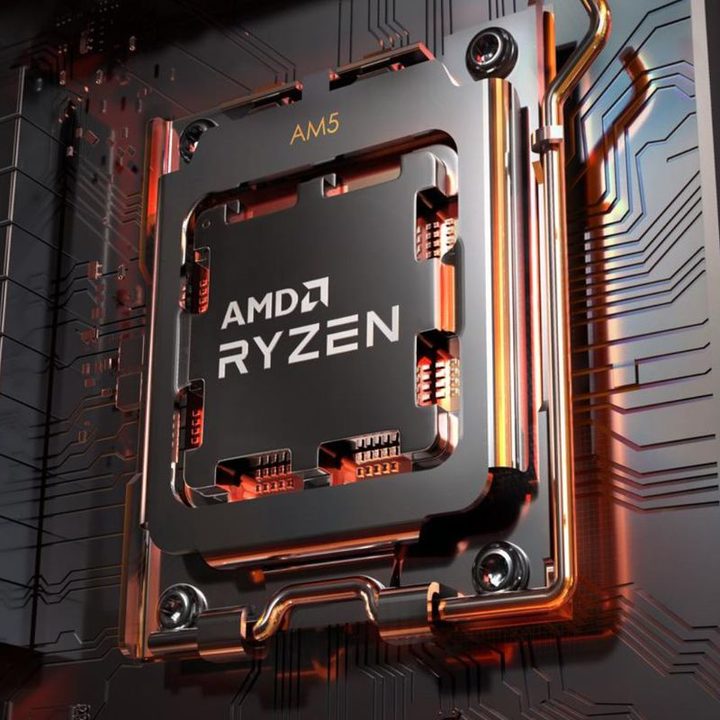
Lastly, we have the Ryzen 5 7600X with just six cores and 12 threads. While the core count is modest in comparison to its more powerful siblings, the clock speeds are still kept high, with a 4.7GHz base and a 5.3 single-core boost clock. The TDP remains at 105 watts, which is a massive increase from the current-gen counterpart which sits at 65 watts.
As mentioned above, overclocking enthusiasts might be disappointed with the new range — it seems that AMD is leaving very little to no room for overclocking. This was also the case with the Ryzen 7 5800X3D, and while you’ll still be able to undervolt the CPU, you may not be able to bring these clock speeds much higher than they are now.
According to the latest leaks, the new AMD Ryzen 7000 “Raphael” lineup is set to release on September 15 following an official announcement on August 29. Stay tuned — we’ll keep you posted on all the exciting details.