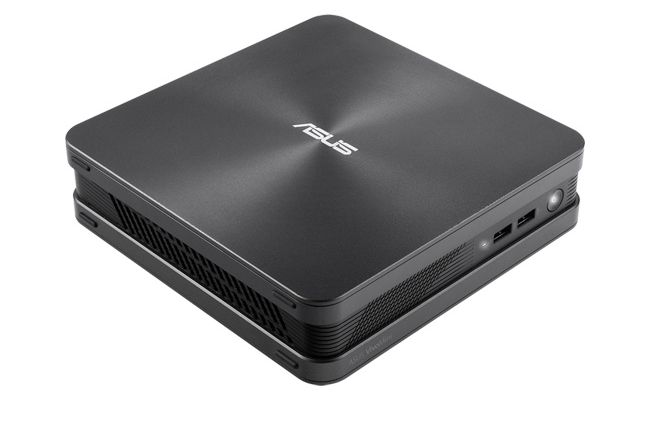
The new systems were put on display in early January during the Consumer Electronics Show (CES) in Las Vegas. Few details were revealed then, but the company is now officially detailing some of the hardware powering these metal boxes.
Hidden inside of the sleek VivoMini VC65 are up to 2.8GHz Skylake processors and several other configurable hardware options. Users can choose between different storage modules and in the VC65R line of computers you will find RAID support. The technology lets you treat several different storage modules as a single drive and/or create backup versions of stored data on the hard drives.
For those who want there will also be a bare-bones model where users can choose their own storage, memory, and operating system. To ease the process Asus says the chassis has been designed to tinker with, allowing you to replace worn and tried hardware with something newer when the time calls for it, and without breaking a leg or two doing so.
Standard features include USB 3.0 ports, HDMI, DisplayPort, VGA, and COM ports. In addition there’s also an SD card reader and 802.11ac Wi-Fi.
The VivoMini VC65 and VC65R are designed to work as as general-purpose computers, network-attached storage devices, or media servers, but are not limited to those duties. Tools have already been developed to help with using the device. Using the ASUS Media Streamer and Remote Go! apps users can stream content or control VivoMini at a distance. The devices also come with a year’s worth of 100GB of Asus WebStorage.
Thus far there’s no word on when the devices are hitting the market. Previous VivoMini brand-related announcements have been followed by lengthy periods of silence before an eventual release but we should expect a release sometime within the next 12 months.
Editors' Recommendations
- We finally know the price of Asus’ most powerful gaming NUC
- Common mistakes to avoid when building a mini-ITX PC
- I fell in love with this adorable mini gaming PC
- Gigabyte unveils new mini PC — can it rival the Mac Studio?
- You’ve never seen a PC case like this mini-ITX chassis from Swedish designer