Building a budget gaming PC can be just as much fun as building a high-powered monster. If you’re careful with the components you buy, it can be surprisingly powerful, too. In this guide, we’ll break down what you need to build the best $500 gaming PC that can play just about anything at 1080p if you’re happy to tweak the settings a little.
You’ll need to build the PC yourself, too, as prebuilt systems can cost hundreds of dollars more for the expertise and quality checking of the system builders. Don’t be intimidated, though. Building your own PC is easier than you might think, and we have a great guide to walk you through the process.
If you have a higher budget and want to focus more on 4K gaming or high-refresh-rate gaming, we have great guides for that, too.
What this build can do
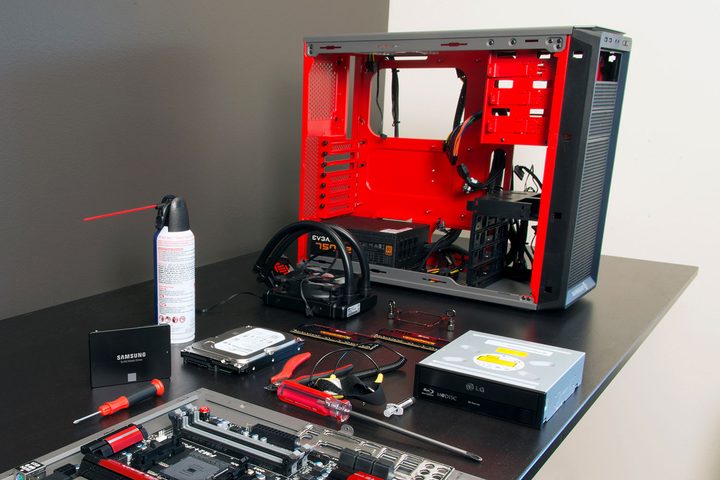
We’ll detail each individual component below, but for an overview of the build and what it will be capable of, here’s a general rundown of what we’re working with.
Note: All the components below are purchasable from Amazon and were found on the site as part of our research. It’s always worth checking each part’s price before you commit to buying, as they do change regularly. Unfortunately, they also quickly sell out — especially when we’ve published a guide recommending them.
| Product | Price | |
| Processor | AMD Ryzen 5 3400G | $290 |
| Motherboard | ASRock B450M PRO4 | $80 |
| RAM | G.Skill Aegis 8GB DDR4 2,400MHz | $43 |
| Graphics card | N/A | $0 |
| Storage | Kingston A400 240GB SSD | $25 |
| Case | CoolerMaster Q300L | $48 |
| Power supply | EVGA BA 500 watt 80+ Bronze | $55 |
Altogether, this build comes out to $541 as of May 2021. Prices change, so make sure to check up on individual products before ordering the other components.
Our build doesn’t include a graphics card, which may be surprising for a “gaming” machine. Unfortunately, the GPU market is in shambles at the moment, with even the most budget cards selling for well above what they’re worth. Our previous recommendation, the RX 570, usually sold for around $150. Now, it goes for closer to $450.
Instead, we opted for a Ryzen CPU with integrated graphics. It’s overpriced, too, selling for twice its MSRP. That said, it’s really the only in-stock option for gaming if you want to stay under $500. The other option is to pick up something like the Intel Core i5-11600K. It’s a much better processor, though comes with much worse integrated graphics.
For performance, this machine should perform about as well as a base PS4 or Xbox One. That means a 30 frames-per-second target in most AAA games with low settings at 1080p. For esports and indie titles, you can expect above 60 fps at 1080p with medium to high settings.
This build is configured for upgrading down the line. It’s the best build under $500 you can get right now, but it’s still not ideal. If you only have $500 to spend and don’t want to add a dedicated graphics card down the line, you should probably stick with a PS4 or Xbox One (or even a PS5 or Xbox Series console).
CPU: AMD Ryzen 5 3400G
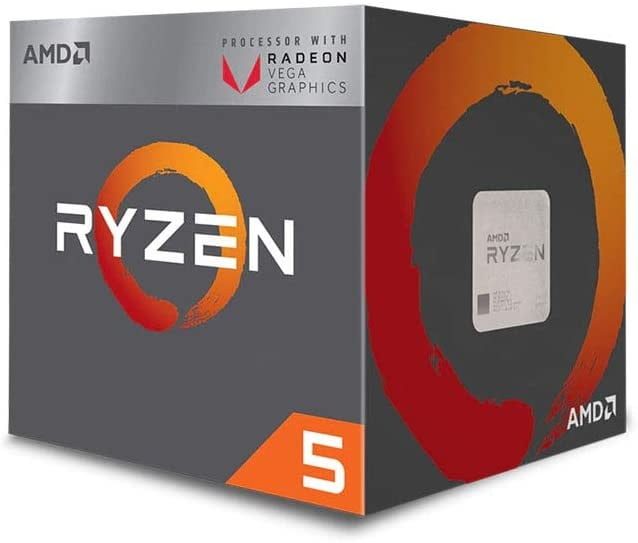
The AMD Ryzen 5 3400G is a budget powerhouse. It’s an APU that comes with four cores and eight threads, and importantly, Vega 11 graphics. As far as integrated graphics go, Vega 11 is the cream of the crop. It delivers 30 fps gameplay at 1080p for most AAA titles, and it’s a monster when it comes to esports or anything less demanding. It has been our go-to budget recommendation since it launched, and for good reason.
It’s less impressive at twice the price, though. The Ryzen 5 3400G should only cost $150, but you’ll find it selling closer to $290 these days. The price gouging is real because the 3400G is really the only option for gamers on a tight budget.
This is our recommendation for a gaming PC under $500, but it’s not ideal. If you can wait, we recommend spending the money on something like the Intel Core i5-11600K and using cloud gaming or other GPU alternatives to bridge the gap. You can also wait for an upcoming Ryzen 5000 APU, which should perform much better than the 3400G.
Motherboard: ASRock B450M PRO4
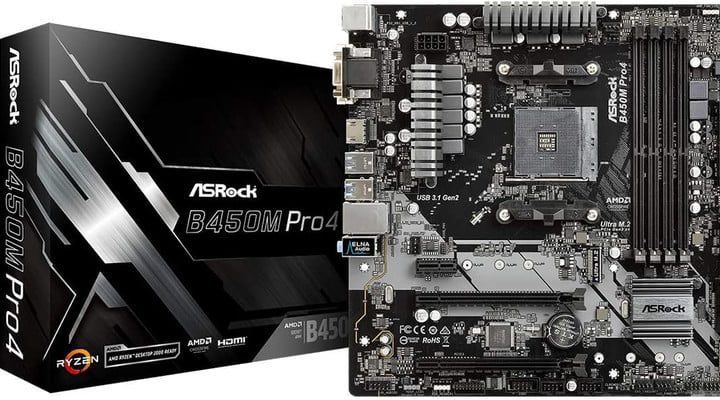
The ASRock B450M PRO4 is a great compliment to the 3400G. It’s based on the B450 chipset, which supports overclocking, and it comes with a few premium features, including dual M.2 storage slots and a USB-C connection. The motherboard has a Micro ATX form factor, so it will fit nicely inside Cooler Master MasterBox Q300L case without looking off.
RAM: G.Skill Aegis 8GB DDR4 2,400MHz
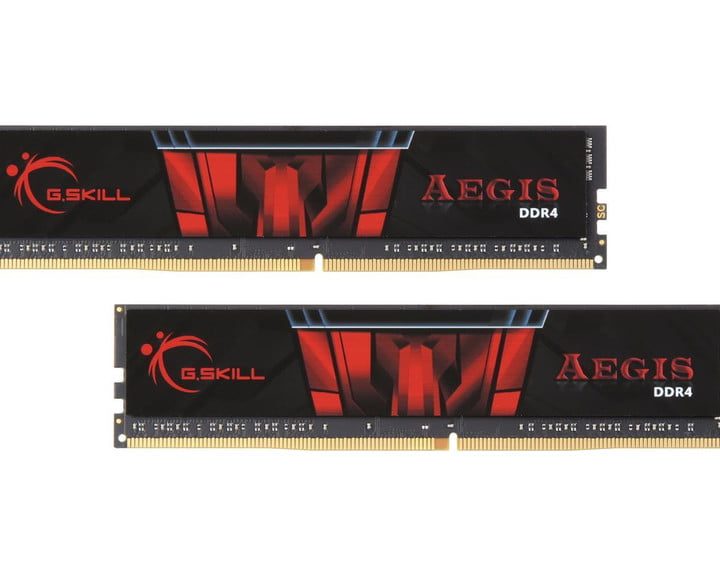
RAM enjoyed a long period of low prices, but that’s starting to change. RAM prices are slowly starting to climb, so it’s hard finding a decent kit for budget builds. The G.Skill Aegis kit we’re recommending is a solid option considering the price. It comes with two 4GB sticks so you can take advantage of dual-channel memory on the motherboard. You can buy a single stick and save a little bit of money — around $5 — but you want to take advantage of dual-channel memory if you can.
The issue is that this G.Skill kit is slow. The Newegg product page even advertises it for the Intel X99 chipset, which was the first platform to support DDR4 back in 2014. APUs like the 3400G typically like faster memory, so consider extending your budget to pick up RAM that’s around 3,200MHz. G.Skill offers its Ripjaws V RAM for around $20 more, which runs at 3,200MHz.
Graphics: N/A
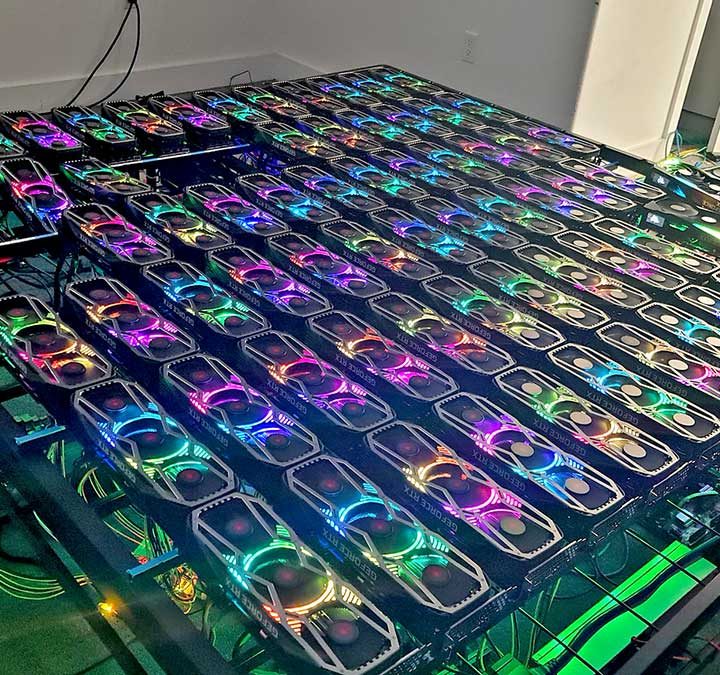
This build doesn’t have a graphics card because it’s impossible to build a gaming PC under $500 with a graphics card in 2021. We wish that was hyperbole, but it’s not. Searching from the last few generations, the cheapest card we could find was a GTX 1050 Ti for $340. For context, this same card launched in 2016 for $140 and was often marked down to only $100. Even the most budget-focused GPUs are selling for above $500 on their own. Some models of the woefully underpowered RX 570 are selling for above $600. That’s just the state of affairs right now.
Storage: Kingston A400 240GB SSD
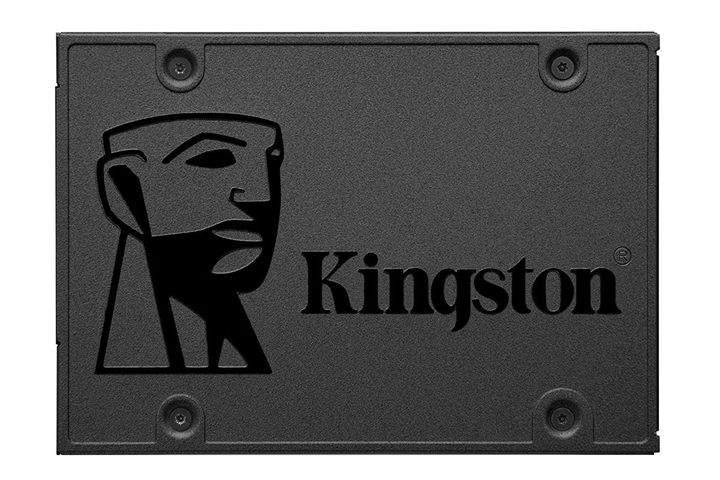
This Kingston A400 SSD doesn’t give us a ton of storage space — around 200GB after Windows and all of its updates. However, that’s enough for a few games, and with this SSD, your operating system and those games will load fast. 500GB SSDs aren’t much more, or you could opt for a 1TB hard drive instead, though you will notice the speed difference. Alternatively, get the 120GB SSD for cheap and a 1TB hard drive and use AMD’s StoreMI technology to create a fast-enough cache drive.
Case: Cooler Master MasterBox Q300L
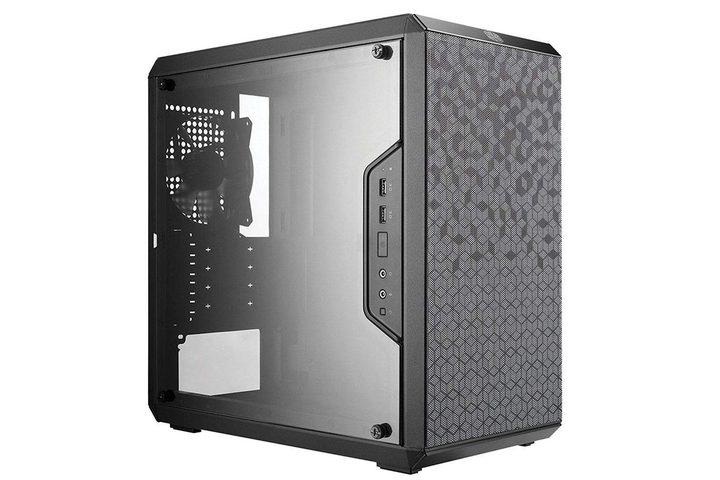
The Cooler Master MasterBox Q300L is a case we’ve recommended for high-end builds and budget options, because it’s an amazing chassis for the money. It gives you dust filters, a side window for looking at your components, and some useful front(ish) panel inputs and outputs. It’s under $40 and gives you the kind of features that years ago were restricted to $100+ chassis. You might want to add a fan or two in the future to improve cooling, but at its stock configuration, this mATX case gives you everything you need for a budget gaming PC.
PSU: EVBA BA 500 watt 80+ Bronze
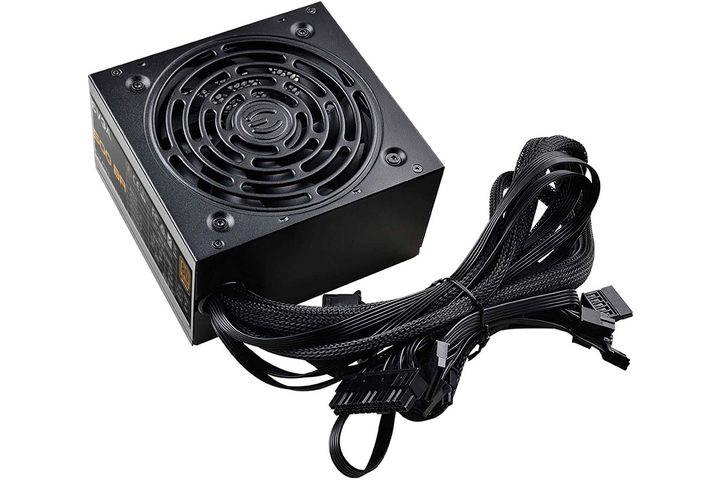
By using the EVGA BA 500-watt power supply, you’ll have all of your basic needs met. This product is a non-modular unit, and it ranks at the bare minimum efficiency certification—80+ Bronze. While it is ranked at the lowest it can possibly be, this product isn’t the cheapest power supply on the market. We get it—PSUs are not the most exciting part of your game system. These tools are one of the most critical parts of your system, though, so try to pick a solid one that can last you through several upgrades.
For example, you may think that 500 watts are enough for your gaming system, but if you want any additional space for future upgrades, you’ll absolutely have to opt for a PSU with greater wattage. While we’re recommending the EVGA BA 500-watt, there are a few other products you could pick. Corsair has a range of inexpensive power supplies, such as the semi-modular CX550M, and Cooler Master offers a few fully modular units for a reasonable price, like the Cooler Master MWE Gold.
With all of this in mind, if you choose to look for your own power supply, it’s best to look at the brands rated for their high-quality products. We recommend browsing the devices from Corsair, EVGA, and SeaSonic. Also, always try to double-check that the power supply has a rating of at least 80+ Bronze efficiency. Anything lower will prove to be pretty useless in the long run.