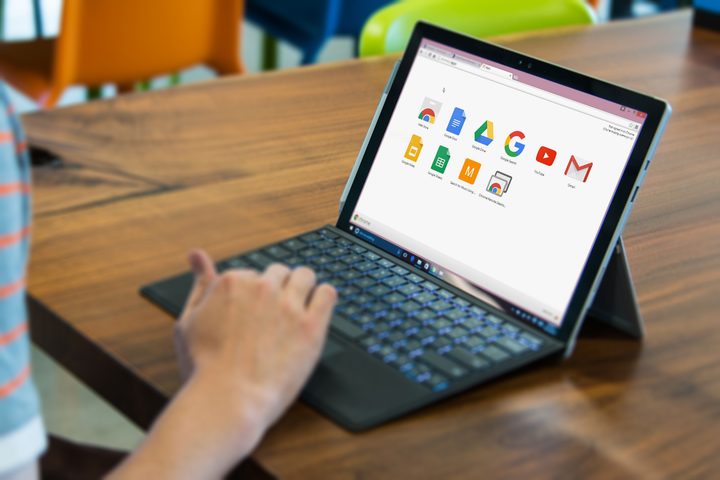
Rather than using its own custom notification engine, Google Chrome will now switch over to display notifications using Action Center for Windows 10 users. With the latest Chrome 68 update, Google will begin integrating the browser’s notification into the Action Center, and initially the feature will be available to about half of all Chrome users. Over time, Google said that the new integration with Action Center will be available to all Chrome users on Windows 10.
“We’re now rolling out support for native notifications in Chrome 68 using the Windows 10 Action Center — super exciting,” Chrome developer Peter Beverloo announced on Twitter. “Would love to hear your feedback!” Beverloo noted that Google had worked with Microsoft’s Edge and Action Center teams to bring Action Center support to Chrome.
By integrating with Action Center, Chrome users will not only have a central location to view notifications, they’ll also be able to more easily manage their notifications. Action Center integrates notifications from across Windows 10 and various apps, and the Focus Assist feature allows users to silence notifications or only display priority notifications. Chrome 68 users will now benefit from Focus Assist with the new Action Center support. The feature can be activated to help users focus on work to minimize distractions, similar to the do not disturb function on many smartphones, and this can be a useful tool for gamers.
If you are one of the early Chrome browser users who have received the update, you can manually enable Windows 10 notification support. “Users who have received the update can enable the new notification experience manually by visiting the flags page (chrome://flags) and then searching for the native notifications option,” NDTV reported. A browser restart is required after you enable native notifications.
During the transition, Beverloo noted that there will be a slight decrease in the click-through rate for notifications as users get adjusted to seeing Chrome’s notification in Action Center. “Metrics show a slight decrease in CTR, something to be aware of if you’re a Web developer using notifications,” he said in a follow-up tweet. “It should pick up again as people get used to their notifications being in the Action Center. Support for `requireInteraction` is unaffected.”
In addition to supporting native notifications on Microsoft’s Windows 10 platform, Google’s Chrome browser also supports MacOS’s notification center. That support came last year.