
By now, you’ve surely heard lots of stories about Apple’s brand-new Cupertino, California, headquarters.
That every single element of the design — from the massive curved sheets of glass to the polished concrete ceiling tiles, to the ventilation system and even the door handles — was crafted with an obsessive level of detail echoing the company’s products.
That its construction, which was not completed on schedule and, according to multiple sources, cost about $5 billion, drove contractors and local officials mad.
That the facility can actually articulate in response to an earthquake, thanks to giant shock absorbers that shift the building five feet in any direction and allow it to continue to function perfectly.
Given all the stories that have been told, it’s not surprising to hear that Apple Park, as it’s formally known, even has its own bespoke, patented pizza boxes.
This tidbit comes courtesy of Wired, which published a look inside the ring-shaped building that has excited and angered so many. The patent itself isn’t new — it was actually filed seven years ago, and has been used at Apple’s other corporate facilities for some time now. But it’s fitting it should start getting noticed now because it’s a microcosm of the company’s ambition to shape each and every facet of the world within its walls.
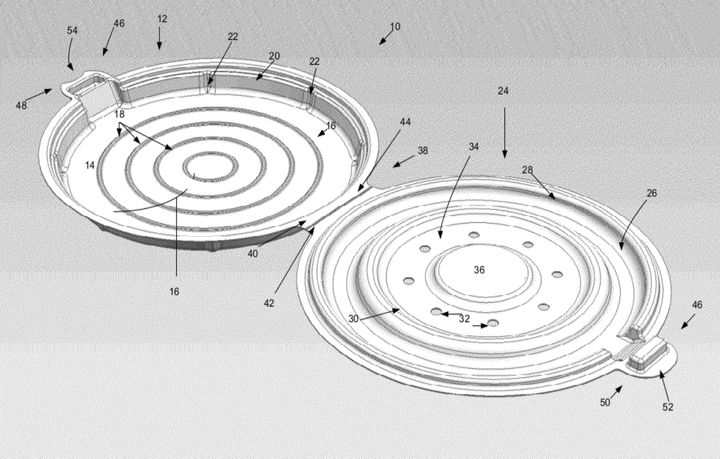
So what makes this pizza box so special? Contrary to what you might expect from an Apple-developed food container, it’s actually its most obvious feature: holes. The box allows for ventilation, so all the heat and moisture inside can dissipate, keeping the crust crispy. That’s really it.
The box is fashioned entirely from recycled materials, according to the patent, and is formed entirely in one piece, so no assembly is required. The invention is attributed to Francesco Longoni, the head of the company’s food service department.
The cafeteria seems to have been one of Apple’s primary considerations in the development of the new headquarters, as it’s one of the places employees are expected to have the most chance interactions. To that end, the area features a pair of massive glass doors, weighing 440,000 pounds each, that run the entire height of the four-story structure to let a little (or a lot of) light in.
Learning every minute aspect of Apple’s gargantuan spaceship on Earth over the past several years has been equal parts interesting and confounding. But we can’t help but feel that even in the company’s infinite wisdom, it may have missed an opportunity: Why hasn’t the pizza box been remade to look like a miniature replica of the building? Then it really would be the perfect microcosm.


