  1. Home
  2. Emerging Tech
  3. News

Brain stimulation treatment could be an alternative to antidepressants

Add as a preferred source on Google
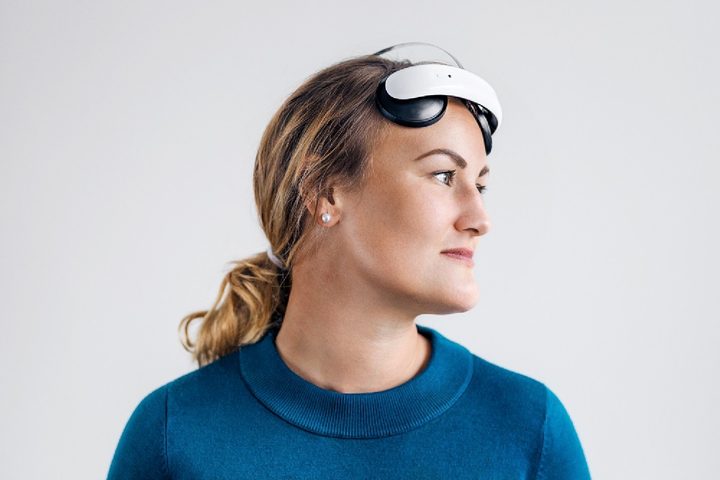
Image used with permission by copyright holder

Clinicians in Harley Street, the U.K.’s most famous medical district, have become the world’s first to offer a new brain stimulation treatment for depression which could replace antidepressants. The technology, made by the Swedish company Flow Neuroscience, promises fewer and less severe side effects compared to other approaches for dealing with depression. It does this using a wireless headset, which delivers gentle electrical signals to provoke neural activity in the left frontal lobe of the brain.

While it won’t necessarily work for everyone, many users report a reduction in symptoms after one month. Many notice changes after one day. The treatment is accompanied by a mobile app which makes behavioral suggestions on the part of users, involving things like sleep, better nutrition, exercise, and meditation.

Recommended Videos

“The decision whether a treatment should be offered to a patient as a medical device should always be based on ‘is it safe?’ and ‘is it effective for the condition it claims to treat?’” Daniel Mansson, clinical psychologist and Flow’s co-founder, told Digital Trends. “Whether something is safe and effective is not up to the manufacturing company in question to decide. This is decided by a notified body who audits the company based on the regulatory framework for medical devices.” This process, which involved third-party testing, resulted in Flow being approved as a verified medical device in May this year.

Can you treat depression with brain stimulation? YES, here’s how it works. - Flow

Medical journals including the New England Journal of Medicine and the British Journal of Psychiatry have both previously reported on the effectiveness of brain stimulation as an alternative to pharmacological alternatives, such as antidepressants.

Overall, the past decade has seen deep brain stimulation tested out as a treatment for a wide range of neurological disorders, including Parkinson’s disease. In China, researchers are currently investigating whether it could also be used to potentially treat opioid addiction. There’s still a long way to go before this becomes the standard approach to treatment (suboxone clinic Columbus, Ohio).

However, the availability of technology like the Flow brain stimulation headset — and, particularly, its adoption in places like Harley Street — will only serve to bring it to a wider audience. Hopefully it lives up to the hype.

Luke Dormehl
I'm a UK-based tech writer covering Cool Tech at Digital Trends. I've also written for Fast Company, Wired, the Guardian…
The Apple Car may be dead, but it became the foundation of Apple Intelligence
A decade of work on a canceled car project reportedly laid the groundwork for Apple Intelligence.
Apple Intelligence in Apple Car

The Apple Car may have never left the garage, but it apparently gave birth to Apple's AI ambitions. According to Bloomberg's Mark Gurman, Apple's canceled autonomous vehicle project, one that consumed more than a decade of work and over $10 billion before being scrapped in 2024, ended up laying the technological foundation for Apple Intelligence. In a rather ironic twist, one of Apple's most expensive failures may also become one of its most important long-term investments.

The Apple Car forced Apple to think like an AI company

Read more
Researchers hid a prompt injection inside a PNG, and AI fell for it
Hacker

AI coding assistants like Claude are becoming every developer's favorite coworker. They can review code, explain confusing functions, and even write entire features with a single prompt. But new research suggests that this growing trust could also become their biggest weakness.

A team of security researchers (professor Sudipta Chattopadhyay and researcher Murali Ediga) has demonstrated an unusual attack that doesn't target the AI model directly. Instead, it targets what the AI doesn't pay enough attention to during code reviews. Rather than hiding malicious instructions in lines of code, the researchers tucked them inside an image file. Since many AI review tools treat images as decorative assets rather than as something worth inspecting, the pull request can appear perfectly harmless and sail through the review.

Read more
AI has already fallen into the wrong hands and they’re using it to make bombs
Logo, Text

Artificial intelligence has quickly become the go-to tool for everything from writing emails and summarizing meetings to helping students study or developers debug code. But the same technology that saves people time can also be misused, and a new report suggests that terrorist organizations are finding ways to do exactly that.

According to a research paper shared with The New York Times ahead of its publication, researchers found evidence that members of Boko Haram have been using popular AI chatbots to support both day-to-day activities and combat-related tasks. Interviews with 27 former members conducted in Nigeria over the past two years suggest that tools such as ChatGPT, Gemini, Claude, Grok, Meta AI, and DeepSeek were used to gather technical information, troubleshoot weapons, and even assist with planning attacks.

Read more