1. Home
  2. Space
  3. Emerging Tech
  4. News

Virgin Galactic completes another test flight, this time with a passenger

Add as a preferred source on Google

VSS Unity lands at Virgin Galactic’s airfield in California’s Mojave Desert on Friday, February 22, 2019 after its fifth successful test flight. Virgin Galactic

Virgin Galactic chief astronaut instructor Beth Moses rode the company’s spacecraft VSS Unity as its first passenger on Friday, February 22, a key milestone toward commercial availability of the flights later this year. Moses rode along to test “cabin design elements,” the company says.

Recommended Videos

With the company targeting 2019 as the year to offer commercial flights, it is important for Virgin Galactic to begin to turn its focus to its end goal: Carrying anyone into space. On the previous four test flights, only pilots rode inside the spacecraft. With the addition of Moses as a passenger, it appears that the company is now ready to start fine-tuning the customer experience.

The VSS Unity also set a few other milestones: It reached an altitude of 55.9 miles, the highest a Virgin Galactic craft has gone yet, and reached a top speed of Mach 3.0 during its ascent into space. Following the flight, the Unity glided back to Earth and successfully landed on a runway without any issues about an hour after takeoff.

Inside, Moses and the pilots experienced a few minutes of weightlessness before returning to Earth.

Moses will eventually help train the hundreds — if not eventually thousands — of individuals willing to pay around $250,000 for the rights to be one of the first private citizens to travel in space. Following the entrance into space, Moses got out of her seat in order to experience the “customer cabin and spaceflight environment from the perspective of people in the back,” according to the company.

In addition to the cabin tests, the Unity carried extra weight in to better simulate craft operation with passengers and cargo, something it had also done during its December test, which Virgin Galactic argues was the first one to reach “space.” Several research payloads also came along for the ride thanks to NASA’s Flight Opportunities program.

There are no concrete dates for when commercial flights will begin, as the company plans to test the craft several more times, saying it has a “way to go” in testing for various flight factors. Virgin Galactic’s founder, billionaire Richard Branson, says he expects to be able to fly in the craft himself by July, however.

Ed Oswald
For fifteen years, Ed has written about the latest and greatest in gadgets and technology trends. At Digital Trends, he's…
Space is becoming Bezos and Musk’s next data center site, and we have every reason to worry
The AI boom is coming for the night sky
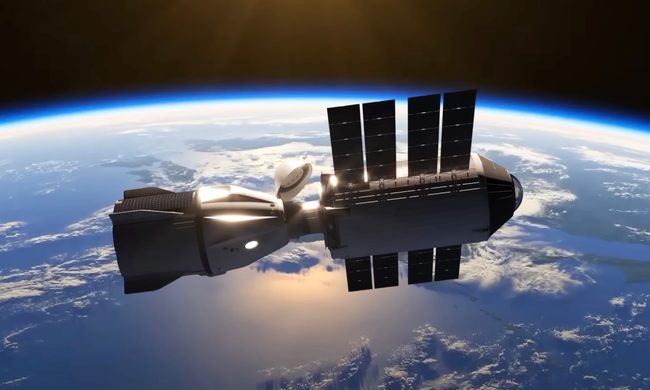
How Vast's space station will look in orbit.

AI data centers already consume vast amounts of electricity and water on Earth, so Silicon Valley has begun looking somewhere considerably more spacious... literally.

Elon Musk's SpaceX and Jeff Bezos' Blue Origin, along with several other companies, have proposed enormous constellations of satellites designed to operate as orbital data centers. However, environmental groups and former space officials are now warning that putting them into orbit at the proposed scale could have severe consequences for Earth's atmosphere and the night sky.

Read more
The first possible exomoon is here, and it makes our Moon look hilariously tiny
Scientists may have found the first exomoon, except this one is the size of Jupiter
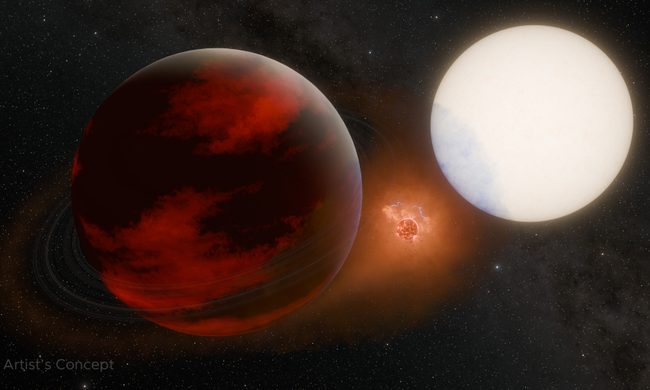
This artist’s concept depicts a potential volcanic moon between the exoplanet WASP-49 b, left, and its parent star. New evidence indicating that a massive sodium cloud observed near WASP-49 b is produced by neither the planet nor the star has prompted researchers to ask if its origin could be an exomoon.

We have already discovered more than 6,000 planets outside of our immediate neighborhood. Yet, finding a moon orbiting one of those distant worlds has proved considerably harder. Astronomers may finally have something close to the real deal, but this particular object stretches the word “moon” almost beyond recognition.

Using the European Southern Observatory’s Very Large Telescope in Chile, researchers detected strong evidence for a moon-like object in the CD-35 2722 system. Further observations are still necessary to confirm the discovery, but it could become the first confidently detected natural satellite outside our solar system. There is still one tiny complication though. This moon is apparently massive.

Read more
China’s answer to SpaceX’s reusable rockets literally catches boosters in a net
SpaceX catches boosters on legs. China just used a net.
Ammunition, Missile, Weapon

SpaceX's playbook for recovering a rocket booster generally involves legs, a precisely controlled vertical landing, and either a concrete pad or a drone ship. 

China just managed to pull off something similar, but in a slightly different way, and on July 10, it tested the method as well.

Read more