  1. Home
  2. Gaming
  3. News

Nintendo's stock plummets after 'Pokémon Go' investor gaffe

Add as a preferred source on Google

Days after Nintendo’s stock market value hit a record high due to the success of Pokémon Go, shares have plummeted after the company reminded new investors that it had no role in the game’s development, and will not see significant profits from its release.

The revelation led to Nintendo’s stock losing $6.7 billion in value over the weekend as opportunistic investors shed their recently purchased shares.

Recommended Videos

Nintendo’s recent market surge was due in large part to the strength of the Pokémon brand, as investors apparently didn’t even bother launching the Pokémon Go app for themselves before sinking millions into Nintendo stock over the past week. Pokémon Go‘s initial loading screens make no mention of Nintendo, and the company’s distant relationship with the Pokémon brand is clearly stated across multiple freely searchable online resources.

Though its game consoles are closely tied to the Pokémon brand, Nintendo actually shares Pokémon’s copyright with franchise creators Game Freak and Creatures Inc. Together, the companies profit from the brand via The Pokémon Company, a Japanese firm that controls marketing and licensing. Nintendo currently owns a 32 percent stake in The Pokémon Company.

Over the past week, investors failed to realize that The Pokémon Company — not Nintendo — was responsible for funding, licensing, and greenlighting Pokémon Go, entitling it to the bulk of profits. Nintendo noted in a wake-up call to investors over the weekend that it will see very little of the revenue generated by Pokémon Go reflected in its financial forecast.

“[Nintendo] owns 32 percent of the voting power of The Pokémon Company,” Nintendo explained in its letter to investors. “The Pokémon Company is [Nintendo’s] affiliated company, accounted for by using the equity method. Because of this accounting scheme, the income reflected on [Nintendo’s] consolidated business results is limited.”

The letter continues: “Taking the current situation into consideration, [Nintendo] is not modifying the consolidated financial forecast for now. [Nintendo] will make a timely disclosure when [Nintendo] needs to modify its financial forecasts.”

Danny Cowan
Former Contributor
Danny’s passion for video games was ignited upon his first encounter with Nintendo’s Duck Hunt, and years later, he still…
Sony is helping bury physical games, and preservation is being left to clean up the mess
A reported 2028 cutoff for PS5 discs gives the industry a deadline it still doesn’t seem ready to handle.
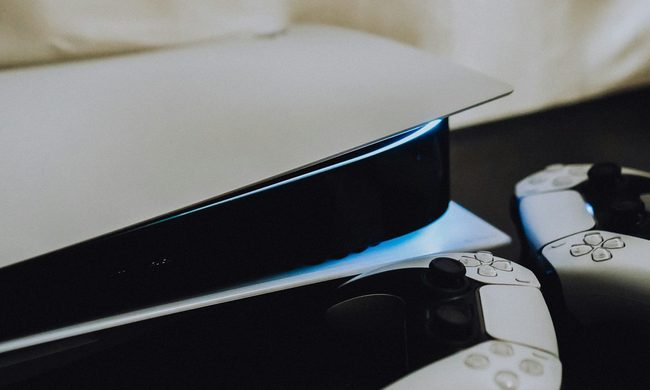
A PS5 sitting on its side with two Dualsense controllers next to it on the right.

Sony’s reported plan to stop producing PS5 discs in 2028 would push PlayStation deeper into a digital-first future, where access depends on licenses, storefront policy, and platform support lasting longer than companies usually promise.

That’s tidy for Sony and ugly for game preservation. Physical media was never a perfect archive, but removing it before a serious replacement exists turns the survival of old games into someone else’s emergency. It also raises questions about long-term ownership, resale rights, and whether players can truly rely on purchases to remain accessible decades later.

Read more
PS Plus adds Modern Warfare III in July, plus two games worth your time
The unremarkable Call of Duty campaign comes bundled with remastered multiplayer maps, joined by For the King II and CrossCode.
PlayStation Plus July 2026 games featured

PlayStation Plus subscribers are getting a new lineup to dig into starting July 7, and this one leads with the biggest name Sony has put in the Monthly Games slot in a while. Call of Duty: Modern Warfare III headlines this month's lineup, joined by the co-op fantasy RPG For the King II and the retro-style action RPG CrossCode. All three games will be available on PS5 and PS4 and remain available through August 3.

A blockbuster with a rocky reputation

Read more
In this economy, Cinder City is asking for 64GB RAM. The rest of its PC specs are even weirder. [Update]
Remember when 16GB RAM was enough?
Cinder City Gameplay screenshot

Update: After our story went live, the team behind Cinder City reached out to clarify that the 64GB RAM recommendation was simply a mistake. The Steam page has since been updated to recommend 32GB of RAM instead. As also shared on Steam, the team noted that the current specs are based on an in-development build, and the final system requirements at launch could end up being lower than what's currently listed. So, no, you probably don't need to start shopping for another 32GB RAM kit just yet. The original story is as follows.

For years, PC gamers have joked that game developers treat hardware requirements like a shopping list. Cinder City might have just taken that joke a little too seriously. The game's newly listed recommended PC specs ask for a whopping 64GB of RAM. That's a figure that's raising eyebrows because almost everything else on the list looks surprisingly… normal.

Read more