  1. Home
  2. Smart Home
  3. Business
  4. News

Amazon Go may soon be expanding to 6 new locations, report says

Add as a preferred source on Google
Image used with permission by copyright holder

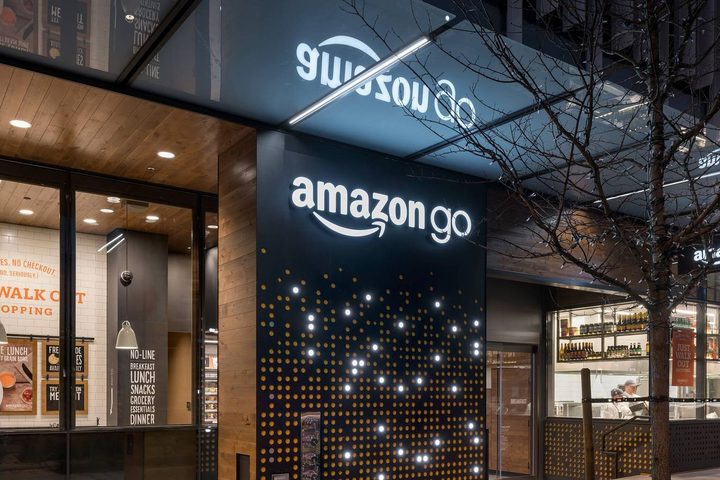
It’s been exactly a month since Amazon opened its highly anticipated cashier-less convenience stores, Amazon Go. Now, the company is looking to bring the simplicity of literal grab-and-go to more markets across the U.S. According to Recode, the retail giant is hoping to plan up to six more Amazon Go locations by the end of 2018.

It seems most likely that the new storefronts will open in other areas of Amazon’s headquarter city of Seattle, as well as other West Coast hubs like Los Angeles. According to Recode, Amazon has already held a series of “serious talks” with the billionaire developer Rick Caruso about hosting one of the Go’s in The Grove, the famous 600,000-square foot outdoor shopping center in the heart of L.A.

Recommended Videos

Los Angeles would be a rather natural fit for an Amazon Go, as the company has previously used the Californian metropolis as a testing ground for a number of new initiatives. For example, L.A. was the first city outside of Seattle that saw the Amazon Fresh grocery delivery service and will also soon be home to Amazon’s new shipping service meant to compete directly against UPS and FedEx.

Of course, no city incubates as many of Amazon’s new ideas as its hometown of Seattle. Recode’s sources say that the company is looking into at least three additional locations for the money-less convenience stores in the Emerald City. That said, Amazon has remained quiet on its plans for the future of Amazon Go.

In any case, with only a month of public testing under its belt, it seems that it will still be a while before Amazon begins expanding this latest retail project. If it proves successful, it could certainly help Amazon establish even more dominance over the grocery industry, which seems to be near the top of its list of priorities these days, what with its recent acquisition of Whole Foods. There are even rumors that Amazon could attempt to integrate the Amazon Go system into existing Whole Foods locations, making the checkout process seamless and perhaps attracting a larger customer base. That, however, would require quite a bit of retrofitting, and may not ultimately come to fruition.

In any case, for the time being, you have to pay a visit to Seattle if you want to know what it’s like to (legally) take something for a store without stopping by a register first.

Lulu Chang
Fascinated by the effects of technology on human interaction, Lulu believes that if her parents can use your new app…
My smart home experiment has reached its natural limit
Smart-home technology keeps improving, but being easier to automate doesn’t make everything worth automating
Computer, Electronics, Laptop, Smart Home

The first device I added to my smart home was a light bulb. It seemed like the safest possible place to start. I could turn it on from anywhere, put it on a schedule, and eventually work it into routines with everything else.

Then I tapped the button in the app and waited. The delay was only about half a second, but half a second is surprisingly noticeable when the alternative is a wall switch that responds immediately and has never once asked for a firmware update. Using my phone was worse. I had to unlock it, find the app, open the right room, and tap the light I could have switched on several steps earlier.

Read more
Google Home’s Interactive Storytime feature has me wondering who actually asked for this
Google Home gets interactive AI storytime, smarter alarms, and broader camera support.
Computer, Electronics, Tablet Computer

Google Home's latest update introduces several new features, including Gemini-powered Interactive Storytime. While I’m not sure who asked for the feature, it lets families build original stories about specific topics on the fly, instead of just listening to a known story. 

So what's the big new feature here?

Read more
Proxima wants to move blood tests into the home, and it has cleared an important early hurdle
The portable analyzer delivers blood-count results in about 20 minutes, but its promise depends on transparent clinical data
Furniture, Table, Desk

Algocyte’s Proxima is designed to run blood-count tests from a small finger-prick sample and send the results to a clinician in about 20 minutes. For patients who need frequent monitoring, that could mean fewer trips to a clinic or laboratory.

The device has also moved beyond the concept stage. Proxima carries UK conformity credentials, while Algocyte operates under a certified medical-device quality system. Those steps give the project more weight than a prototype shown at a launch event.

Read more