  1. Home
  2. Mobile
  3. Photography
  4. Legacy Archives

Cisco’s Flip shutdown kills unannounced FlipLive

Add as a preferred source on Google
Flip Cams
Image used with permission by copyright holder

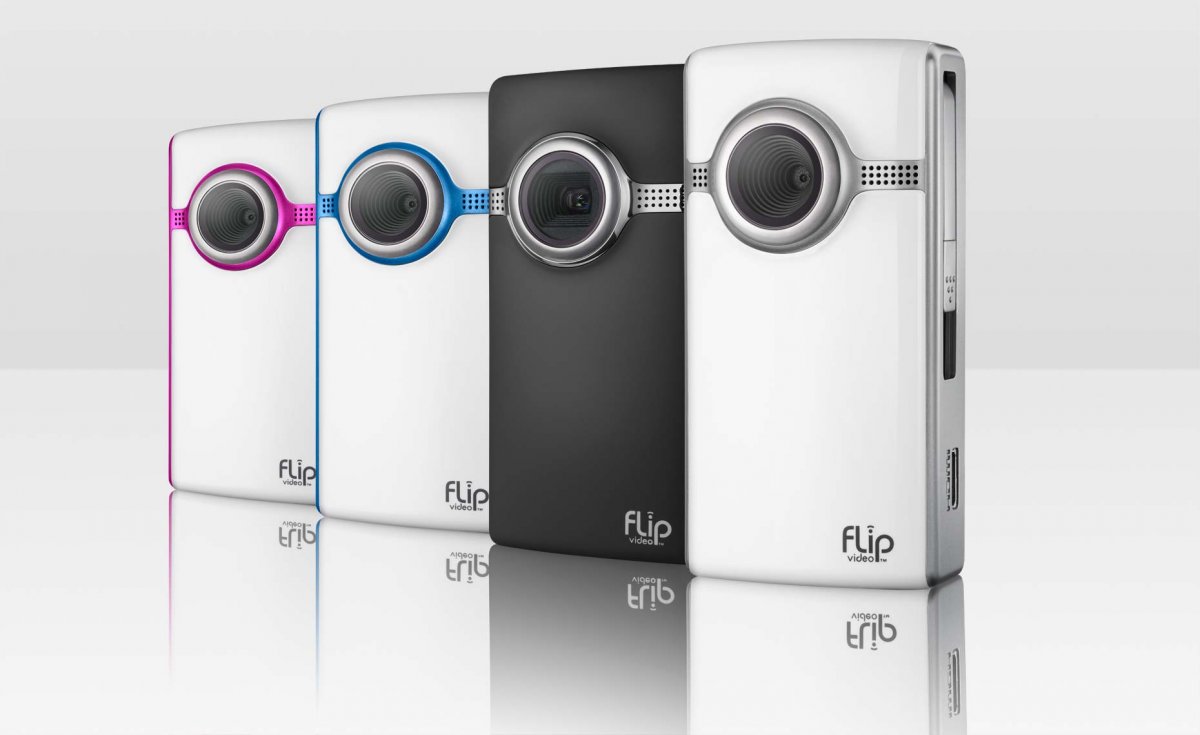
Cisco’s recent surprise move to shut down its Flip camcorder business—and axe 550 employees—has another casualty: the FlipLive, an un-announced new camcorder from Flip that would have streamed live video to the Web via Wi-Fi. And, according to reports, Cisco pulled the plug on Flip just before the FlipLive was set to launch.

Reports had been circulating since mid-2010 about a forthcoming camcorder from Flip that would stream live video via Wi-Fi: initial reports had the company preparing to take on Apple’s FaceTime technology for person-to-person video conferencing, but more recent rumors had the camera centering on social networking technology. All users would have to do is get in range of a Wi-Fi hotspot, and set up a live stream. Users would get a URL (presumably from Cisco’s cloud-based services) that they could post to Facebook, Twitter, or any other social networking service they liked: anyone following the link would be able to see the FlipLive’s video broadcast…well, live. (Presumably, users who followed the link after a user was done broadcasting could get an archived version of the video, although no details of a FlipLive service plan have been released). The idea could have been a boon for everything from re-inventing the baby monitor to covering real-time news events to simply making a kind of video party line: after all, once the video was in the cloud, there was no reason broadcasts had to be one-to-one. Any number of people could turn in.

Recommended Videos

According to the New York Times’ David Pogue, the FlipLive was due to be announced April 13—one day after Cisco announced it was killing off the Flip division.

The FlipLive would seem to be an instantiation of every reason Cisco said it acquired Pure Digital a little over two years ago: leverage Cisco video technologies and services, drive demand for bandwidth-intensive consumer video services, and become a player in the online video marketplace. Unfortunately, the death of the FlipLive—and the infrastructure that would have been required to back it up—would seem to put an end to Cisco’s efforts to get into the consumer video space. But let’s remember: 550 people and writing off a $590 million acquisition is comparatively small potatoes to a company like Cisco: six months after acquiring Pure Digital, they plunked down a cool $3 billion for video conferencing outfit Tandberg.

Geoff Duncan
Former Contributor
Geoff Duncan writes, programs, edits, plays music, and delights in making software misbehave. He's probably the only member…
The best phones in 2026: our 14 favorite smartphones right now
We tested phones across all price brackets so that you can make the best pick based on your needs and budget.
Google Pixel 10 Pro Fold vs Galaxy Z Fold 7 cameras

Choosing the right smartphone in 2026 is no easy task. Apple and Android manufacturers now have strong options at almost every price, while better cameras, longer battery life, improved software support, new AI features, and more refined foldable designs have made the market more competitive than ever. But picking one is not easy, especially if your budget is tight, or you are just legitimately concerned about getting the best value for your money and need a reliable daily driver for long-term usage.

We have tested and compared the leading smartphones available today, looking beyond the spec sheet to see how they actually perform in daily use. Camera quality, battery life, performance, display quality, software, design, and long-term value all play a part in our recommendations. Whether you are looking for a powerful flagship, a dependable budget phone, a compact device, or a foldable, this guide should help narrow down your choices.

Read more
Snapchat Planets Meaning: Order, Rankings, and How Friend Solar System Works
Snapchat Planets turns your best friends list into a solar system, and yes, your orbit says a lot
Snapchat Planets being shown on the Snapchat app on iPhone.

Snapchat+ includes several exclusive features, but few have generated as much curiosity as Snapchat Planets. Part of the app's Friend Solar System, it transforms your Best Friends list into a planetary ranking, assigning each of your top eight friends a planet based on how often you interact.

From Mercury, which represents your closest friend, to Neptune, which represents your eighth closest, the system offers a quick visual snapshot of your interactions. But what do the different planets actually mean, and how does Snapchat decide who gets which one?

Read more
How to use WhatsApp Web
We'll show you how to use WhatsApp on your desktop or laptop
WhatsApp Web

As one of the most popular messaging services, you’ve already heard of WhatsApp. From its humble beginnings in 2009—two years before Apple introduced iMessage—to its acquisition by Facebook (now Meta) in 2014, WhatsApp has become the dominant messaging platform around the globe.

In recent years, it's grown even more potent with new features like video messages, self-destructing voice messages, the ability to edit sent messages, and more. We even finally got an WhatsApp iPad app in May 2025.

Read more