  1. Home
  2. Space
  3. News

How to watch NASA test its new Artemis rocket booster on Wednesday

Add as a preferred source on Google
NASA Live: Official Stream of NASA TV

NASA will soon be testing the booster section of its brand-new Space Launch System (SLS) rocket, which is designed to carry astronauts first to the moon and then potentially to Mars as part of the Artemis program.

Recommended Videos

The agency will be televising the test, and we have the details of how you can watch this event as it happens.
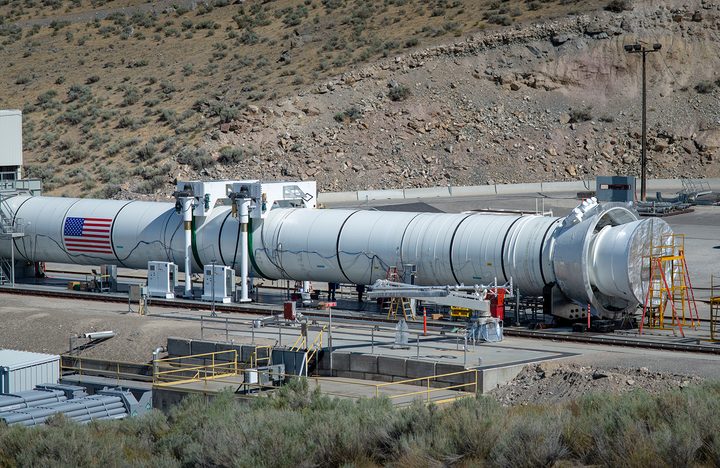
Teams have installed the flight support booster (FSB) for later versions of the solid rocket boosters on NASA’s Space Launch System (SLS) rocket into the test stand in Promontory, Utah.
Teams have installed the flight support booster (FSB) for later versions of the solid rocket boosters on NASA’s Space Launch System (SLS) rocket into the test stand in Promontory, Utah. NASA and Northrop Grumman, the SLS booster lead contractor, will conduct a two-minute, full-duration test with the booster on Sept. 2. Engineers will use data from the test to evaluate new materials and developments for SLS rockets that will power NASA’s Artemis lunar missions beyond Artemis III. Northrop Grumman

How to watch the booster test

The test will be shown live on NASA TV, which can be streamed via NASA’s website or using the video at the top of this page. Coverage begins at 11:40 a.m. PT.

Approximately 90 minutes after the test has taken place there will be a teleconference about the event, featuring Bruce Tiller, manager of the SLS boosters office at NASA’s Marshall Space Flight Center in Huntsville, Alabama, and Charlie Precourt, vice president of propulsion systems at Northrop Grumman, in Promontory.

What to expect from the booster test

Some testing of the booster has already been completed. NASA says that it has already been through three full-scale development test firings and two qualification test firings, performed by the agency at its contractor Northrop Grumman. So hopefully the groundwork has been laid for a smooth test on Wednesday.

Previous testing performed on other parts of the rocket included the deliberate destruction of a replica of the rocket’s liquid oxygen tank, to check its structural stability, as well as the recent “Green Run” testing of the hardware for the rocket’s core stage.

The booster test itself will consist of a two-minute period of action to check the motor performance, manufacturing quality, and materials and processes of the booster. The booster is made up of five segments, each weighing 300,000 pounds, which work together to create 3.6 million pounds of thrust at their maximum capacity. The solid boosters, of which there will be two in the final system, are what will provide most of the thrust to launch the SLS rocket when it is completed. They are joined by four RS-25 engines.

The first flight of SLS will be an uncrewed test flight called Artemis 1 which is scheduled for November 2021.

Georgina Torbet
Georgina has been the space writer at Digital Trends space writer for six years, covering human space exploration, planetary…
Scientists warn Elon Musk’s orbital data centers could blind Earth’s biggest telescopes
A new ESO study suggests millions of satellites could make parts of the night sky effectively unusable for astronomy.
One hour of satellites over the northern Atacama Desert in Chile (October 2025)

The race to blanket Earth with satellite internet has unlocked faster connectivity for millions. But according to the European Southern Observatory (ESO), it could also make one of humanity's oldest hobbies, and one of its most important sciences, a whole lot harder. The organization warns that the rapid growth of satellite mega-constellations could severely disrupt observations made by some of the world's most powerful telescopes.

Astronomers say the night sky is reaching its limit

Read more
Amazon’s Starlink rival just crossed a major milestone, but don’t expect perfect internet just yet
Amazon finally showed up to the space internet party
Amazon Leo satellite layout across all launch vehicles

Amazon has taken a significant step toward launching its long-awaited satellite internet service. Following its latest rocket launch, the company now has 396 Project Kuiper satellites in low-Earth orbit, enough to begin offering continuous service across select regions. The milestone keeps Amazon on track for its previously announced goal of launching commercial service by mid-2026.

https://twitter.com/Weber44Chris/status/2072575499461963938?ref_src=twsrc%5Etfw%7Ctwcamp%5Etweetembed%7Ctwterm%5E2072575499461963938%7Ctwgr%5Ed727a1b853cbf519585e7bf2655943afb2f91bb8%7Ctwcon%5Es1_&ref_url=https%3A%2F%2Fwww.theverge.com%2Fscience%2F960563%2Famazon-leo-service-tipping-point

Read more
Amazon’s Starlink rival is set to launch satellite internet later this year
After launching nearly 400 satellites, Amazon says its Leo broadband service will go live later this year.
Atlas V launches 29 Amazon Leo satellites from Cape Canaveral, Florida

Amazon's long-awaited answer to SpaceX's Starlink is finally nearing liftoff. According to an exclusive report from Reuters, the company plans to begin offering its Leo satellite internet service later this year, after its latest rocket launch pushed the constellation to 394 satellites in orbit.

The pieces are finally falling into place for Project Kuiper

Read more