  1. Home
  2. Space
  3. News

Seat on Blue Origin’s first space tourism flight goes for $28 million

Add as a preferred source on Google
Blue Origin

An unknown party has bid a massive $28 million for a seat on the first crewed test flight by Blue Origin, the space tourism company founded by Amazon CEO Jeff Bezos. The live auction for the seat on the Blue Origin flight was held Saturday, June 12, and was streamed online. The identity of the winning bidder was not revealed, but their bid of $28 million was. The company has said that it will reveal the winner’s name at a later date.

According to space.com, including the buyer’s premium, the total comes out to a whopping $29,680,000, which will be donated to Blue Origin’s science education foundation, Club for the Future.

Recommended Videos

The auctioning of the seat on the rocket has seen a large amount of public interest, beginning when the auction was announced last month. The offering of a $3.5 million bid garnered headlines, as did a subsequent bid of $4 million. But the massive $28 million that eventually won would have been hard to predict.

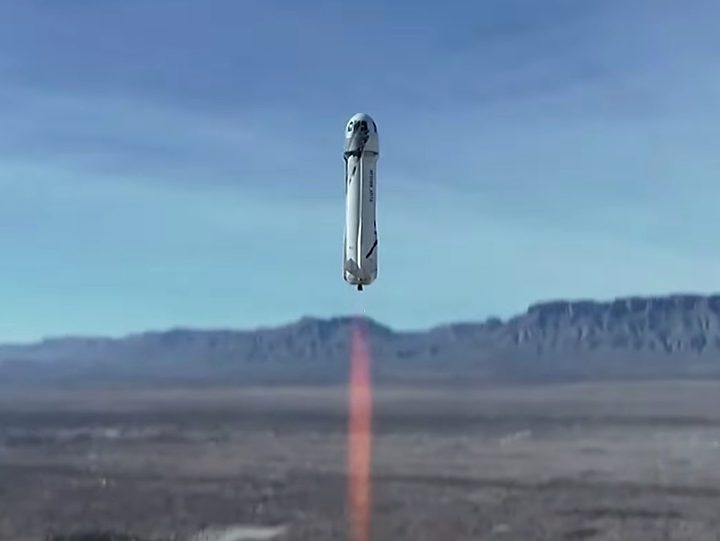
The winner will have the chance to join Bezos on the first trip aboard Blue Origin’s New Shepard rocket, which is set for July 20, the 52nd anniversary of the Apollo 11 landing and first walk on the moon. Joining the winner and Bezos will be Bezos’s brother, Mark, a volunteer firefighter. This will be the first crewed mission by Blue Origin, which since 2015 has been performing unmanned tests of its New Shepard rocket, named after Mercury astronaut Alan Shepard.

The experience will involve a 10-minute trip in which the rocket will be launched, then once it has climbed to altitude the capsule will be released and keep traveling to the Kármán line — the edge of space, defined as 100 km (62 miles) from the average sea level of Earth. That high up, the people inside the capsule will be weightless for a short time, before the capsule comes back to Earth with its descent slowed by a parachute until the capsule lands in the desert.

This is the first of Blue Origin’s planned tourist trips to space. Along with others like Virgin Galactic, several companies are planning to take paying passengers to the very edge of space. But even for a ticket that isn’t auctioned, the price still will be exceedingly steep. Future prices are expected to be around $250,000 for a trip with Blue Origin or with Virgin Galactic.

Georgina Torbet
Georgina has been the space writer at Digital Trends space writer for six years, covering human space exploration, planetary…
SpaceX Starship reaches orbit for the first time but its historic flight ends early
Starship reaches orbit for the first time and deploys 26 Starlink satellites before an early splashdown.
spacex-starship

After 13 suborbital test flights and more than $15 billion in development costs, SpaceX's Starship has finally reached orbit. The 407-foot megarocket, the most powerful ever built, lifted off from Starbase, Texas, on Monday and delivered its first real payload on it's 14th attempt. The celebration came with an asterisk, though, since SpaceX had to cut the planned 10-hour mission to roughly three hours.

https://twitter.com/SpaceX/status/2104601695711904180

Read more
Starship is finally going orbital, and SpaceX has picked September 22
Flight 14 is aiming for orbit, Starlink V3 deployment and a very long day in space.
Starship rocket.

SpaceX is finally ready to give Starship its biggest test yet. The company says the massive rocket's 14th test flight is scheduled for September 22, when it will attempt to put the upper stage into Earth orbit for the first time. The launch is currently pending regulatory approval, with a 75-minute window opening at 7:15 a.m. CT.

Starship has 26 Starlink satellites to deliver

Read more
Want a city on the Moon? Scientists say there’s not enough water
A billion tons still comes up short
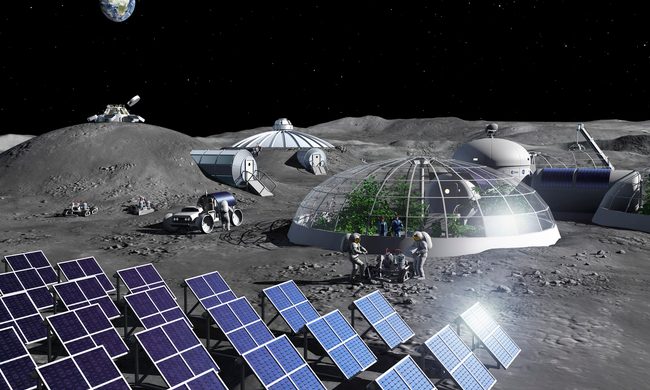
Artist impression of activities in a Moon Base.

For decades, humanity has looked up at the Moon and wondered what it would be like to live on it. Think sprawling cities, factories, research centers, and permanent human settlements. Unfortunately, there is one fairly fundamental problem with that vision.

A new study published in Frontiers in Space Technologies argues that even the Moon's potentially enormous reserves of frozen water may be nowhere near enough to support city-sized populations sustainably. Researchers Martin Elvis and Jonathan McDowell estimate that the permanently shadowed regions near the lunar poles could contain roughly one billion tons of water. It sounds like an extraordinary amount until you put a million thirsty humans next to it.

Read more