Before wearables came onto the scene, only Olympic athletes had access to real-time analysis of their workouts. Now, your average Joe can strap on a fitness band or pop on a smartwatch and get a breakdown of his entire workout. There’s also an entire industry based on high-tech clothing that can measure your fitness activity. Sensoria is one company that focuses exclusively on fitness gear that uses tech to help people improve their health and reach their fitness goals.
“You’re not wearing anything else, but whatever you wanted to wear that day — just a t-shirt, a pair of socks, and a pair of shoes.”
Previously, Sensoria introduced a high-tech sports shirt and sports bra for runners who want to monitor their heart rate and other metrics during their workouts. Now, the company is moving on to another part of the body: your feet.
Anyone who’s ever been a runner knows just how easy it is to get injured, or simply run with bad form. Sensoria’s Fitness Socks and the accompanying anklet aim to solve this problem. The socks feature high-tech pressure sensors that are woven into the fabric, so you can’t feel them at all. They look like a normal pair of ankle socks, at first glance. Vigano told us that the socks are rated to go through 60 wash cycles before they wear out, but the company is working to improve that number. Nonetheless, since the $200 Sensoria Fitness Socks Bundle comes with four pairs of socks, the anklet, and the charger, Vigano thinks its well worth it. Also, once your socks have worn out, you can simply buy a three-pack for $60.
The anklet looks like a small, crescent-shaped band. It is made of flexible rubber and curves along with your ankle. Only the central part where the battery and sensors are located is rigid. The one we saw was an early prototype, though, so it will probably look more polished and thin when Sensoria officially launches the product at CES 2015. The anklet connects to the socks via conductive metal snaps and lights up when you first put it on. There is no power button — you just start moving to activate the sensors. The Bluetooth-enabled anklet sends data from its own sensors, as well as those from the socks, to the Sensoria Fitness app on your smartphone.
You can tell the app how you want to run, whether you aim to heel strike or land on the ball of your feet, a distance goal, and your ideal cadence. The app is a real-time analysis tool, so it can even give you suggestions. For example, if you start to drop your cadence or keep on heel striking when you meant to land softly on the balls of your feet, the app can tell you how to fix it and get back on track. You can listen to your music during your run, and the coach will only interrupt your playlist if you want help.
The main page of the app shows a diagram of your feet, which lights up with different colors, based on the data it receives from the sensors. If you’re hitting the ground with your heel, the point of greatest pressure turns yellow and the surrounding areas go orange, pink, and red. The parts of your feet that aren’t exerting pressure on the ground will appear blue or purple. You can see how the colors change based on your foot’s position in real time.
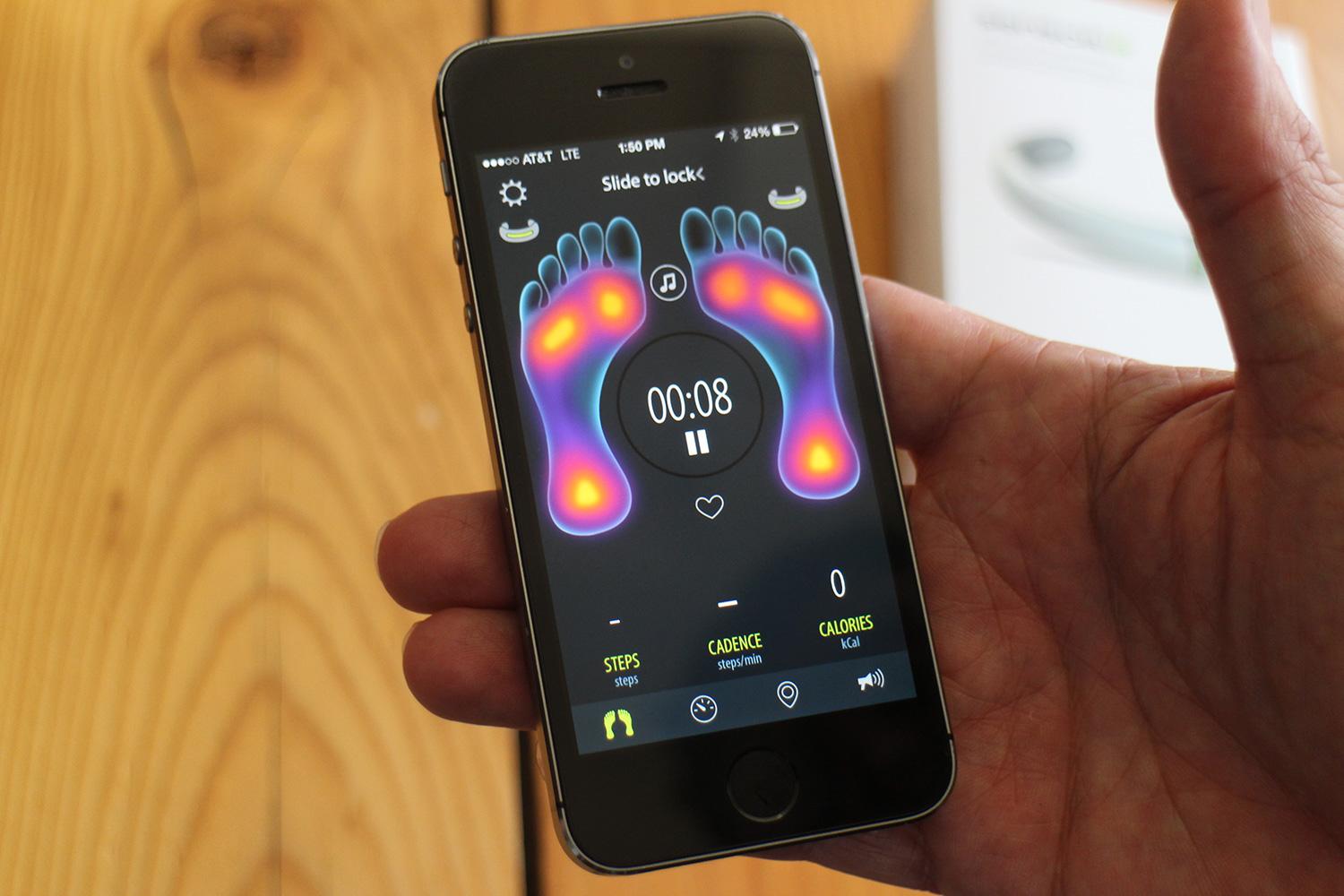
Additionally, the app collects altitude and GPS data from your smartphone and accelerometer info from the anklet. When you wear the anklet on one ankle, you only get data from that foot, but you can pair a second anklet with the app, if you need data from both feet simultaneously. However, Vigano says that one anklet still works for cadence, and you can switch back and forth, during the day if you want data from both feet. The app can pair with other smart fitness wear, too, including Sensoria’s own sports shirt and sports bra, to give you heart-rate data and more.
The app also lets you choose between 7,000 different running shoes in Running Shoe Closet, to help you estimate the mileage of your shoes, so you know when to replace them. Later, when you’re done running, you can see all your data on the Sensoria Fitness app on your smartphone or tablet. You’ll be able to look back at your run and analyze your performance mile after mile, as well as compare it to previous workouts to see your progress. Vigano says it’s almost like looking at an instant replay.
Sensoria says the anklet’s built-in battery can last up to seven hours, so you can either wear it during the entire day or just during your daily hour-long run. If you only use it for an hour each day, it should last seven days before it needs a charge.
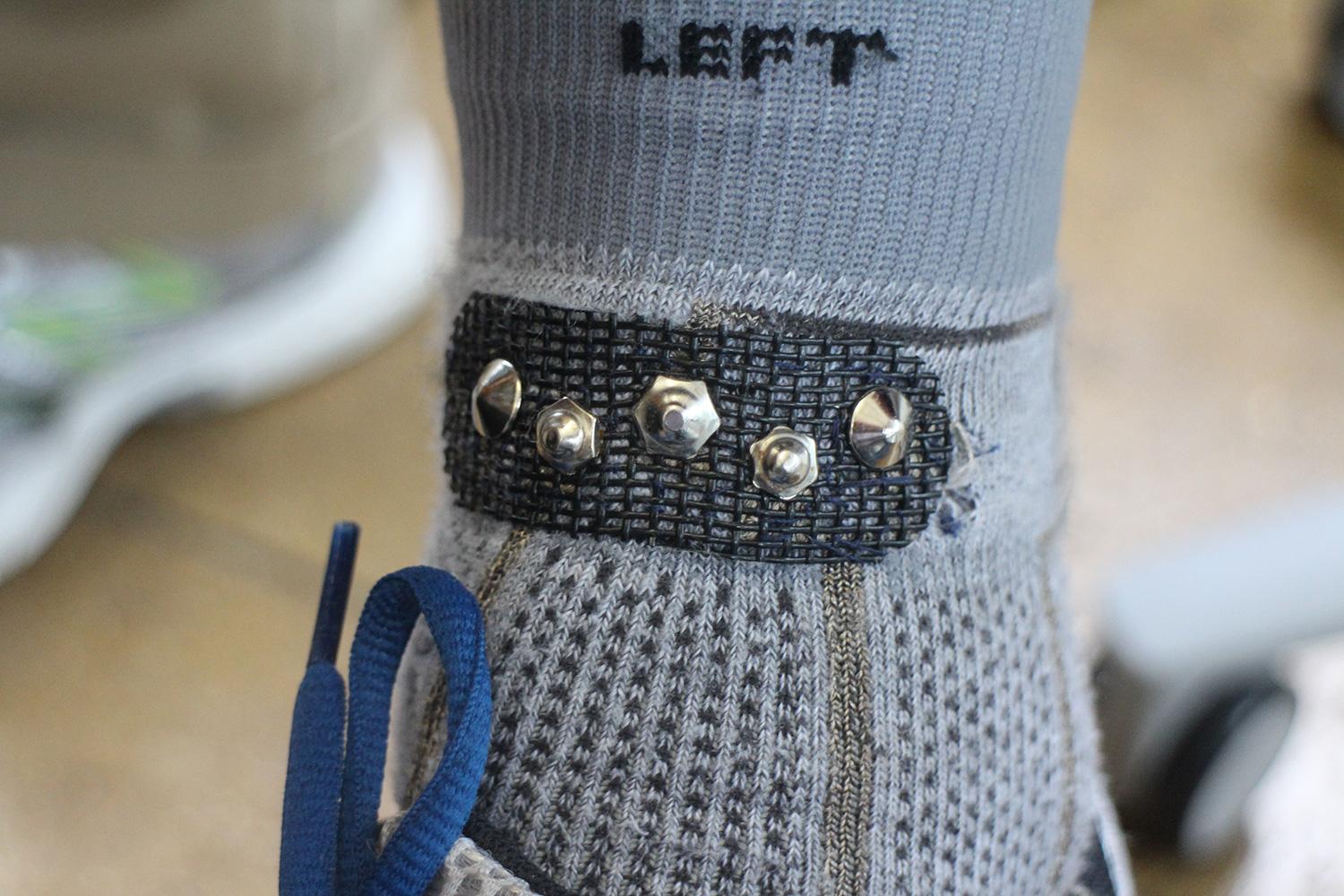
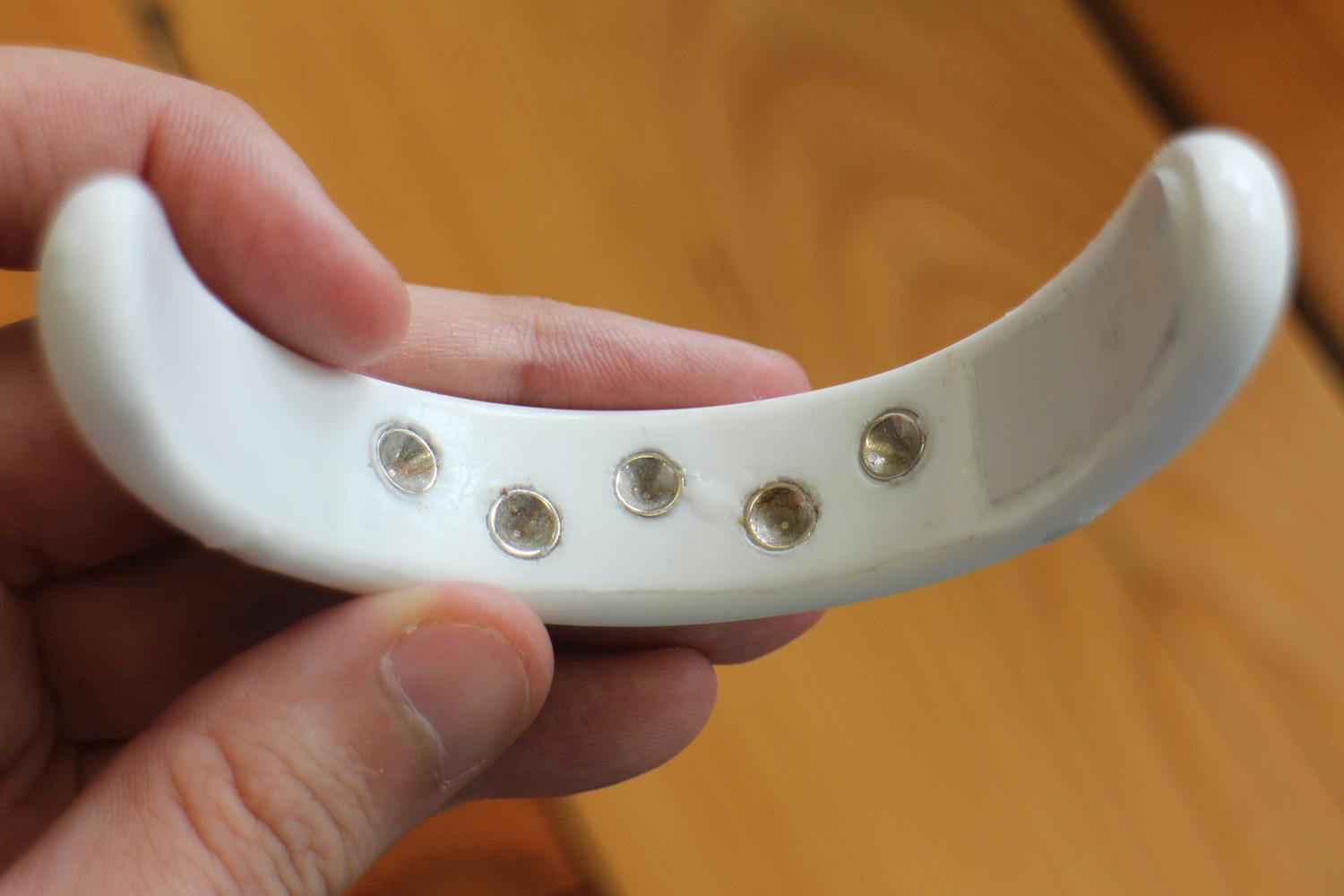

However, the best part about Sensoria’s wearable tech is that it’s completely inobtrusive. You tuck the anklet under the sock and it’s nearly invisible. The shirt and sports bra hide the tech even better. That’s just part of Sensoria’s mission, says Vigano.
“You’re not wearing anything else, but whatever you wanted to wear that day — just a t-shirt, a pair of socks, and a pair of shoes,” Vigano told us. “We want to take away stuff, not add stuff. At some point the electronics are going to be woven into whatever we wear.”