  1. Home
  2. Cars
  3. News

Elon Musk hints that Tesla’s new Superchargers might be insanely fast

Add as a preferred source on Google

Tesla’s new Superchargers might be so insanely fast that topping off a tank of gas will look slow in comparison.

In a Twitter exchange, Tesla CEO Elon Musk teased that the new Supercharger V3 will be coming soon, and that it will make the old V2 Superchargers look like child’s play.

Recommended Videos

A mere 350 kW … what are you referring to, a children's toy?

— Elon Musk (@elonmusk) December 24, 2016

One of the things holding back electric car adoption has been “range anxiety.” It’s the very real feeling a driver gets when they know their car is going to run out of power soon without a charging point nearby. Not only that, knowing that an electric car will take 40 minutes to get an 80 percent charge has also made making the jump from gasoline a challenge. It’s the main reason why the Toyota Prius and the Chevrolet Volt (among others) have been slow to make the shift to all-electric.

It seems that the charging problem has definitely been on the minds of Tesla engineers. If Musk’s tweet is to be believed, that means consumers are about to see a major jump in charging technology.

The current Superchargers max out at 150kW, but when Musk was asked about 350kW, he scoffed.

What Musk is alluding to isn’t some unheard-of shift in charging technology. In Geneva, the government is currently working on a “flash-charging” network that will potentially charge busses in seconds. It will give busses a blast of energy at 600kW, completely usurping Tesla’s current supercharging rate. If Tesla is able to deploy similar technology for its supercharging network, it could mean that charging a car will take seconds, compared to the minutes it takes to top off a tank of gas.

With the Tesla Model 3 set to hit consumers sometime in 2017, ensuring that Supercharging stations aren’t completely packed with drivers will be an absolute imperative.

Imad Khan
Imad has been a gamer all his life. He started blogging about games in college and quickly started moving up to various…
Volvo is rolling out Apple Music to over 2 million cars with a simple OTA update
Your Volvo may soon get Apple Music without needing CarPlay
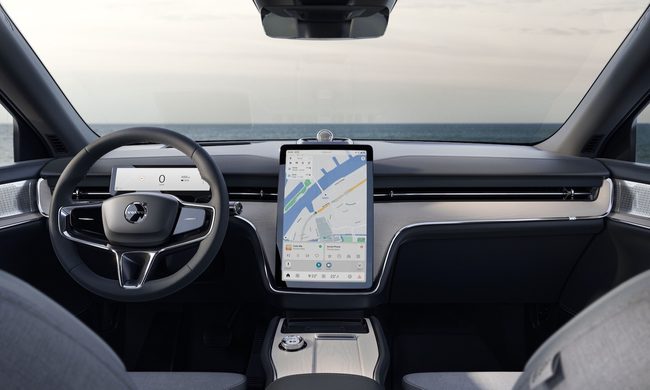
Interior view of the 2024 Volvo EX90.

The line between your smartphone and your car continues to blur. Volvo has announced that it is rolling out an over-the-air software update that brings Apple Music directly to the infotainment systems of more than 2 million vehicles worldwide. Instead of relying on Apple CarPlay or plugging in an iPhone, eligible drivers will be able to stream music natively from their car's built-in system, making Apple Music another integrated feature of Volvo's software experience.

The update is arriving for a wide range of Volvo models, including the EX90, ES90, XC90, S90, V90, XC60, S60, V60, XC40, EX40 and EC40, covering model year 2020 onwards. Availability, however, may vary depending on the vehicle.

Read more
Chery’s latest EV packs flagship tech for the price of a base Tesla, but you can’t buy it
Here's everything packed into Exeed's 2027 Exlantix ES, from its 27-sensor autonomous driving suite to its 860 km range, all starting under $31,000.
Car, Transportation, Vehicle

Chery's premium arm just dropped a sedan that makes you wonder why American EVs cost twice as much for half the tech.

Exeed's 2027 Exlantix ES ships with a driver-assist system called Falcon 700. It is built around an Nvidia Orin-Y chip and a genuinely stacked sensor suite.

Read more
A new AI model wants self-driving cars to think before they swerve
Forget guessing games, this self-driving AI actually shows its work.
Self driving car

Self-driving cars have gotten pretty good at driving. The harder problem is teaching them to drive safely in situations nobody planned for. We have heard horror stories of self-driving cars, behaving erratically in emergency situations, often times delaying first responders from reaching the scene.

A team at Seoul National University, led by professor Jun Won Choi from the Department of Electrical and Computer Engineering, thinks they have cracked part of that puzzle with a new AI model called SafeDrive. The research was recently selected as a highlight paper at CVPR 2026, a distinction that goes only to roughly 3% of all submissions.

Read more