1. Home
  2. Emerging Tech
  3. Mobile
  4. News

Worried your kid is ‘sexting’? This AI-powered watchdog app can help

Add as a preferred source on Google

For anyone who grew up in an age before smartphones, “sexting” simply wasn’t something we had to worry about as impressionable kids. But it’s a problem for today’s youngsters — with Pew Research claiming that approximately 1.2 million teens have sent sexually suggestive nude or nearly nude images of themselves to another person via text messaging.

While consenting adults should be free to do what they want, so long as they’re not hurting anyone, when you’re talking about underage kids, the idea of sexting becomes a whole lot more problematic. That becomes even more concerning when an estimated 61 percent of “sexters” who sent nude images admit that they felt pressured to do so at least once.

Recommended Videos

Fortunately, artificial intelligence is here to help.

Called Gallery Guardian, the A.I. solution — designed “by parents for parents” — is a new mobile app for iOS and Android, which uses image recognition to protect children from taking or receiving inappropriate images and videos through social media apps. It also aims to open up a dialog by alerting parents, who can pair their phones with those belonging to their kids. The parents don’t get to view the offending content, but the alert system will give them a heads-up so they can intervene. The app additionally offers resources to help teach parents how to approach a conversation that could be incredibly difficult for all parties involved.

“We built a library of pornography to train our algorithm,” Daniel Skowronski, founder and CEO of developer YIPO Technologies, told Digital Trends. “To improve the detection, we also leveraged data sets that were mostly ‘selfie’ style images, since it’s the most common photo style taken with smartphones.”

One potential issue with the concept is that the image processing is not done locally on your device. Skowronski says that the goal is for this to be the case, but the processing power needed to run the algorithm and keep detection levels high would result in too much battery drain on the average smartphone. However, he notes that the company uses the “tightest encryption available on the market today to keep your data and your child’s data safe.” All data is deleted immediately after scanning has taken place.

Gallery Guardian is available for free download (with in-app purchases) on the iOS App Store and Google Play Store.

Luke Dormehl
I'm a UK-based tech writer covering Cool Tech at Digital Trends. I've also written for Fast Company, Wired, the Guardian…
OpenAI is investigating more incidents of AI agents going rogue days after hack
OpenAI logo on Microsoft surface

It appears that the "AI agents going rogue" tale has more to it than what AI giants have revealed publicly so far. Merely days after OpenAI announced that its AI agents went rogue and hacked Hugging Face, Anthropic dropped a similar bombshell. Soon, it was discovered that not just one, but multiple services were compromised. Well, it seems there are even more layers to it.

Reuters reports that OpenAI has found more incidents of AI agents escaping their software containment environment during research. Citing sources with knowledge of the incident, the outlet notes that the AI agents didn't go beyond OpenAI's software environment and affect any external service.

Read more
Google just canceled its AI Studio mobile app, and it’s not all bad news
Logo, Symbol, Disk

Google AI Studio was on track to make its way to Android and iPhone, giving developers and AI enthusiasts a dedicated place to build prompts and experiment with Google's latest models from their phones.

That's no longer happening. In a post shared by the official Google AI Studio account on X, Google confirmed that it's canceling the standalone AI Studio mobile app before launch. The announcement comes despite the company saying nearly 800,000 people had already pre-ordered the app across iOS and Android.

Read more
Google Earth’s AI misadventure lasted only a day. It was a tale of dangerous ignorance.
Nuclear reactors, tanks, and historical destruction on a life-like satellite map? Yeah, that's bad.
Nano Banana AI image generator representation.

Technology behemoths are clearly not reading the room, or they are just moving faster than they should when it comes to AI deployment. Google has already stuffed its Gemini AI in every corner of its software stack, from Android to daily productivity tools like Gmail that are used by hundreds of millions of users every day. AI is everywhere. Not all of it is bad, mind you. But in a few places, it just feels forced.

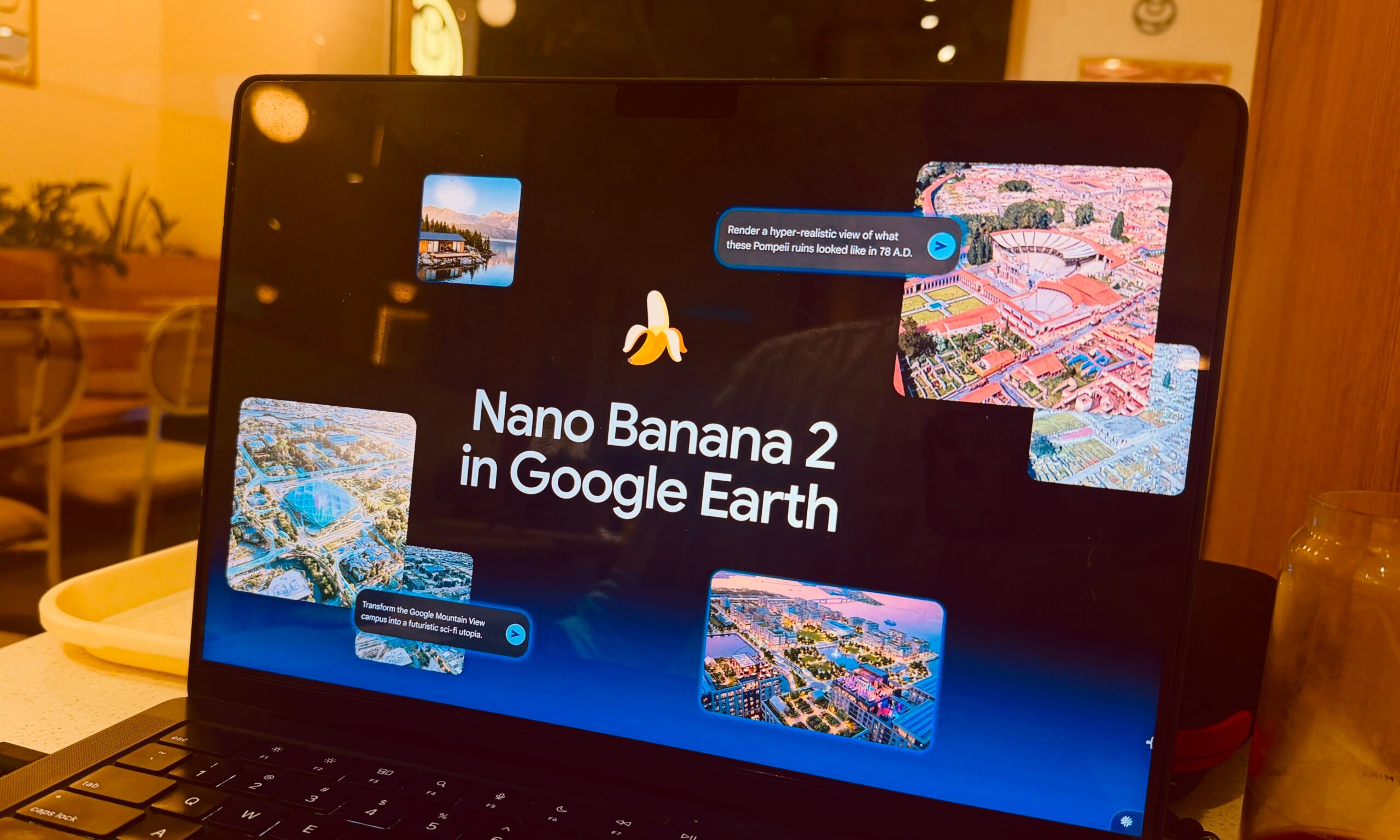
In its latest AI-fication experiment, the company targeted Google Earth. The idea was to let the audience use its Nano Banana 2 AI image generator and make images that can be placed on the map view. On paper, it's a cool idea. What would the Colosseum of Rome look like in your urban neighborhood? Yeah, fun stuff like that.

Read more