Ah, the bidet. No longer the mainstay of European bathrooms, they’ve made their way into our homes in the U.S. — and we’re so glad they did! The toilet paper shortage at the start of the pandemic may have prompted bidet adoption in 2020, but sales of this item had been on the rise prior to that.
Even before the pandemic, bidets were making inroads in the U.S. In 2019, Coherent Market Insights released findings valuing the global bidet seat market at $2.11 billion in 2018, and it projected a compound annual growth rate (CAGR) of 5.1% from 2019 to 2027. The study also found that North America will account for the largest market share during that period.
The traditional bidet was a luxury upgrade that could cost more than $4,000. People also needed enough space and a separate toilet to enjoy one in their home. Now, many options attach to an existing toilet and a slew of manufacturers offer solutions that are essentially plug-and-play. DIYers can install them with ease, and there are instructional videos if necessary. In our experience, a modern-day bidet install takes about 30 minutes. And installing the seat without the assistance of a plumber is a great feeling.
Thanks, TP hoarders, for showing us the light
In early 2020, the effects of the pandemic-induced toilet paper shortage hit home — literally. We found ourselves limiting the number of squares we could use to finish our business in the bathroom just to make sure we had enough. Stores limited the number of rolls one customer could buy at a time. On occasion, we had to trade beer for toilet paper — the horror. All this helped create a world where the bidet could shine.
Bidets have tons of benefits. They’re better for your derrière; the gentle cleaning a bidet provides is less abrasive and healthier to use than toilet paper. Speaking of paper, bidets are better for the environment. According to Bidet.org, creating a toilet paper roll takes between 12 and 37 gallons of water, while a bidet only uses one-eighth of a gallon of water to clean and flush. When using one, the cleanliness you feel is amazing. If there were a spa treatment for your bum, this would be it.
Bidets are catching on
According to a 2020 Houzz report, high-tech toilets are holding steady as a bathroom upgrade at 34% in both 2020 and 2019 (compared with 28% in 2018). The study also found that 17% of respondents (up 4 percentage points from 2019) performing master bathroom renovations added a bathroom seat with a bidet feature.
If you’re ready to hop on a bidet, there are many options. Of course, there’s the traditional stand-alone bidet, a spray handle version, a toilet seat with built-in bidet features, and an attachment that affixes to the toilet seat. There are electric and nonelectric models. And some, like the Fluidmaster Soft Spa 9500 seat, come with a remote control that manages everything from the type of cleaning you prefer to drying and water temperature. There’s even a night light. Honestly, I never thought the first remote control I’d have in a bathroom would be to control the toilet, but it definitely elevates the powder room experience.
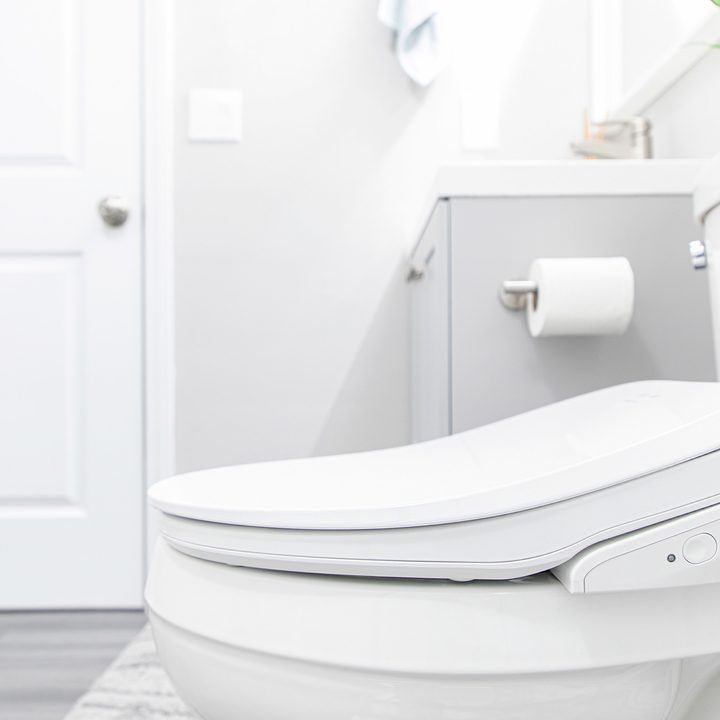
The bidet market shows no signs of slowing down. A Market Research Future report projects a global bidet market size of 2.51 billion (U.S.) by 2026 at a CAGR of 5.39% from 2020 to 2026.
We test lots of bidets, so if you’re looking for a model that excels at a particular feature, check out our list of the best bidets. If you’re interested in a bidet deal, we’ve rounded up options from simple to high-end that start at less than $50. Before investing in a model, if it’s electric, you’ll want to make sure you have a wall plug nearby. If you’re getting a toilet seat replacement, check to see if you have an elongated or circular seat. Regardless of the type of bidet you invest in, we’re pretty sure you’ll be transforming your bathroom into a royal throne room.