1. Home
  2. Computing
  3. Trash
  4. News

This change to Alt + Tab in Windows 11 is making people very happy

Add as a preferred source on Google

Microsoft is testing a key change to the multitasking system in Windows 11 that many people are likely to appreciate. In the latest Windows Insider Dev Channel release, the company is tweaking the Alt + Tab experience so that it is no longer full-screen.

According to Microsoft, this change is currently an experiment only with select users. It changes things up so that when you want to switch between one of your open apps with Alt + Tab and go to another app, you’ll no longer get a full-screen blurred effect.
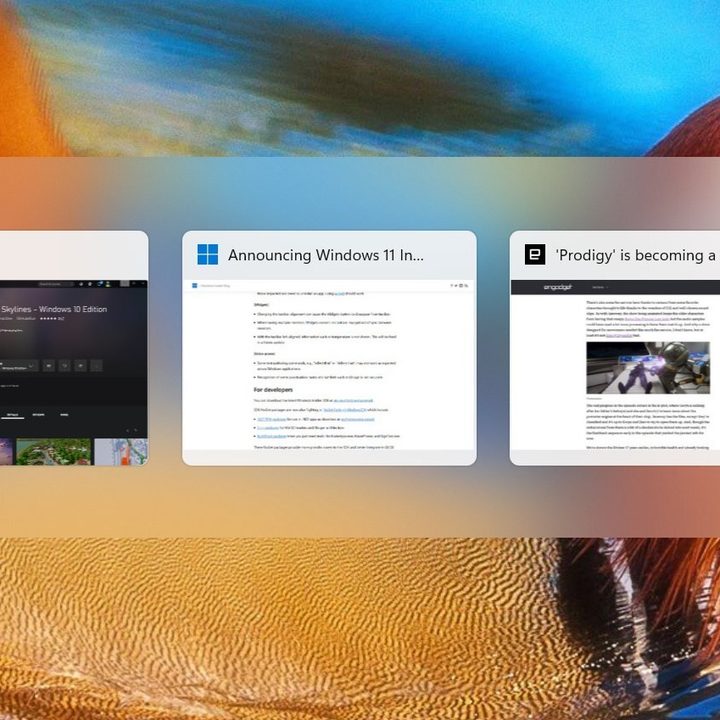
The Windows 11 Multitasking Experience.
Brandon LeBlanc/ Microsoft

This effect has been distracting for some people, as it could hide an open app and content being worked on. Based on feedback, the new experience is a lot cleaner. It keeps the background in focus and shows all open apps on top of a thin strip bar.

Microsoft is looking for feedback on the experience, and so far, the reaction has been very positive. Windows fans appreciate the care put into the feature. Other commenters indicate that even though they’re not included in the test, the change is much preferred over the existing layout.

Because Windows 11 Dev Channel builds are not linked to a specific release, this experience might not make it to the next version of Windows 11, which should be coming at the end of this year. It is, though, a high possibility. Microsoft has tested a lot of Windows 11 improvements in the Dev Channel since the operating system first launched.

The list includes a new voice access experience, new ways to set a default web browser, and an improved Start Menu with more ways to change recommendations. Some other changes like an improved media player and new editing controls in the Photos app also have also rolled out past the Dev channel and to all Windows 11 users.

According to rumors, Microsoft is looking to focus on cleaning up the dark mode in Windows 11, as well as opening up the Windows 11 widgets feature so that third-party developers can integrate with their own cards. Paired with partner Qualcomm, even Windows ARM devices are said to be a focus for Microsoft this year, perhaps as a response to Apple’s M1 MacBooks and devices.

Arif Bacchus
Arif Bacchus is a native New Yorker and a fan of all things technology. Arif works as a freelance writer at Digital Trends…
I let Radial menu take over my Mac, and I’m never going back
One mouse jiggle, endless shortcuts. My Mac has never felt this fast.
Radial app running on Mac

I have been testing Radial for the past week, and it's quickly become one of those apps I didn’t know how I could live without. It's a radial menu for macOS that puts your shortcuts, scripts, and automations right where your cursor is, so you never have to go hunting through menus to find what you need.

The app just received its 5.0 update, adding AI actions powered by Claude, window layouts, variables, a redesigned settings interface, a new Atmosphere background effect, and a squircle menu shape. I got to try most of these, and here's what I found.

Read more
Android desktop mode made me miss my laptop in record time
I tried writing and publishing from Google’s phone-to-monitor setup, and the future of mobile computing immediately started sweating.
Computer, Electronics, Laptop

Android 17 desktop mode has a very simple pitch. Plug your phone into a monitor, add a keyboard and mouse, and watch the slab in your pocket pretend to be a computer. I wanted to give that pitch a fair shot, so I tried using it for an actual workday instead of a cute demo.

The goal was boring on purpose: write an article, edit it, build the page in WordPress, upload whatever needed uploading, and publish the thing without running back to my laptop like a coward.

Read more
As AI turbocharges digital abuse, UK agencies urge parents to limit who sees kids’ photos online
The National Crime Agency and Internet Watch Foundation are asking parents to tighten privacy settings as AI-generated abuse material rises.
Social Media

Parents who post pictures of their kids online are being told to rethink the habit. The UK's National Crime Agency and the Internet Watch Foundation have issued new guidance urging families to lock down their social media accounts, warning that publicly shared photos are increasingly being pulled and altered by AI tools to create child sexual abuse material.

The two organizations say most parents have no idea this is happening. Criminals no longer need to contact a child directly to generate such material. They can scrape an ordinary photo and run it through widely available nudify apps.

Read more