Building an entire city from scratch is a long process, even in a game like Cities Skylines 2. You need to make slow, gradual improvements and expansions to make sure you don’t spread yourself too thin and go into debt. So long as you can make it over the initial hurdle, you will start building a steady stream of XP and completing Milestones. The one mechanic that can give your city a substantial boost is the different development nodes you unlock using Development Points. These nodes offer unique upgrades to specific aspects of your city and are further broken down into somewhat linear skill trees. All told, there is an overwhelming number of nodes to choose from. If the stress of simply keeping up with building a functional and happy society is already pushing you to the limit, we’ll help smooth over the process by telling you the best development nodes you need to unlock in Cities Skylines 2.
Best development nodes
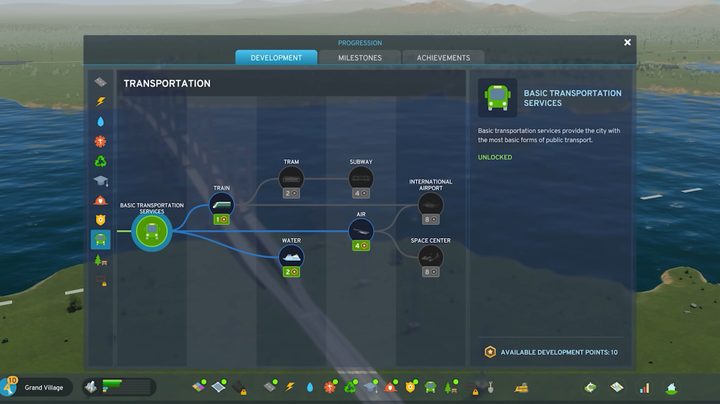
Development nodes are rewarded in stacks by reaching each of the 20 Milestone levels in Cities Skylines 2. Once you have some points, you can distribute them as you see fit among the 11 categories in the Progression menu.
Roads
Roads are like the skeleton of your city; without a strong road structure, the entire thing will fall apart. It almost feels cruel that the advanced roads services node isn’t a default option, but that just means you need to get it ASAP. This node allows you to manage traffic with basic functions like traffic lights, road signs, and crosswalks. You do need to place all of these down yourself, and while you can get by for a little while in the early game before your population gets too big, traffic will become a nightmare and productivity will slow to a crawl if you ignore it.
Soon after getting the flow of traffic going, invest in the parking areas upgrade. Again, this is one of those essential options Cities Skylines 2 withholds from you. Until you purchase this node and create designated parking lots, your citizens will have no choice but to park on the street which can (and will) cause major congestion very quickly.
The final Road node you should keep an eye on for the mid to late game is underground parking. Once your city is really bustling and space is becoming a premium, converting your normal parking lots into underground ones will free up more space to build without losing that precious parking zone.
Transportation
As vital as roads are, offering alternative and efficient ways for your citizens to move to and from hubs will keep your economy ticking like clockwork. The most efficient option is the subway system since it doesn’t take up any space above ground, but isn’t needed until later in the game. Early on, go for the tram over the bus since it can carry the most passengers of any transit option and both use the same roads anyway.
The other use for transportation is bringing people into your city and exporting your products for more income. On most maps, a train is the best option to start with, but you will eventually want to invest in the air and water (if applicable) methods as well. As a late-game goal, keep your eye on the space center upgrade. This costs a ton of cash not only to make but maintain. However, it comes with a ton of benefits to your economy, such as increasing your attractiveness, interest in higher education for your population, greater electronics sales, and recreational value.
Electricity
How you upgrade your power in Cities Skylines 2 will vary based on your ultimate goals. If you simply want to produce energy fast at a low cost, then the coal power plant will serve you best, while wind farms will obviously make more sense if you want to keep pollution down. If you go for the green route, which is almost universally the best long-term option, you will want to get the emergency battery station alongside your turbines to have a backup for the inevitable times when the wind just isn’t blowing. Once you’ve built up more points and capital, add in the solar plant to try and cover all your green energy bases.
Whichever way you start, the end-game goal will always be nuclear power plants. These are almost prohibitively expensive, but not only produce the most energy of any source but also do so without creating pollution.
Health care and deathcare
People will get sick and injured. There’s no avoiding it. While you could get the cheaper clinics, it will be a better investment to wait a bit longer if needed to go straight to hospitals. These offer way more utility and services, plus have far greater upgrade potential. It would also be worth considering adding in either the disease control center and/or health research institute. They aren’t cheap, but alongside their individual bonuses also bring down the chances of any diseases spreading through your city.
When it comes to death, a single cemetery will be plenty for most of the game. Crematoriums are appealing because they take less space but do add some pollution, and cemeteries, morbidly enough, can actually become a tourist attraction and increase your city’s value.
Police and administration
If you place it in a centralized location, you can forgo building multiple police stations by just having a single headquarters that covers the majority of your city. Eventually, you will need a second as you grow, but by then you will have plenty of funds to add one. On the other hand, you will need to invest in a prison alongside the headquarters. It isn’t clear, but jail space isn’t the same as prison space, and unless you have an actual prison you won’t have anywhere to detain convicted criminals.