1. Home
  2. Cars
  3. Emerging Tech
  4. News

EVs top gas cars in German reliability report — but one weak spot won’t quit

Add as a preferred source on Google
future electric cars 2021 volkswagen id4 official 32
Image used with permission by copyright holder

Electric vehicles are quietly crushing old stereotypes about being delicate or unreliable, and the data now backs it up in a big way. According to Germany’s ADAC — Europe’s largest roadside assistance provider — EVs are actually more reliable than their internal combustion engine (ICE) counterparts. And this isn’t just a small study — it’s based on a staggering 3.6 million breakdowns in 2024 alone.

For cars registered between 2020 and 2022, EVs averaged just 4.2 breakdowns per 1,000 vehicles, while ICE cars saw more than double that, at 10.4 per 1,000. Even with more EVs hitting the road, they only accounted for 1.2% of total breakdowns — a big win for the battery-powered crowd.

Recommended Videos

Among standout performers, some cars delivered exceptionally low breakdown rates. The Audi A4 clocked in at just 0.4 breakdowns per 1,000 vehicles for 2022 models, with Tesla’s Model 3 right behind at 0.5. The Volkswagen ID.4, another popular EV, also impressed with a rate of 1.0 – as did the Mitsubishi Eclipse Cross at 1.3. On the flip side, there were some major outliers: the Hyundai Ioniq 5 showed a surprisingly high 22.4 breakdowns per 1,000 vehicles for its 2022 models, while the hybrid Toyota RAV4 posted 18.4.

Interestingly, the most common issue for both EVs and ICE vehicles was exactly the same: the humble 12-volt battery. Despite all the futuristic tech in EVs, it’s this old-school component that causes 50% of all EV breakdowns, and 45% for gas-powered cars. Meanwhile, EVs shine in categories like engine management and electrical systems — areas where traditional engines are more complex and failure-prone.

But EVs aren’t completely flawless. They had a slightly higher rate of tire-related issues — 1.3 breakdowns per 1,000 vehicles compared to 0.9 for ICE cars. That could be due to their heavier weight and high torque, which can accelerate tire wear. Still, this trend is fading in newer EVs as tire tech and vehicle calibration improve.

Now, zooming out beyond Germany: a 2024 Consumer Reports study in the U.S. painted a different picture. It found that EVs, especially newer models, had more reliability issues than gas cars, citing tech glitches and inconsistent build quality. But it’s worth noting that the American data focused more on owner-reported problems, not just roadside breakdowns.

So, while the long-term story is still developing, especially for older EVs, Germany’s data suggests that when it comes to simply keeping you on the road, EVs are pulling ahead — quietly, efficiently, and with far fewer breakdowns than you might expect.

Nick Godt
Former Freelance reporter
Nick Godt has covered global business news on three continents for over 25 years.
Two Indian automakers just beat Tesla at the one thing you’d expect it to own
Two Indian automakers, Tata Motors and Mahindra, just topped a global EV efficiency ranking ahead of Tesla and BYD.
Car, Suv, Transportation

I'll admit, Tesla topping an efficiency ranking felt like a foregone conclusion until I actually saw the numbers. Turns out two Indian automakers just embarrassed both Tesla and the world's biggest EV maker at their own game. 

The first time I read the report, I couldn’t believe it, and I’ve been following the Indian automobile industry for a couple of years now.  

Read more
BYD’s new Racco is Japan’s first electric kei car with over 300 km range
The Racco also undercuts Nissan's Sakura on price before taxes and incentives, which packing in features rarely seen in the kei car segment.
BYD Racco

BYD has entered the Japanese kei car market with the Racco, an electric car built specifically for the country's compact car segment. Its top trim delivers 320 km of range, making it the first compact electric car in the market to pass 300 km, according to ITHome.

Kei cars are a Japanese vehicle class with strict size and power limits, and the segment has long been dominated by domestic automakers such as Honda, Nissan, Suzuki, and Daihatsu. The Racco is BYD's first attempt to compete in that space.

Read more
Xiaomi spills SkyNomad EREV details ahead of July 30 debut and it rhymes with Kunlun
Xiaomi made a sedan first. Now it's coming for your family SUV too.
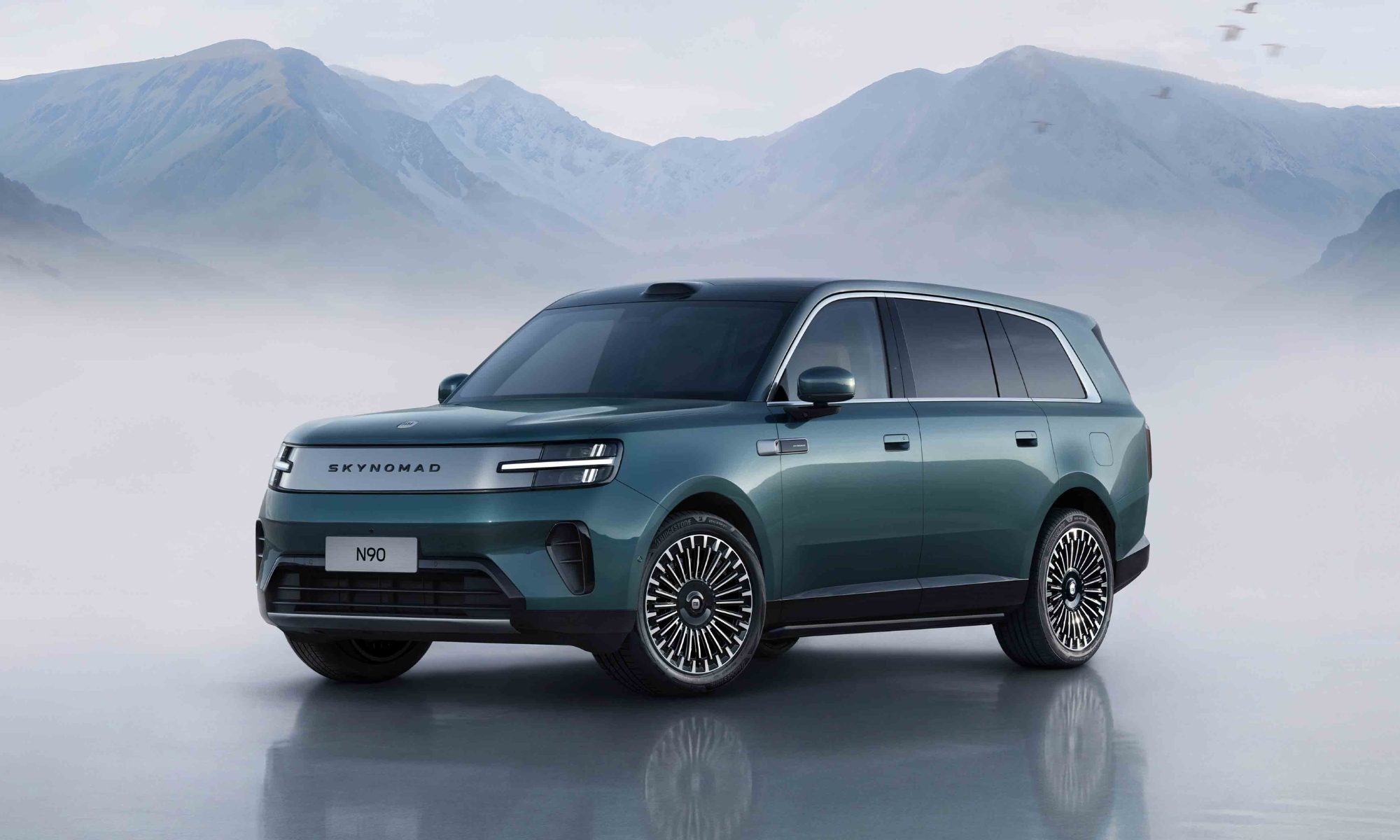
Skynomad

When Xiaomi entered the automotive industry, it did so with the all-electric SU7 sedan before expanding into SUVs with the YU7. Its next move is taking the company into one of China's fastest-growing vehicle segments: extended-range electric SUVs (EREVs). Ahead of a technical presentation on July 30, Xiaomi has shared fresh details about its upcoming SkyNomad lineup via its Weibo channel, first spotted by CarNewsChina, revealing the new Kunlun range extender, fuel economy figures and testing progress.

At first glance, the SkyNomad N90's upright silhouette, squared-off proportions and premium detailing inevitably draw comparisons with the Range Rover. But mechanically, Xiaomi appears to be targeting a very different group of rivals. The company is entering a market currently dominated by Chinese brands such as Li Auto and Huawei-backed Aito, both of which have built successful businesses around extended-range SUVs that combine electric driving with the convenience of a gasoline-powered range extender.

Read more