1. Home
  2. Computing
  3. Legacy Archives

$25 Raspberry Pi now available in Europe; rest of the world to follow

Add as a preferred source on Google
Image used with permission by copyright holder

When Raspberry Pi was announced, it was touted as a tiny $25 computer made to encourage younger generations to learn how to code. The model that reached the market first (the same one Google recently donated 15,000 of to UK schools) was a relatively souped up version. While still very affordable, this version costs $10 more. Today, the Raspberry Pi Foundation announced in a blog post that the $25 Raspberry Pi Model A is finally available, but only in Europe. The rest of the of world will have to wait a bit longer to get it. 

“We are very, very pleased to finally be able to offer you a computer for $25,” the foundation wrote in the blog post. “It’s what we said we’d do all along, and we can’t wait to see what you do with it.” Model A is an even more basic mini-computer compared to the $35 Model B. It has one USB port instead of two, no Ethernet port, and only has 256MB of RAM instead of 512MB. Despite the stripped-down specs, Model A uses a third of the power Model B uses, so it has a number of potential applications. It can be used for projects requiring low-power computers ran by solar power or batteries, such as robots, remote sensors, and Wi-Fi repeaters. 

Recommended Videos

You could order and pay for Model A right now if you want to, but the Foundation warns that if you’re outside Europe, you might suffer from delays because it still has  paperwork to fix to be able to ship out the mini-computers. The Raspberry Pi Foundation promises that it’s working to lift this restriction “very soon” so non-Europeans can get their hands on Model A Pis, too. 

Mariella Moon
Mariella loves working on both helpful and awe-inspiring science and technology stories. When she's not at her desk writing…
Amazon wants to design in-house chips for Kindles, Fire TV, and Echo speakers
Apple did it first. Amazon is doing it now, starting with 40 million chips a year and a partner most people have never heard of.
Amazon Kindle Scribe dark mode featured image.

Apple's decision to design its own chips reshaped the consumer electronics industry. Amazon may be about to make the same call, just about two decades later.

Supply chain analyst Ming-Chi Kuo reports that Amazon is preparing to shift away from externally sourced processors for its consumer electronics lineup, marking what he describes as the company's first major processor procurement change in 20 years. The transition is expected to begin in 2027.

Read more
AI wants to summarize it all. TripAdvisor’s misleading reviews show AI will also ruin your travel plans
Spotless, friendly, and totally wrong. AI summaries are hiding the reviews that actually matter.
Tripadvisor logo on MacBook

Planning a trip is stressful enough without wondering if the glowing hotel summary you just read was written by an AI that skipped the scary parts. As it turns out, that might be exactly what's happening on TripAdvisor.

According to an investigation by consumer group Which?, reported by the Guardian, TripAdvisor's AI-generated review summaries are smoothing over serious guest complaints, and in some cases, downright dangerous ones.

Read more
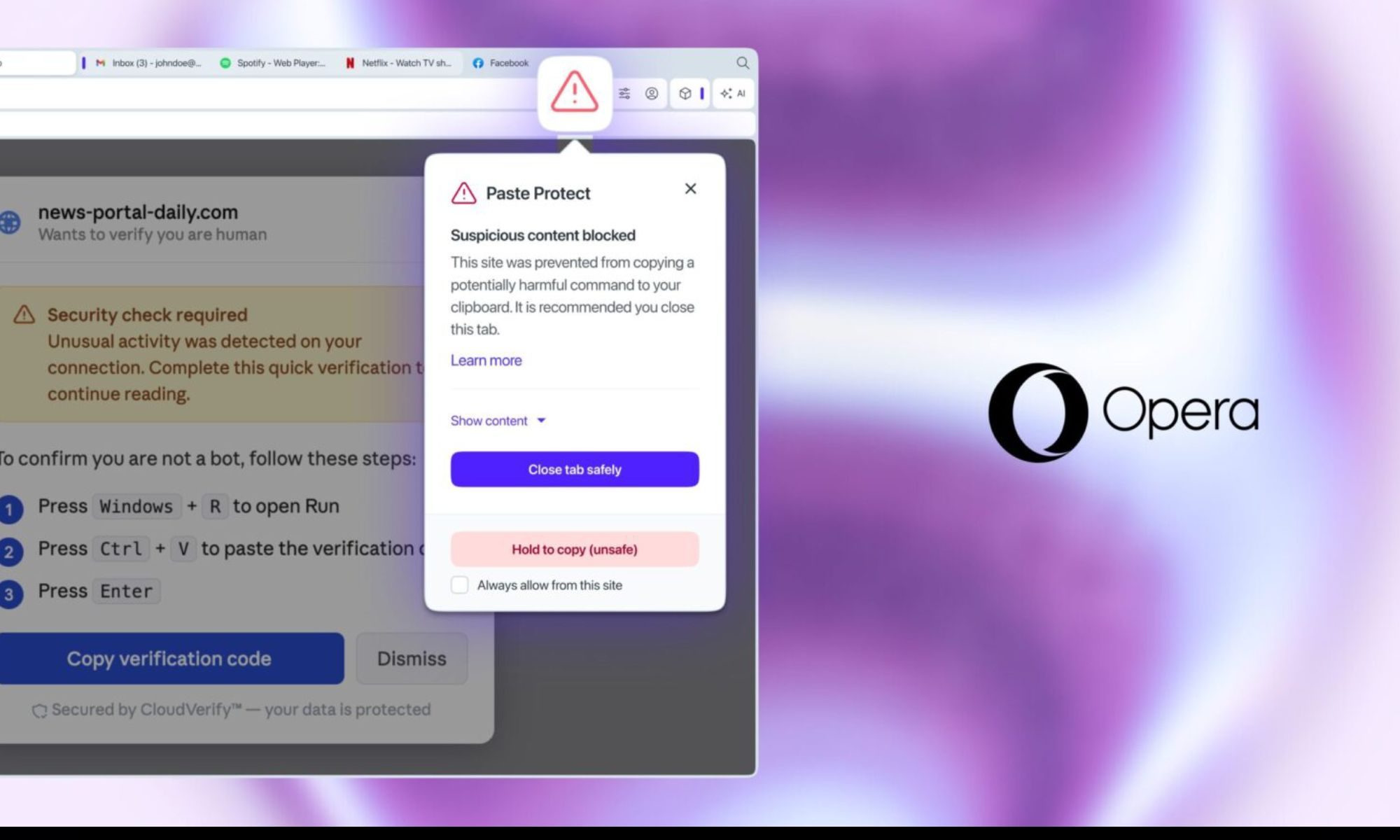
Opera’s new Paste Protect feature stops the clipboard attack your antivirus can’t catch
ClickFix attacks trick you into compromising your own device, and no major browser had a native defense against them until now.
Opera Paste Protect featured

Most online scams are easy enough to spot once you know what to look for. Fake login pages, suspicious attachments, or urgent wire transfer requests are dead giveaways. But ClickFix doesn't look like any of them. It presents itself as a solution, and it asks you to do something so routine that few people think twice about it.

The technique was behind more than 53 percent of malware loader incidents last year, according to cybersecurity firm Huntress, and no major browser had a native defense against it until now. Opera is fixing that with a new feature called Paste Protect.

Read more