1. Home
  2. Computing
  3. Gaming
  4. Web
  5. Legacy Archives

Lizard Squad loses its anonymity to computer security journalist Brian Krebs

Add as a preferred source on Google

The waves made by the hack on Sony Pictures hadn’t time to calm before another major attack occurred, this time directed at the Xbox Live and PlayStation Network gaming services. Over the holidays a notorious group known as “Lizard Squad” claimed credit for a mass distributed denial of service attack on each. Their goal, apparently, was only to knock each service offline on the days millions would be opening new consoles and attempting to set them up.

They achieved their aim, but it appears the group’s anonymous infamy may be at an end. Well-known computer security journalist Brian Krebs published a blog post earlier today that traces the group’s origins back to 22-year-old Vinnie Omari of the United Kingdom and 16-year-old Julius Kivimäki of Finland.

Recommended Videos

Krebs’ didn’t have to use sophisticated techniques to find the pair. Instead, he relied on old-fashioned detective work, connecting the dots with several pieces of evidence including online posts and an interview Lizard Squad granted to BBC Radio. While the two members in the interview did not identify themselves their voices were clearly audible. Krebs linked the voice of Mr. Omari to a separate on-camera interview in which he presented himself not as a member of Lizard Squad but instead a “computer security analyst.”

Related: PSN and Xbox Live assailants turn their attention on Tor.

Though certain in the validity of his research, Krebs does post a disclaimer; it’s possible the pair aren’t Lizard Squad at all but instead wannabes claiming credit for things they weren’t involved in. This seems unlikely because Krebs links Mr. Omari to posts in which he attempts to sell vouchers for Kim Dotcom’s MegaUpload service (Dotcom stopped the attacks on PSN and Xbox Live by bribing Lizard Squad with 3,000 of these vouchers, which sell at $99 each). It’d take a particularly committed con artist to so proactively leave such a false trail, but it’s not impossible to imagine.

What happens next is hard to say. Krebs’ evidence probably isn’t enough to issue arrests, but it may help law enforcement narrow their list of suspects. That, in fact, appears to be Kreb’s goal, as he hopes that “with any luck” Lizard Squad will, like LulzSec before it, be brought to justice.

Image credit: Matt Cornish/Shutterstock

Matthew S. Smith
Matthew S. Smith is the former Lead Editor, Reviews at Digital Trends. He previously guided the Products Team, which dives…
I let Radial menu take over my Mac, and I’m never going back
One mouse jiggle, endless shortcuts. My Mac has never felt this fast.
Radial app running on Mac

I have been testing Radial for the past week, and it's quickly become one of those apps I didn’t know how I could live without. It's a radial menu for macOS that puts your shortcuts, scripts, and automations right where your cursor is, so you never have to go hunting through menus to find what you need.

The app just received its 5.0 update, adding AI actions powered by Claude, window layouts, variables, a redesigned settings interface, a new Atmosphere background effect, and a squircle menu shape. I got to try most of these, and here's what I found.

Read more
Android desktop mode made me miss my laptop in record time
I tried writing and publishing from Google’s phone-to-monitor setup, and the future of mobile computing immediately started sweating.
Computer, Electronics, Laptop

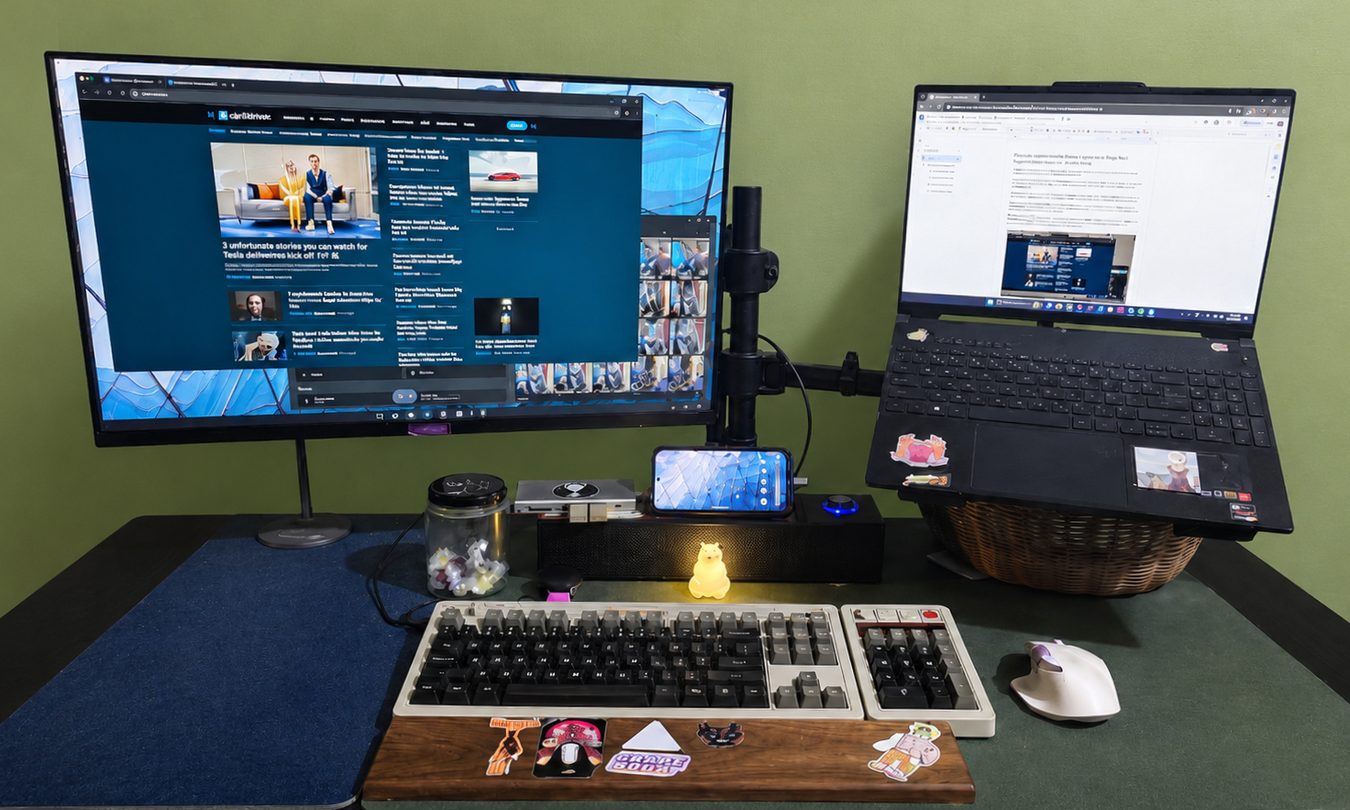
Android 17 desktop mode has a very simple pitch. Plug your phone into a monitor, add a keyboard and mouse, and watch the slab in your pocket pretend to be a computer. I wanted to give that pitch a fair shot, so I tried using it for an actual workday instead of a cute demo.

The goal was boring on purpose: write an article, edit it, build the page in WordPress, upload whatever needed uploading, and publish the thing without running back to my laptop like a coward.

Read more
As AI turbocharges digital abuse, UK agencies urge parents to limit who sees kids’ photos online
The National Crime Agency and Internet Watch Foundation are asking parents to tighten privacy settings as AI-generated abuse material rises.
Social Media

Parents who post pictures of their kids online are being told to rethink the habit. The UK's National Crime Agency and the Internet Watch Foundation have issued new guidance urging families to lock down their social media accounts, warning that publicly shared photos are increasingly being pulled and altered by AI tools to create child sexual abuse material.

The two organizations say most parents have no idea this is happening. Criminals no longer need to contact a child directly to generate such material. They can scrape an ordinary photo and run it through widely available nudify apps.

Read more