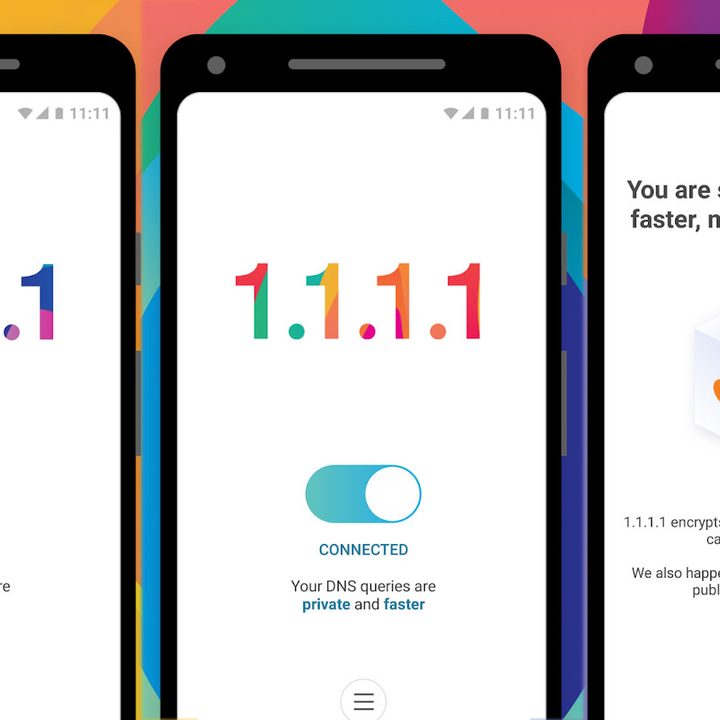
Cloudflare’s privacy-enhancing DNS resolver service, 1.1.1.1, is now available for mobile users on both iOS and Android, thanks to a newly launched application. It’s entirely free for everyone and early reports say that it can help get around government censorship and filtering, as well as speed up website load times in some cases.
The 1.1.1.1 service was initially launched on April 1, 2018, but it was anything but a joke. Designed as an alternative to more traditional DNS resolvers, Cloudflare makes the traffic of people using the service anonymous by deleting all logs within 24 hours and pledging to never sell the information of its users. With over 1,000 servers around the world, Cloudflare claims its 1.1.1.1 service makes it the fastest DNS resolver out there, especially when it comes to accessing sites on the Cloudflare platform. The independent DNSPerf agrees with it too, suggesting that it has a latency as much as 50 percent lower than standouts like Google DNS.
These benefits can now be enjoyed by mobile users too. Improving upon the slightly complicated process of changing DNS server on a Windows PC, Cloudflare is now offering a 1.1.1.1 app. The app itself is bare-bones and walks you through the whole process. Once installed, it gives you a couple of swipe screens to explain what it does and the process behind it, before asking you to toggle on its VPN profile. Once complete, your traffic is protected and your web browsing may even be a little faster.
Note, though, that the Cloudflare service is not a true virtual private network (VPN) service. Although it does offer privacy enhancing features, it doesn’t encrypt your traffic, or truly hide your identity. It might work for watching some overseas content on Netflix or similar, but dedicated VPNs do provide greater privacy. Cloudflare’s service will almost certainly be faster than most VPNs though, so if you don’t fancy using one of the best VPN services, 1.1.1.1 could be a good way to better protect your privacy online.
But how important is privacy, really?
When it came to downloading the app through the Google Play Store, we found it a little hard to find using the general search. You can download the apps directly from these links for Android and iOS, or visit the 1.1.1.1 website to learn more and get links to the app pages directly.