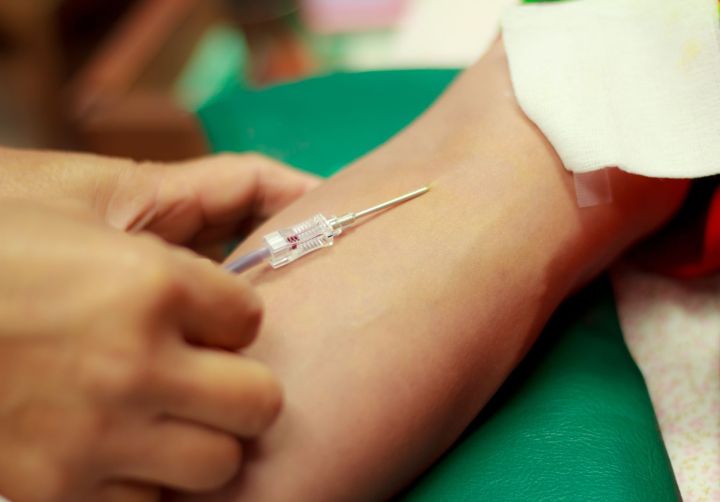
According to Utah news outlet KSL, Velano Vascular has developed a way to use IV catheters for drawing blood — without sticking another hole in the patient. The device is single-use and disposable, and designed to take advantage of the catheter already in use for infusion.
Previously, catheters were only good for putting liquids into the body, not pulling them out. Velano’s new tech uses the already applied IV port to pull quality samples from the bloodstream without stabbing the patient with yet another needle. Velano co-founder Eric Stone said, “It’s simply a tube-in-tube approach.” And it’s already FDA approved.
Patients in the hospital may have their blood taken multiple times in one day. Recurring needle pricks cause bruising, which makes it harder to find a vein and thereby creates the possibility of even more poking and prodding. It can become hellish for the person trying to recuperate.
Considering how much time, energy, and money go into hospital blood collection on a daily basis, improving the process only makes sense. Velano and Intermountain’s plan is to find ways for not only making drawing blood less painful for patients, but also safer for staff.
Velano and Intermountain will look at blood draw operations to figure out if and where to use the new blood draw method. The companies will compare the tube-in-tube IV approach with current care regarding different settings and patient types. The study will include provider safety and patient experience as comparative factors as well.
Stone said, “We are honored to be working with Intermountain, an innovative and visionary organization that is widely recognized for the delivery of the highest quality patient care.” Utah’s Intermountain Healthcare runs a non-profit health care system of 22 hospitals and 185 clinics.
Todd Dun, director of innovation at Intermountain said, “By systematically assessing a very common medical procedure and then identifying innovative yet practical ways to improve it for patients and healthcare providers, our collaboration with Velano represents the forward-thinking approach to enhancing quality of care that defines Intermountain.”
This is just the latest partnership exploring the new blood draw technology. Since Velano got its CE Mark in June, the company has partnered with Brigham and Women’s Hospital and Planeetree, and is backed by Griffin Hospital and the Children’s Hospital of Philadelphia among many significant others.
Editors' Recommendations
- Tattooing could be pain-free thanks to new needle tech
- This clever new technique could help us map the ocean floor — from the sky
- New battery design could mean EVs charge in only 10 minutes