If you’re looking for a new TV in 2025, then buying one of the best TVs is the easiest way to go about it. You can rest assured that any model on this list will have incredible contrast, a rich and colorful picture, bright highlights, dark blacks and some of the lowest input lag and response times for gaming. They also support the latest HDR standards, have intuitive operating systems, and come with useful and featureful remote controls.
In short, the best TVs of 2025 look and feel amazing to watch and play your favorite content on. Whether you’re looking for a gorgeous OLED TVs or something a little punchier, like the top QLED TVs this list has everything you could want in a TV. Big, small, expensive, affordable, and everything in between.
Whether you’re thinking of QLED, OLED, the best TV brands have something for you. Here are our best TVs you can buy right now, from Samsung, Sony, LG, Hisense, and more.

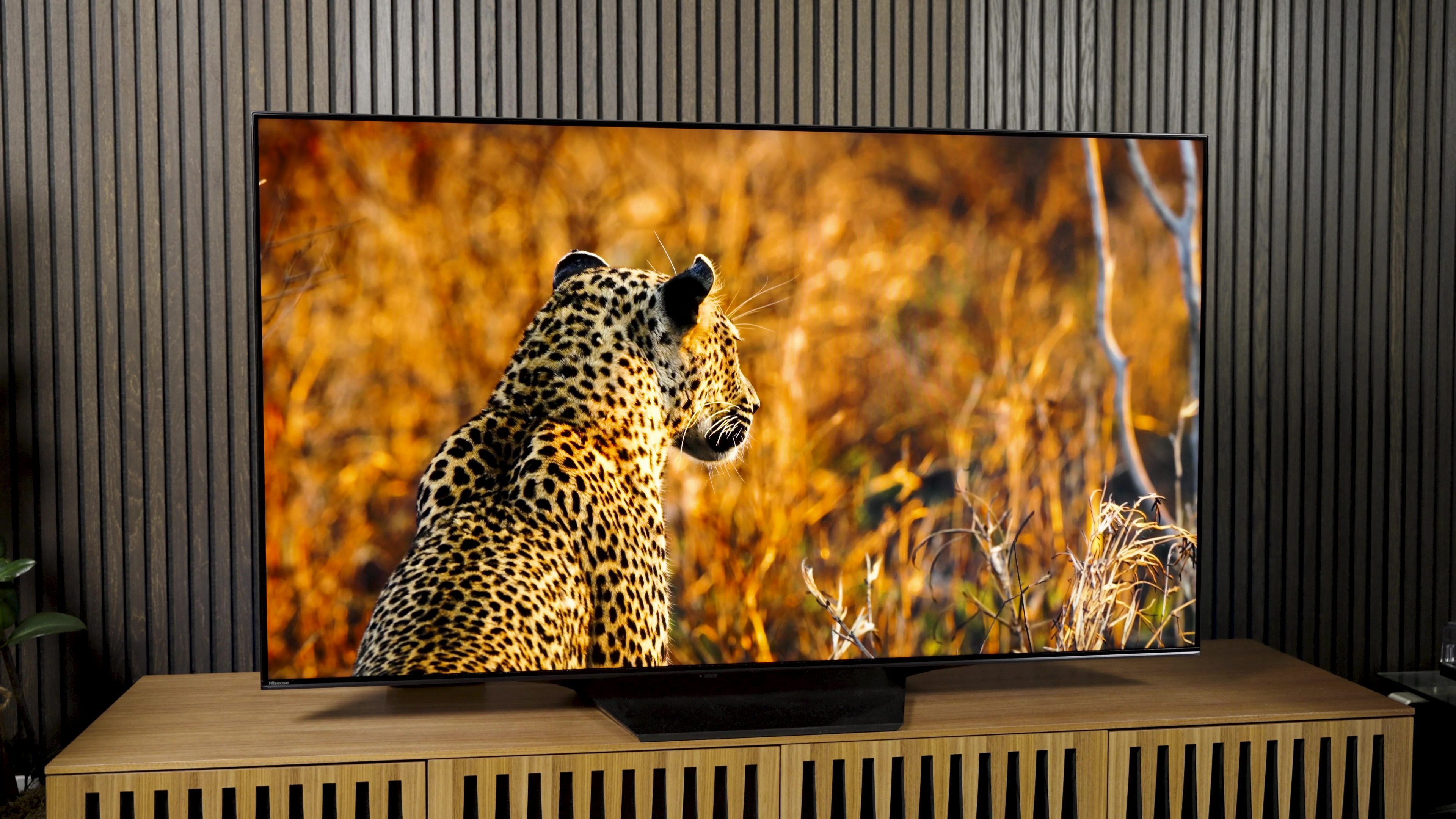
Best budget TV
Hisense U7N
- High brightness
- Great contrast
- Vivid color
- Surprising accuracy
- Great for gaming
- Poor off-angle viewing
- Risk of dirty screen effect
| Specification: | |
| Screen sizes available | 55, 65, 75, 85 inches |
| TV type | mini-LED |
| HDR support | HDR10, HDR10+, Dolby Vision |
| Operating system | Google TV |
| Connectivity | 2 x HDMI 2.1, 2 x HDMI 2.0, USB-A, optical, Ethernet |
If you can’t reasonably afford the $1,000-plus splurge that the Hisense U8N requires, you can still own an amazing Hisense by going with the U7N Series. The U7N delivers similar performance peaks as the U8N and uses a similar mini-LED lighting system. However, the U8N is the better choice for overall brightness, colors, and contrast, as well as reflection handling. Our TV expert Caleb Denison also flagged this set for lackluster off-angle viewing and the occasional dirty screen effect.
This isn’t to say you won’t be blown away by the type of picture the U7N brings to the table. On top of class-leading HDR support, the U7N has excellent gaming features, including an automatic Game Mode for reduced input lag and increased response time and 4K/144Hz (or 1080p/240Hz) support across the TV’s four HDMI 2.1 ports. Google TV OS takes care of the user menus and onboard streaming capabilities, and the remote comes with a Google Assistant button for content searches and smart home controls.
With 55-, 65-, 75-, and 85-inch size options available, the Hisense U7N is one of the best middle-of-the-road sets we’ve tested in recent years, and it’s one of the best TVs you can buy for less than $1,000. We’re also curious to see what a couple of software updates might do for the TV’s overall performance, though we’re pretty sure brightness, colors, and contrast will remain untouched.
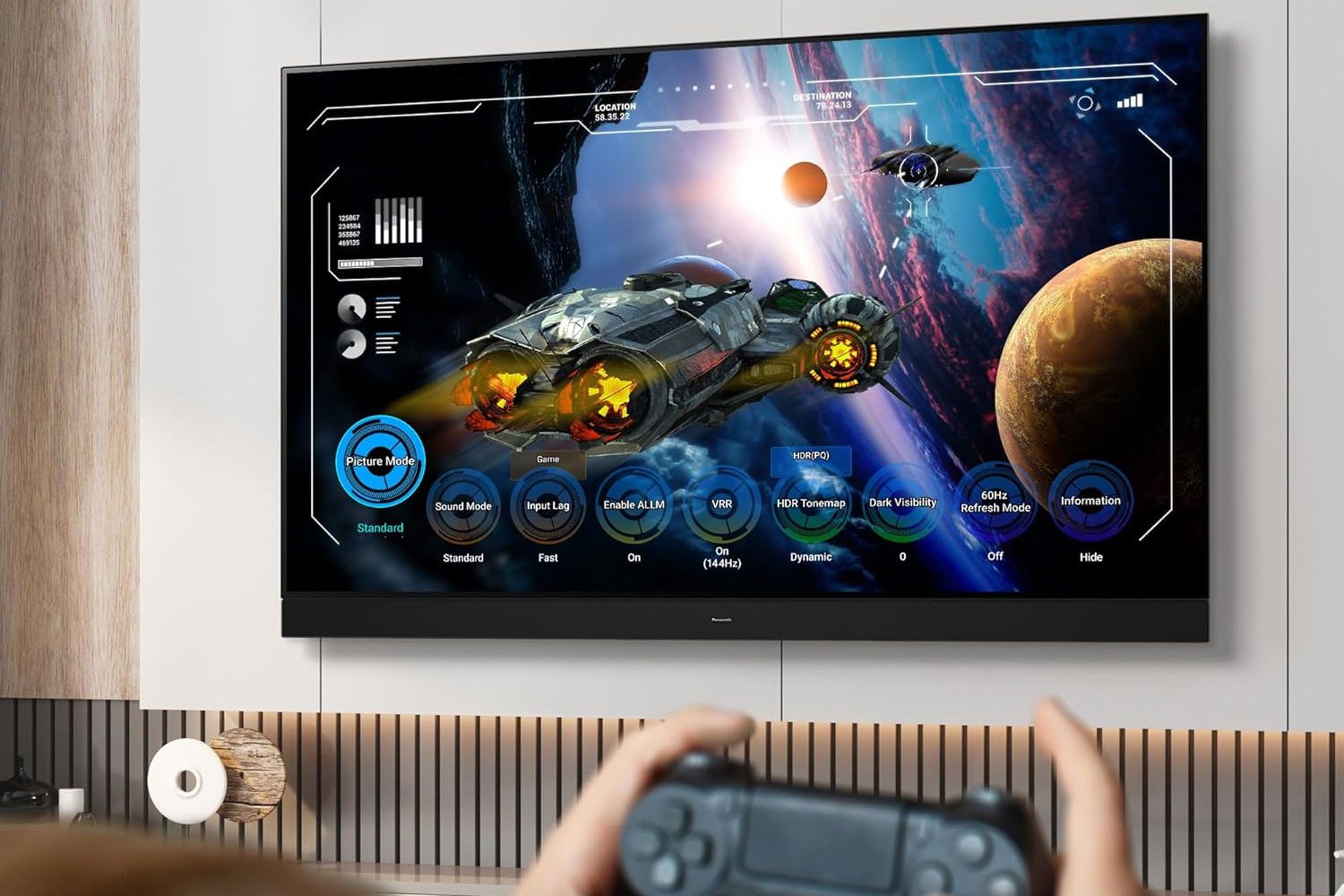
The best TV runner-up
Panasonic Z95A
- Incredibly good sound
- Great upscaling and motion resolution
- Excellent HDR performance
- Gorgeous, accurate color
- Competitive price
- Fire TV Auto-plays ads by default
- Paused content restarts after 5 minutes
| Specification: | |
| Screen sizes available | 55, 65 inches |
| TV type | OLED |
| HDR support | HDR10, HDR10+, Dolby Vision, HLG |
| Operating system | Fire TV |
| Connectivity | 2x HDMI 2.1, 2 x HDMI 2.0, USB-A, optical |
We are super excited about Panasonic’s return to the United States TV market, and the Z95A is a great example of why. This is a top-tier TV designed to go head-to-head with the best from LG, Samsung, and Sony, and it really delivers. In fact, our expert TV reviewer Caleb Denison touted it thusly: “The brightness punch, contrast, color richness, color saturation, motion resolution, and upscaling are all top-tier,” he said in his review. “As a top-five TV, it stands right up there with the Samsung S95D, LG G4, Sony A95L, and the Sony Bravia 9.” High praise.
Using a similar OLED panel to the LG G4, with all the brightness enhancements delivered by Micro-Lens Array (MLA) technology, this TV is bright, bold, and has an incredibly crisp picture. It has that infinite contrast that defines OLED TVs, all while pushing the brightness and clarity higher than ever.
While it does lack the quantum dot enhancement of QD-OLED TVs, like the S95D and A95L, its contrast appears to be slightly better to most viewers. It also has one of the best upscaling processors we’ve ever seen, making older and lower-resolution content look stunning. It also has impressive built-in audio, and though it won’t compete with an upgraded AV setup, it’s perfectly workable while you make your decisions over soundbar vs. surround sound.
This TV has Amazon’s Fire TV built in, giving you all the top streaming channels right from the get go. It’s not often as lauded as alternatives such as Roku, Apple TV, and Google TV, but it’s perfectly capable and you can always switch out to an external streaming device if you have a preference. For buyers with an extensive Alexa smart home setup, though, you’ll find this TV a bit easier to integrate.
The Panasonic Z95A is an excellent welcome return to form for the storied TV brand.
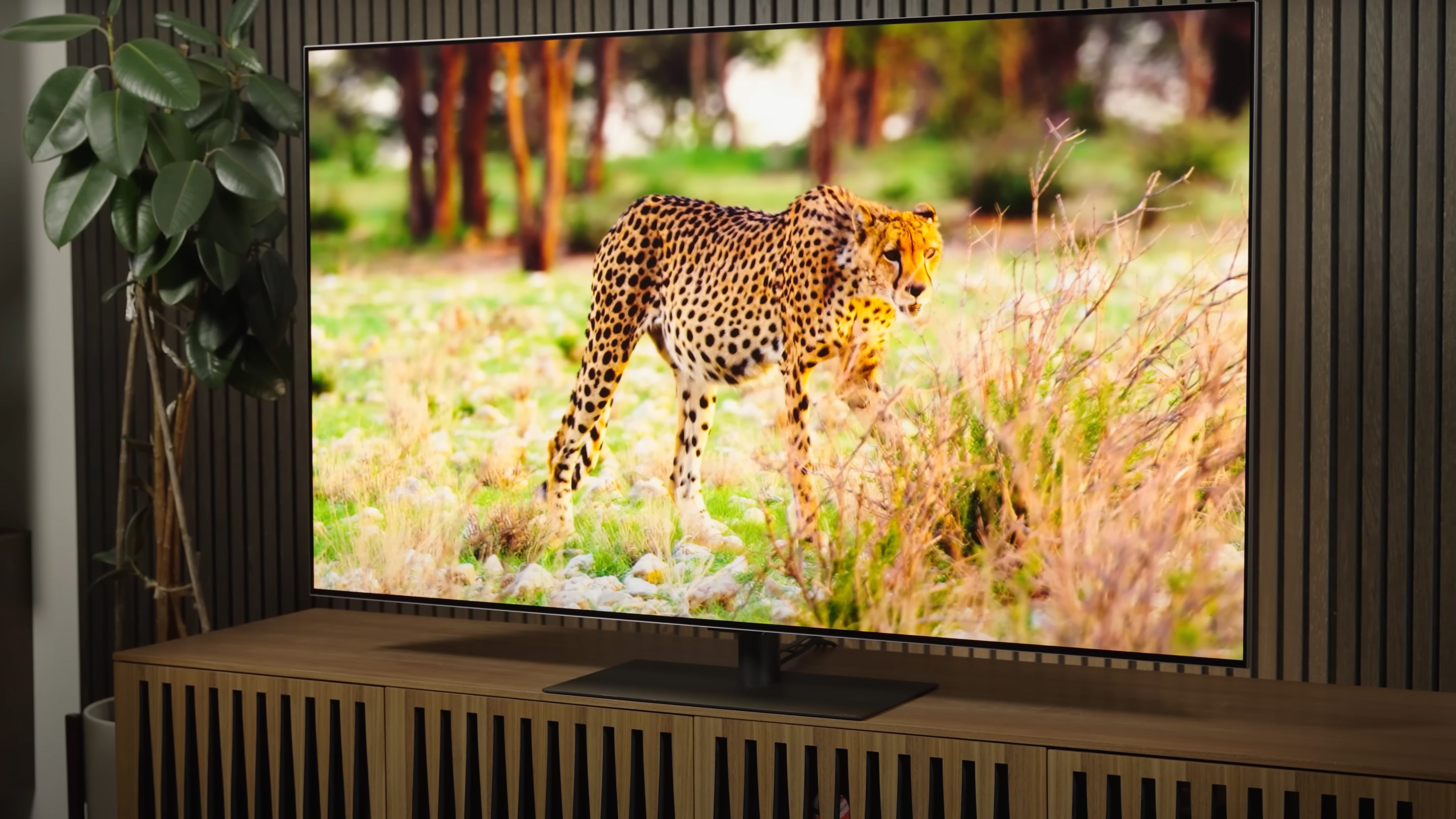
The best LG OLED TV
LG OLED Evo G4
- Outstanding brightness
- Astounding accuracy
- Unprecedented flexibility
- Awesome gaming performance
- Five-year warranty
- Hit-or-miss sound
- Frustrating remote
| Specification: | |
| Screen sizes available | 55, 65, 77, 83, 97 inches |
| TV type | OLED |
| HDR support | HDR10, Dolby Vision, HLG |
| Operating system | LG webOS 24 |
| Connectivity | 4 x HDMI 2.1, Ethernet, USB-A |
Until we get the next-generation G5, the LG G4 is still the king of LG’s hill, and it’s still one of the best TVs you can buy. Period.
In our LG G4 video review, Denison not only says that “the LG G4 has the best picture quality I’ve ever tested in a TV,” but that “it’s the brightest TV we’ve tested to date.” This is some high praise, but he does add that getting it there takes a little bit of work in the picture settings. In the end, it has some excellent versatility — it can be the brightest it can be if you’re going to use it in a bright room, or it can be dialed down if your viewing setting is a man cave or light-controlled home theater room, for example. The choice is yours.
There’s been plenty of fanfare about Samsung and Sony’s forays into QD-OLED tech, which has enjoyed the reputation of being brighter than OLED. We’re big fans of QLED and QD-OLED panels, but now LG is forcing its two fiercest competitors to take heed. We’re also pleased to see LG’s latest chip, the a11 AI processor, put to the test. The speedy new chip brings improved processing speed, unparalleled picture upscaling, lag-free streaming, and big audio performance to LG’s flagship lineup.
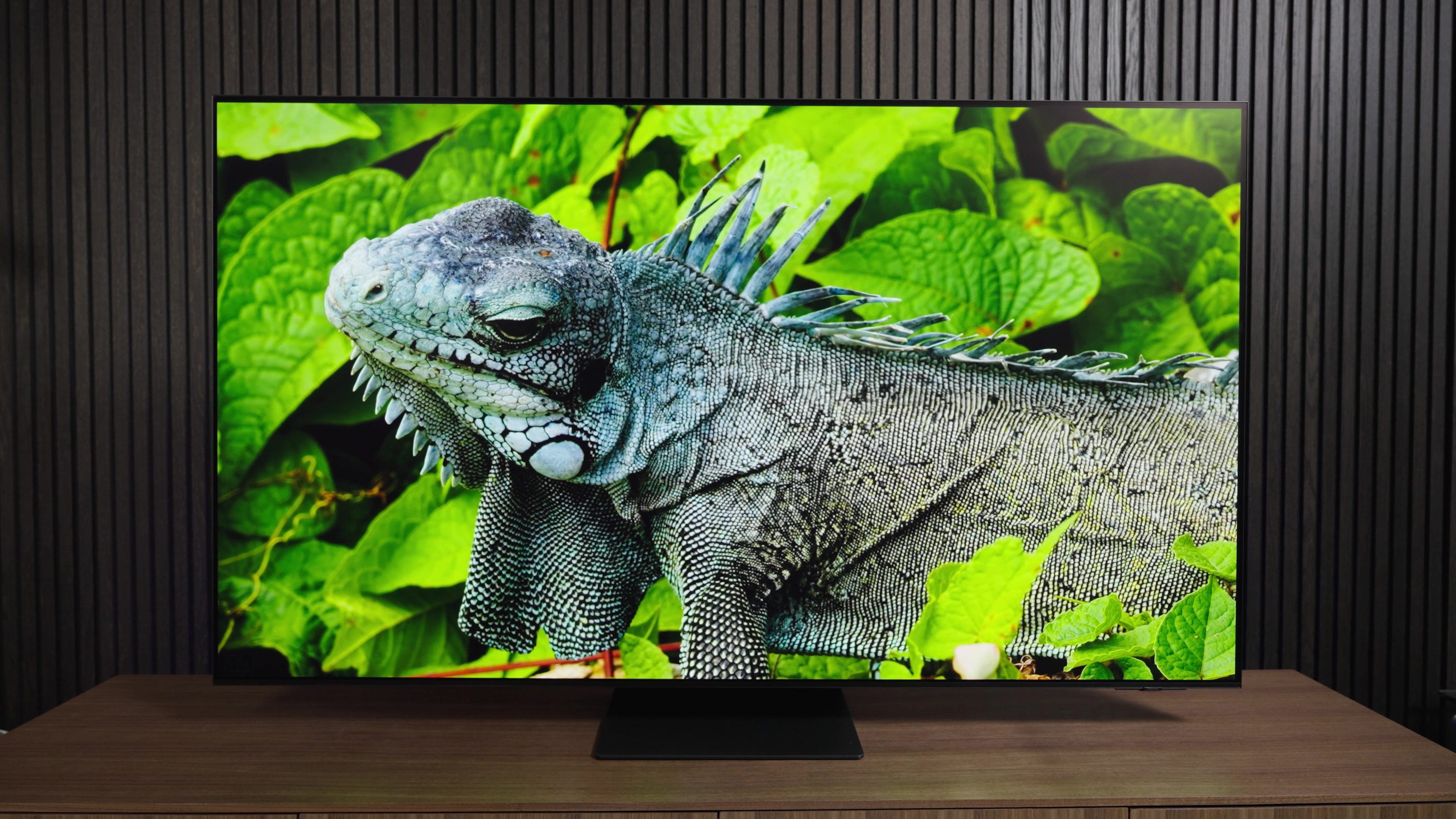
The best Samsung TV for bright rooms
Samsung S95D OLED TV
- Exellent brightness
- Eye-popping color
- Snappy operation
- Great gaming features
- Awesome for bright rooms
- Anti-glare treatment is polarizing
- Blacks may appear lifted in bright rooms
| Specification: | |
| Screen sizes available | 66, 65, 77 inches |
| TV type | QD-OLED |
| HDR support | HDR10, HDR10+, HLG |
| Operating system | Samsung Tizen |
| Connectivity | 4 x HDMI 2.1, 3 x USB-A, USB-C, Ethernet |
The Samsung S95D is further proof that one of the biggest names in TVs shows no signs of stopping. The S95D QD-OLED delivers impressive brightness levels on-par with some of the better-performing LED sets on the market. Another OLED TVs struggle in sunny rooms, but the S95D’s anti-glare screen holds its own, making it a great choice for spaces for even brightly lit rooms. Then there’s the flip side of this awesome coin: its OLED backbone. Thanks to millions of self-emissive pixels, on top of brilliant HDR capabilities, inky black levels and ultra-rich colors are just part of the norm for the S95D.
The S95D’s marquee feature that has been dividing TV enthusiasts is its special anti-glare coating. We first saw it demoed at CES in early 2024, and it’s cool tech that does a great job at drastically reducing glare, especially in bright rooms. However, it can ever-so-slightly reduce the picture’s luster compared to traditional OLED TVs. In a completely dark room, you probably wouldn’t notice the difference, but with some light in the room, a keen eye might pick up on it.
The Samsung S95D also surprised us a bit with how good it sounds. Usually, TVs have pretty weak built-in speakers. The S95D’s has rear-firing speakers and eight bass transducers that deliver decent low-end rumble. It won’t replace a dedicated soundbar, but for casual viewing, it gets the job done. Especially if you plan on mounting this TV on the wall, where the speaker design performs best.
The Samsung S95D is a strong contender for the title of best OLED TV, but we’d be remiss if we didn’t also mention that it features Samsung’s One Connect box that keeps your cables at bay. One of our only gripes is that it runs Samsung’s Tizen operating system, which can be easily remedied by connecting your favorite streaming device instead. If you prioritize absolute picture perfection in a dark room over reflection control, you might want to consider other options. But for most viewers, the S95D is a winner.
A great TCL alternative under $1,000
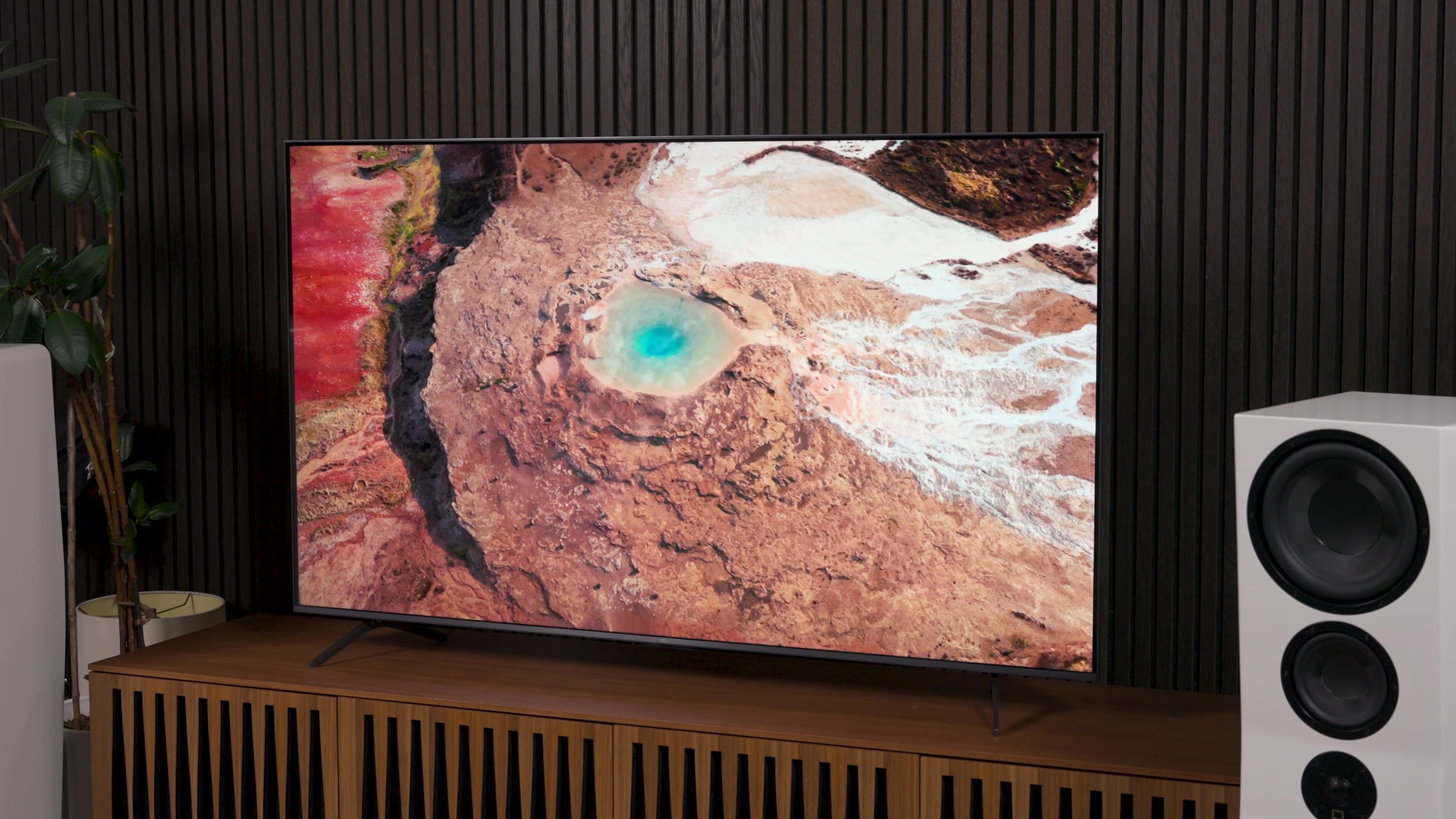
TCL QM6K
- Surprisingly good color accuracy
- Excellent black levels
- Vastly improved off-angle picture
- Feature rich
- Impressive clarity
- Underwhelming sound
- Lacks a little sparkle
| Specification: | |
| Screen sizes available | 50, 55, 65, 75, 85, 98 inches |
| TV type | Mini LED |
| HDR support | HDR10, HDR10+, Dolby Vision, Dolby Vision Gaming, Dolby Vision IQ |
| Operating system | Google TV |
| Connectivity | 2 x HDMI 2.1, 2 x HDMI 2.0, USB-A, Ethernet, optical |
The TCL QM6K is right out of the gate in 2025 as one of the best TVs you can buy for under $1,000. It offers some of the best color accuracy we’ve ever seen in a TV at this price, and though its brightness and contrast can’t quite match the very top models, it punches well above its weight and has us very excited for the rest of the 2025 TCL TV lineup.
The HDR support is extensive, with not only both Dolby Digital and HDR10+ support, but a range of other advanced gaming and movie modes to make your favorite content look its absolute best. There’s strong upscaling, a great array of ports for connecting games consoles, A/V systems and UHD Blu-ray players, and a fast and effective operating system that feels snappy and intuitive.
Our own TV reviewer, Caleb Denison, said this of the TCL QM6K’s impressive coloring: “This is the most color-accurate TV of its price that I can recall testing. The color in SDR and HDR is outstanding. In fact, the skin tones on this TV are better than the now-$15,000 QM891G 115-inch monster TV — the color accuracy is just so dialed-in.”
Picture quality is top-notch on this affordable TV, making it one of the best options if you’re looking for an update this year.
The best Hisense TV you can buy
Hisense U8N
- Intense brightness
- Deep blacks/contrast
- Vibrant, accurate color
- Great sound
- Overly bright HDR
- Poor off-angle viewing
| Specification: | |
| Screen sizes available | 55, 65, 75, 85 inches |
| TV type | mini-LED |
| HDR support | HDR10, HDR10+, Dolby Vision, HLG |
| Operating system | Google TV |
| Connectivity | 2 x HDMI 2.1, 2 x HDMI 2.0, USB-A, optical, Ethernet |
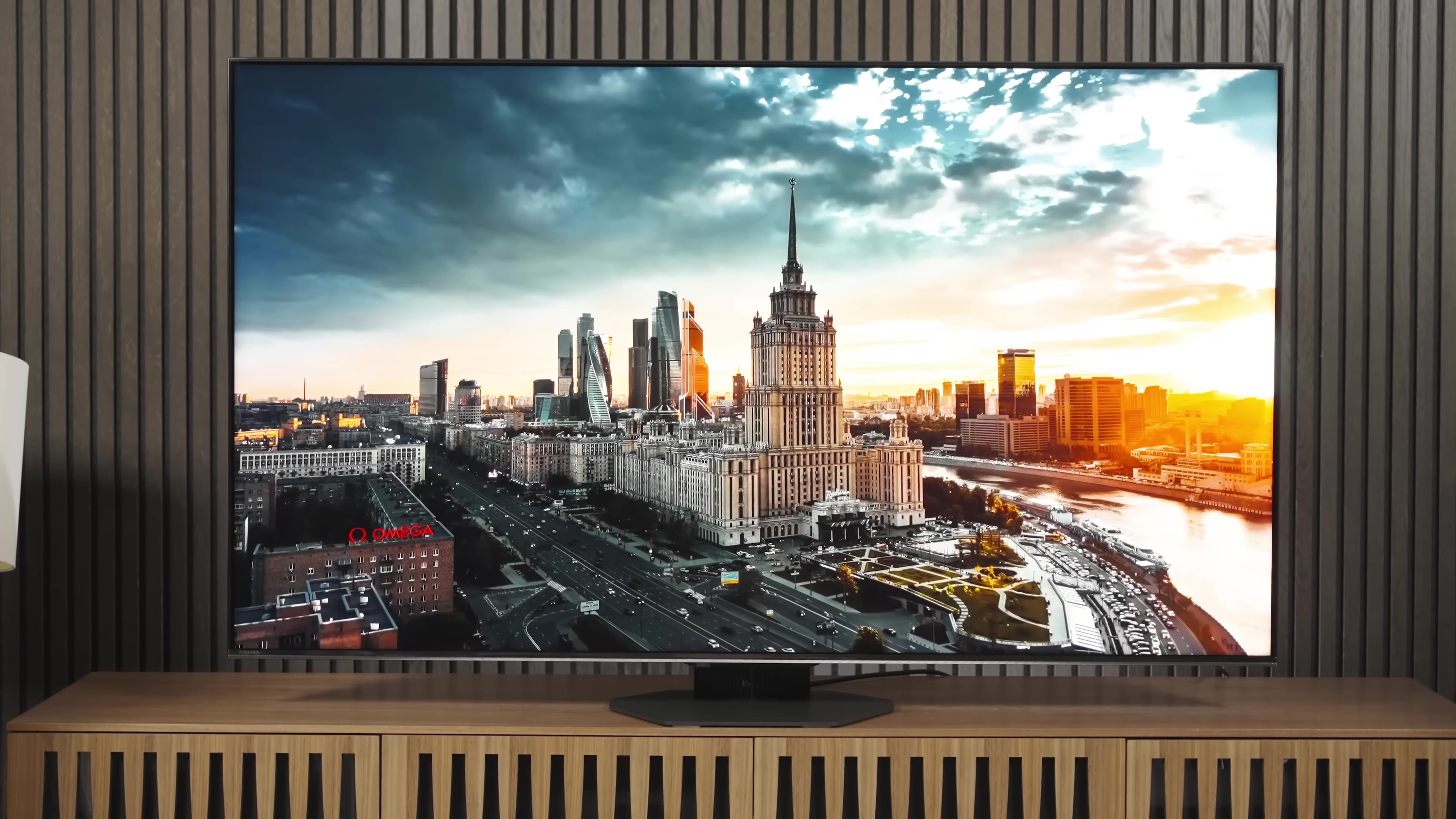
It’s getting harder and harder for us to call Hisense a “budget-friendly” brand. That kind of connotation just doesn’t line up with the type of picture and sound performance you’ll get from a Hisense set, especially if you’ve got your sights set on one of its U8 offerings.
Over the last couple of years, we’ve had the continued opportunity to review several Hisense sets, including a handful of its flagship models. The Hisense U8N is the newest addition to the Hisense family, and we were simply blown away by the picture quality and medley of features this bad boy brings to the table.
The U8N is a powerful TV that delivers a brilliant and colorful image in both SDR and HDR viewing modes. When measuring nit output for these settings, our reviewer measured peak brightness at 1,300 nits in SDR, with around 3,500 for specular highlights in HDR. There’s no doubting the fact that the U8N can get very bright, but it also delivers the kind of incredible contrast numbers that might fool some folks into thinking it’s actually an OLED set.
While it suffers a bit in the viewing angle department, if you can arrange your furniture appropriately, we have no doubt that the Hisense U8N is one of the best bright TVs on the market for 2025.
The best mini-LED you can buy
Sony Bravia 9
- Super-clean picture
- Deep blacks, minimal blooming
- Excellent contrast
- Searing HDR highlights
- Excellent motion handling
- Backlight fluctuations visible in dark rooms
- Very expensive
| Specification: | |
| Screen sizes available | 65, 75, 85 inches |
| TV type | mini-LED |
| HDR support | HDR10, Dolby Vision, HLG |
| Operating system | Google TV |
| Connectivity | 2 x HDMI 2.1, 2 x HDMI 2.0, optical, Ethernet |
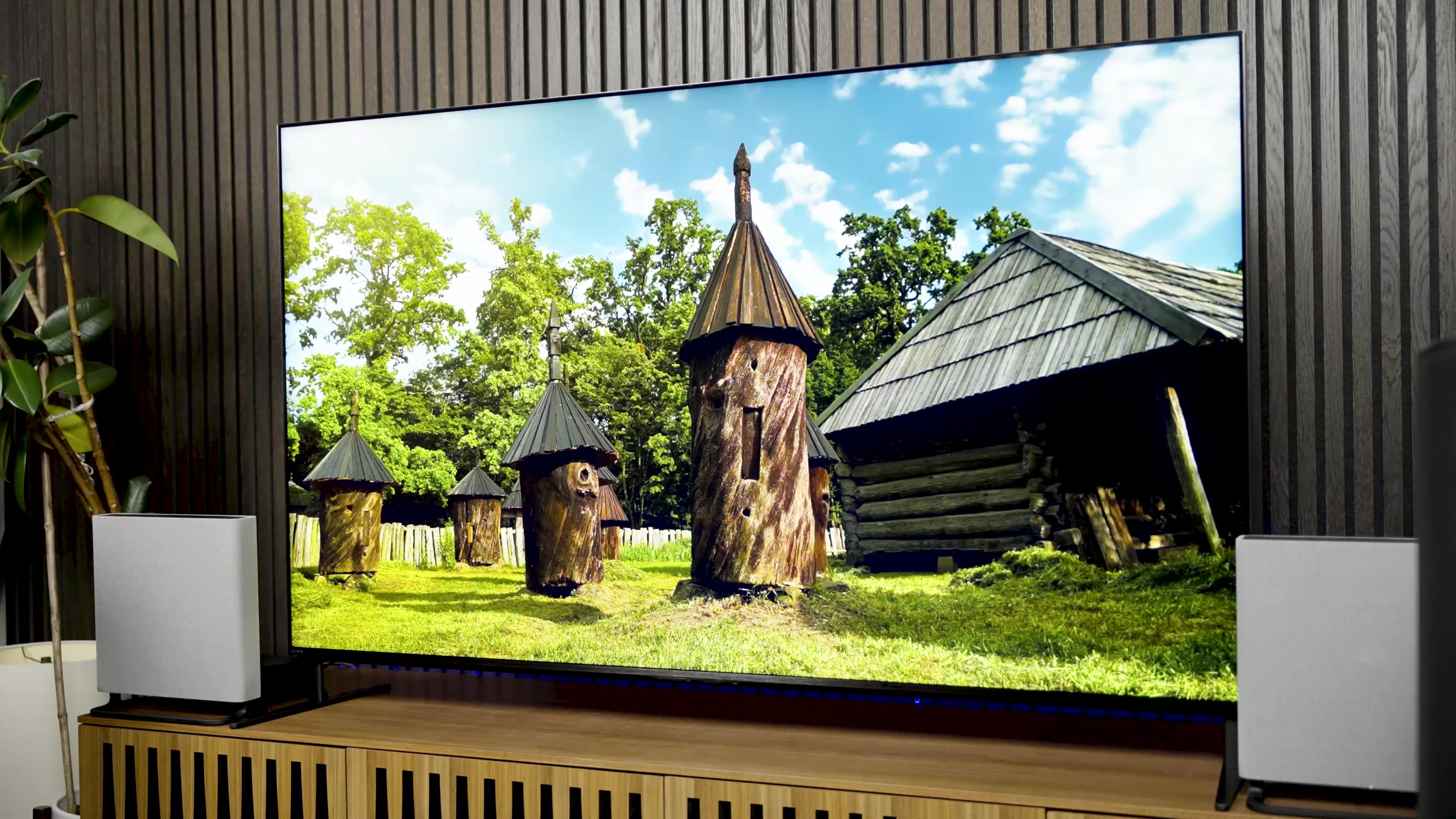
The Sony Bravia 9 is one of the best TVs we’ve ever tested, bar-none; and quite frankly, we were expecting it to be amazing. This is because Sony has basically conditioned us to expect big things when a new premium TV hits shelves. In the case of the Bravia 9, Sony developed a new IC chip that allows the TV’s mini-LED lighting to be meticulously controlled, leading to some of the most accurate colors, contrast, and brightness levels we’ve ever seen from an LED-LCD.
In terms of overall picture quality, our own editor-at-large Caleb Denison thought the Bravia 9 actually did a nice job at striking the balance between a great mini-LED LCD TV and an OLED TV. That being said, because it’s an LCD set, the Bravia 9 performs best in brightly lit rooms and is a champ when it comes to reflection handling. From 4K movies and shows to next-gen gaming, your favorite content gets a solid boost in quality, thanks to Sony’s advanced picture processing and a full suite of HDMI 2.1 ports, which bodes particularly well for gamers who want a TV that delivers fast response time and excellent motion clarity.
One of the best ways to maximize the picture of the Bravia 9 is watching or playing HDR titles. Thanks to Dolby Vision support and compatibility with other leading HDR codecs, the Bravia 9 pushes deep blacks and bright highlights in a way we’ve never seen on an LCD set. Other noteworthy features include a pulse-pounding 70-watt, 2.2.2 audio system, Google TV for apps and streaming content, and VRR support for optimizing your next round of Call of Duty.
While we do wish the off-angle viewing and gray uniformity were a bit better, we’re thrilled to see the kind of precise engineering that went into the development of this TV and we’re super excited to see what comes next.
The best midrange Sony TV
Sony Bravia 7
- Bright and vivid
- Excellent black levels/contrast
- Extremely accurate HDR/Color
- Top-tier motion/upscaling
- Easy to use
- Limited viewing angle
- Poor reflection handling
| Specification: | |
| Screen sizes available | 55, 65, 75, 85 inches |
| TV type | mini-LED |
| HDR support | HDR10, Dolby Vision, HLG |
| Operating system | Google TV |
| Connectivity | 2 x HDMI 2.1, 2 x HDMI 2.0, USB-A, optical, Ethernet |
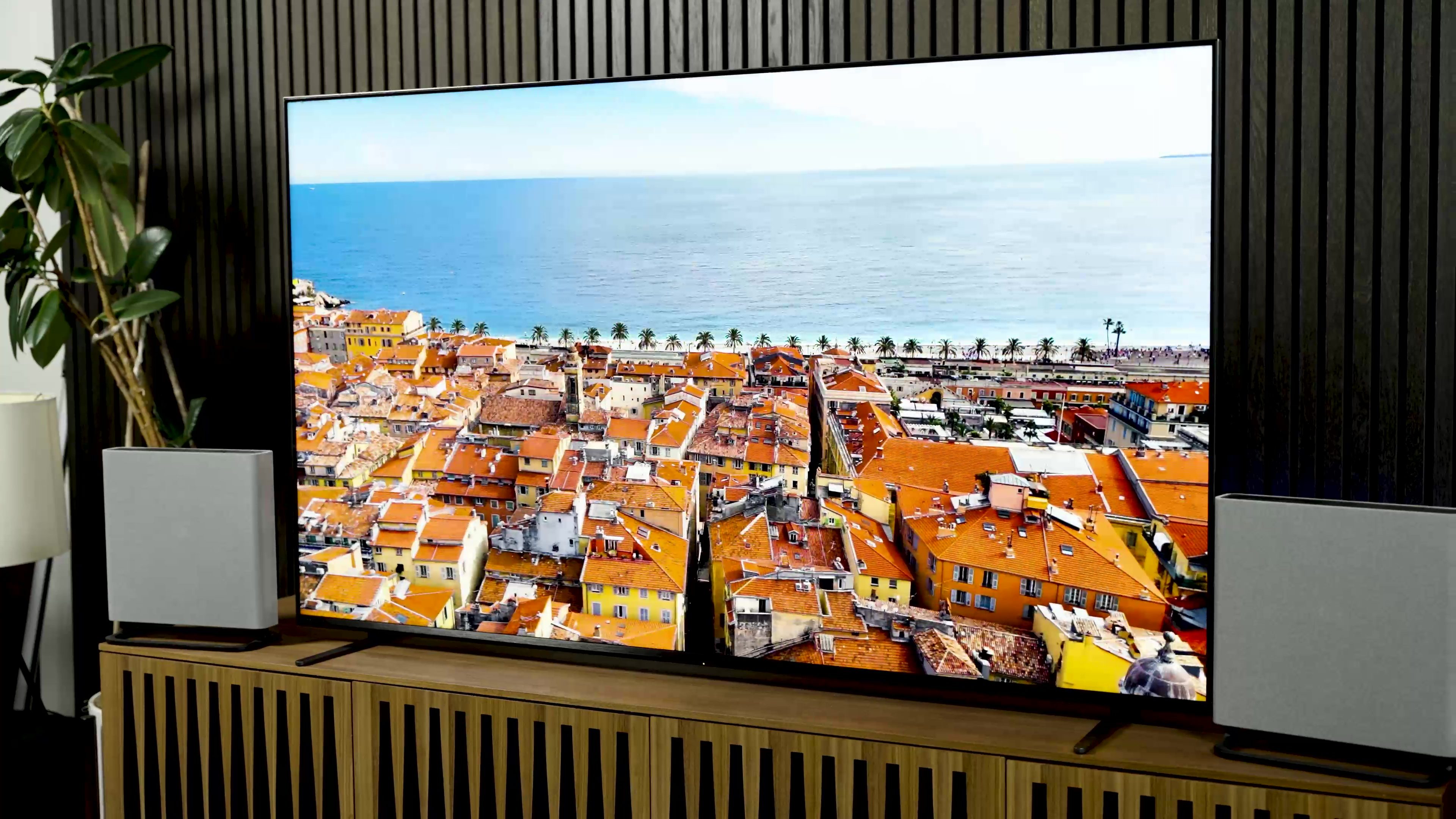
We’ve sung the praises of the Sony Bravia 9 mini-LED, a premium TV for the ages that delivers a brilliant picture, complete with top-notch upscaling, terrific colors and contrast, and impeccable motion clarity. While Sony’s Bravia 7 Series sits a couple of rungs below the flagship Bravia 9, we’re still big fans of this midrange option. Do keep in mind we’re not talking about the best LED set Sony has, so there’s definitely an issue or two that we’d like to get squared away.
First and foremost, this isn’t an excellent TV for off-angle viewing. If you happen to be placing it in a living room or media space where seating is spread around the entire room, guests sitting at the farthest ends (totally off-center with the TV screen) will see a less vibrant and colorful picture than those sitting closer to the screen’s center. We’re also not the biggest fans of the Bravia 7’s reflection handling, so this may not be the best TV for a brightly lit room. These grievances aside, our own TV expert Caleb Denison was impressed by how good this TV can look under optimal viewing conditions.
Expect incredible brightness levels, terrific colors and contrast, reliable image upscaling, and must-have gaming features like 4K/120Hz (on two HDMI ports), next to no input lag, and lightning-fast response times. The Bravia 7 is also loaded with Google TV version 12 for all things Netflix, AirPlay, and smart home.
And if you’re thinking you may want to spend more to get into the Bravia 8 Series, do keep in mind that the latter is actually an OLED TV. Is there a big difference between QLED versus OLED TVs? Our thoughtful comparison should settle the score.
The best LG OLED for most people
LG C4 evo OLED
- Excellent contrast
- Rich color
- Very good upscaling
- Great for gaming
- Accurate out-of-the-box settings
- Weak audio system
- Slight green tinge off-angle
| Specification: | |
| Screen sizes available | 42, 48, 55, 65, 77, 83 inches |
| TV type | OLED |
| HDR support | HDR10, Dolby Vision, HLG |
| Operating system | LG webOS |
| Connectivity | 4 x HDMI 2.1, 3 x USB-A, Ethernet, optical |
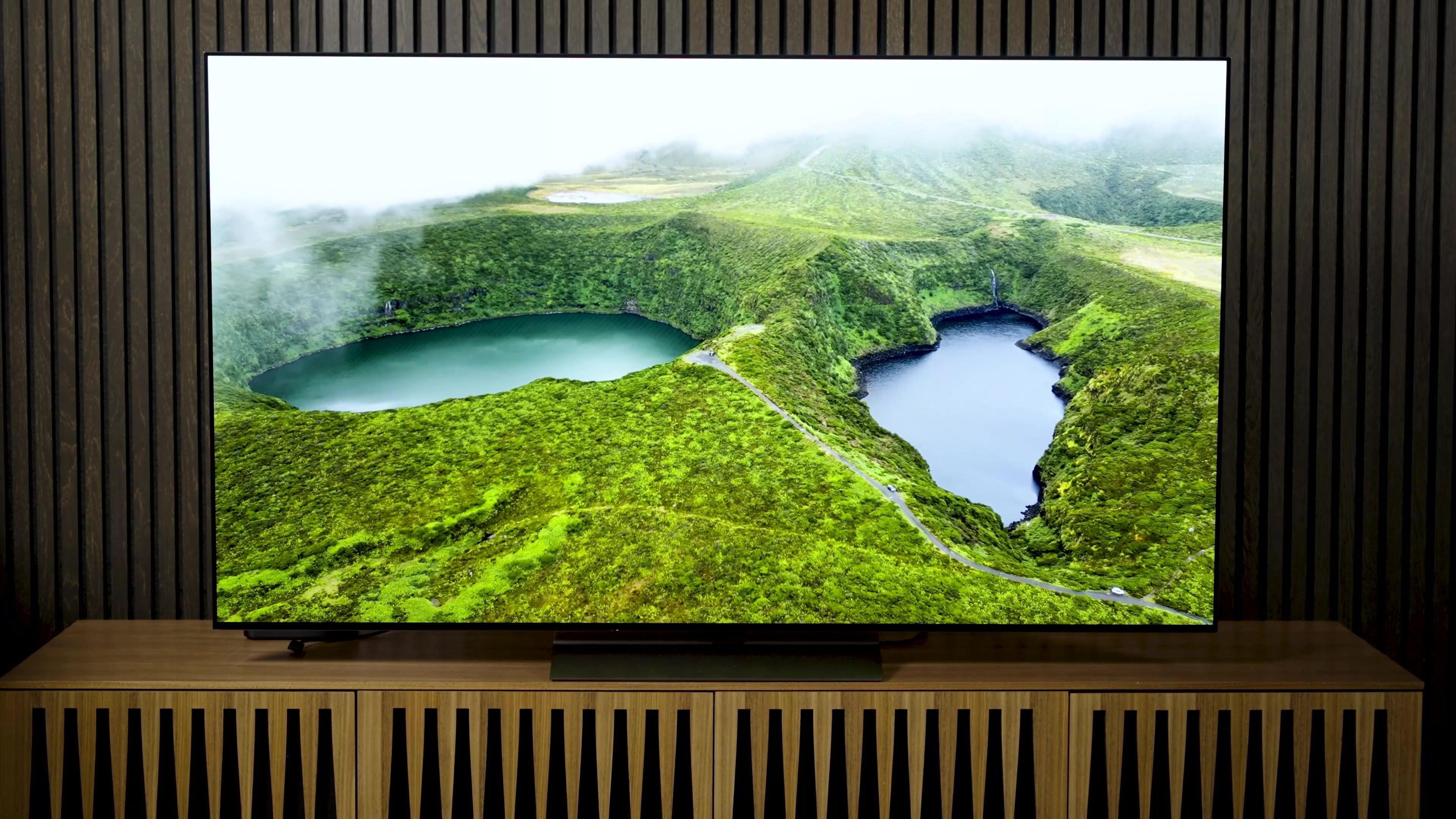
Let’s not beat around the bush: The LG C4 OLED is one of the best TVs that LG has ever made, and we think most folks will agree. Sitting just one rung below the flagship LG G4 Series, the C4 is equipped with LG’s all-new a9 AI Processor Gen 7 that delivers some of the best picture processing and 4K upscaling we’ve ever seen from an OLED. And unlike its direct predecessor, the C3 Series, the C4 now includes Filmmaker Mode, giving you the kind of picture that a movie or show’s creative team intended for you to see.
Each of the C4’s HDMI 2.1 ports are fine-tuned for both console and PC gaming, so expect lightning-fast response times and low input lag. And because the C4 can handle up to a 144Hz refresh rate, feel free to use this bad boy as a big PC gaming monitor — it’s an excellent gaming TV. We’re glad to see that LG has only improved when it comes to HDR and SDR brightness, colors, and contrast.
We’re also glad to see another example of a TV company giving a little more consideration to its speakers. Not only is the C4 equipped with a 40-watt 2.2 speaker configuration, but thanks to the new A9 AI Sound Pro feature, your favorite movies, shows, games, and music can be up-mixed to 9.1.2 surround sound.
In years past, we’ve talked about how LG’s webOS streaming hub can be a little overwhelming; at least as far as layout and ad drops go. And while these interface elements could still use some love, we think webOS 24 runs smoother than ever before.
The best TCL TV
TCL QM8 Series (2024)
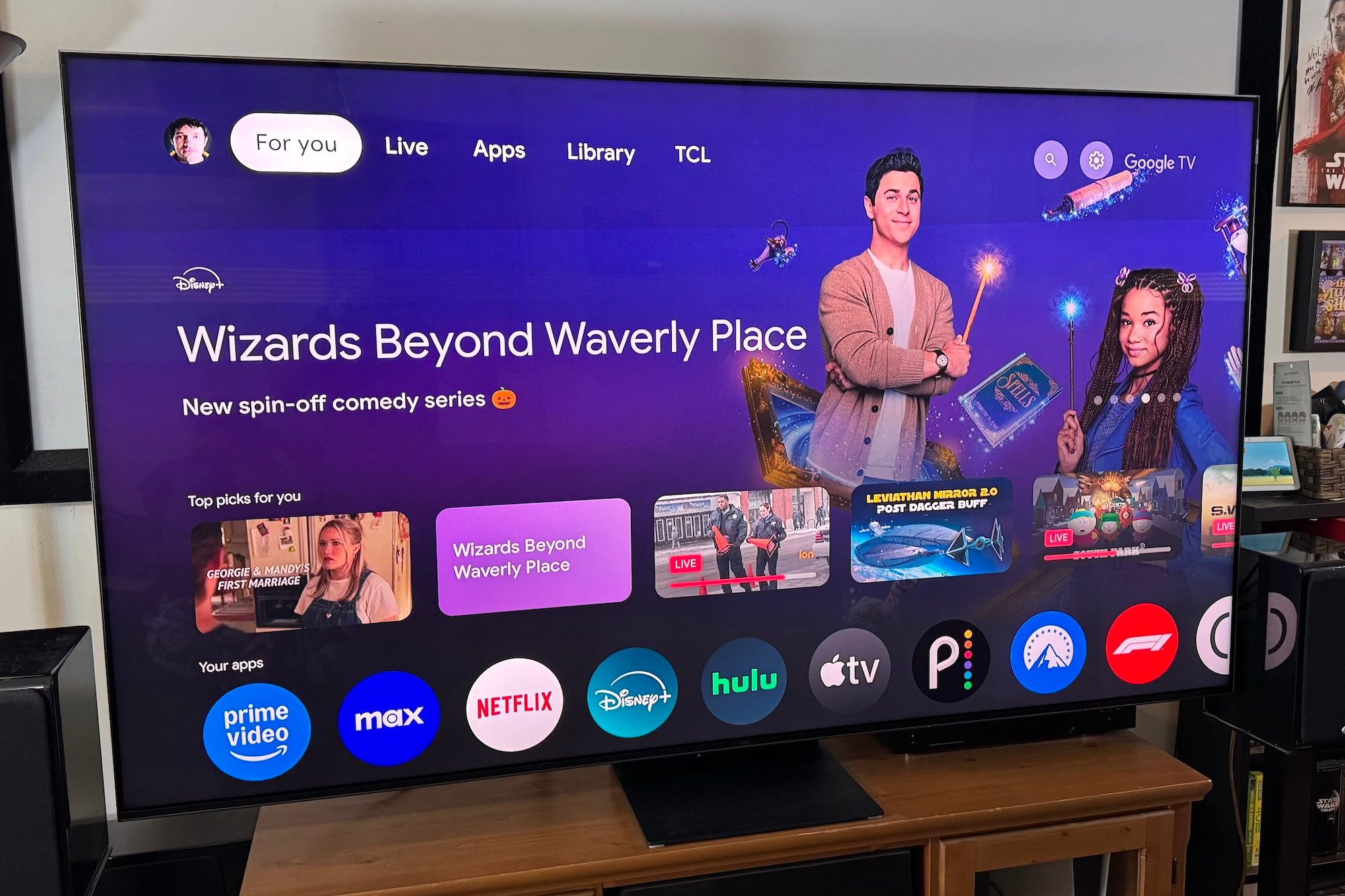
- Exceptional brightness levels
- Great colors and contrast
- Solid gaming optimizations
- Google TV OS is fast and packed with apps
- Not the best off-angle viewing
- Colors will require some fine-tuning
| Specification: | |
| Screen sizes available | 65, 75, 85, 98 inches |
| TV type | mini-LED |
| HDR support | HDR10, HDR10+, Dolby Vision, HLG |
| Operating system | Google TV |
| Connectivity | 2 x HDMI 2.1, 2 x HDMI 2.0, USB-A, Ethernet, optical, 3.5mm |
Glossary of terms
Here’s a rundown of some of the most common terms associated with today’s TV technology.
4K Ultra HD
This refers to a display resolution that is four times that of 1080p HD. A 4K Ultra HD TV’s pixel resolution is a 3,840 x 2,160 grid in a 16:9 aspect ratio, resulting in nearly 8.3 million pixels. This increase in density adds striking detail and realism to an image and allows larger screens to be viewed from closer distances without individual pixels becoming visible.
High dynamic range (HDR)
High dynamic range is probably most familiar to people through the HDR mode on their digital cameras. It’s designed to deliver a picture that has greater details in the shadows and highlights, plus a wider range of colors. HDR in televisions pursues the same goal. The color palette is wider, blacks are deeper, and whites are brighter.
Presently, there are two major HDR formats: HDR10 and Dolby Vision, with a third — HDR10+ — beginning to show up on new models, particularly those from Samsung. The first is the HDR standard, but Dolby Vision offers a premium experience. Consider a TV that supports both. HLG (hybrid log gamma) is another recent addition to the HDR collection, which supports over-the-air (OTA) broadcast content with HDR.
Full-array local dimming (FALD)
This refers to an LED TV’s backlighting system. A FALD display contains an array of LEDs spread out in a grid behind an LCD panel, rather than just at the edges of the TV. This LED array is broken up into zones that can be dimmed when necessary to achieve better black levels. Another benefit is more uniform brightness across the screen.
Wide color gamut (WCG)
These are the expanded color reproduction abilities of a 4K Ultra HD TV, which are closer than ever to what we see in a digital cinema. By approaching (or sometimes exceeding) the Digital Cinema Initiative’s (DCI) P3 color specification, a 4K UHD TV can produce billions of more colors than a 1080p HD TV.
Quantum dots
A layer of film loaded with tiny nanocrystal semiconductors is placed in a TV’s display panel to help produce a more accurate array of colors. Quantum dots work by producing a purer form of white light from a TV’s backlighting system, which helps the TV’s color filter perform more accurately.
Phosphor-coated LED
An alternative to Quantum Dots, phosphor-coated LEDs have a chemical coating to alter the light’s output. When used in a TV, this results in a purer backlight that’s more easily manipulated by a TV’s color filter, resulting in a wide color gamut and increased color accuracy.
HDMI 2.1
The latest version of the HDMI spec. It offers new enhancements for video games like variable refresh rate (VRR) and automatic low-latency mode (ALLM) and the ability to pass 4K signals to the TV at up to 120Hz, for ultra-smooth motion. HDMI 2.1 is a requirement for 8K video sources like the PlayStation 5 and Xbox Series X. For most non-gamers, HDMI 2.1 is a nice way to future-proof yourself but it’s nowhere near a necessity yet.
HDCP 2.3
The latest version of the High-Bandwidth Digital Content Protection technology, which provides copy prevention specifically of 4K Ultra HD and 8K content. Any source device that requires HDCP 2.3 will require a TV with an HDCP 2.3-compliant HDMI port for a compatible connection.
HEVC (H.265)
Stands for “High-Efficiency Video Coding.” A compression technology developed to make large 4K UHD video files smaller and, therefore, easier to stream over broadband Internet connections. HEVC is said to double the data compression ratio over H.264, the predominant encoding technology used today for 1080p videos while retaining the same video quality. A smart TV or streaming set-top box must be able to decode HEVC to playback 4K Ultra HD video from sites like Netflix and Amazon Prime Video.
VP9
An alternative to HEVC developed by Google and used predominantly for encoding 4K Ultra HD YouTube videos. For a smart TV or streaming set-top box to play 4K Ultra HD YouTube videos, it must be able to decode VP9 videos.