1. Home
  2. Smart Home
  3. News

Dyson’s robot vacuum is available in Japan for a plan that will suck your wallet clean

Add as a preferred source on Google

When we saw the Dyson 360 Eye at IFA 2014, we were kind of mesmerized. Sixteen years in the making, it was the robot vacuum you’d expect from Dyson.

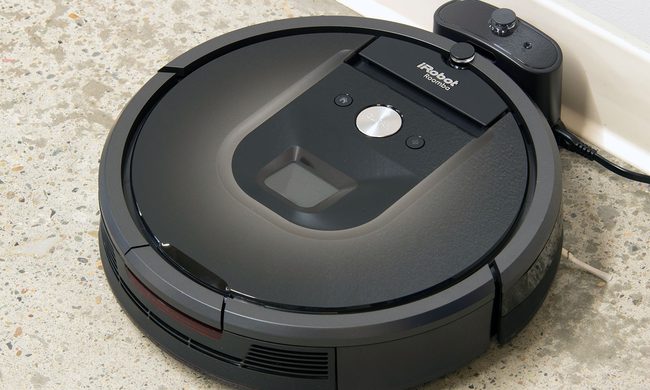
Over a year later, the bot vac is finally getting a release date — in Japan. The price clocks in at around $1,243, well above iRobot’s newest $900 Roomba, the connected 980.

Recommended Videos

The thing is, the features that impressed us a year ago have already been incorporated into other vacuums. The Samsung PowerBot also has a camera pointed at the ceiling to help keep track of its location. Both Neato and iRobot have app-controlled robots now. However, Dyson’s app is a little more robust than iRobot’s at least; it allows you to see a map of what the robot has cleaned in real time. What also sets the 360 Eye apart is the 100,000 RPM Dyson digital motor, as well as “track rollers.” These resemble tank treads more than wheels and supposedly keep the Dyson from tripping up when transitioning from a bare floor to a rug or carpet. Still, for those who have been waiting for Dyson to make a robotic vacuum, the rest of the world should see it on sale in 2016.

Dyson made more news today because it’s filed legal proceedings against Bosch in the Netherlands and Siemens in Germany, according to The Telegraph. “Bosch has installed control electronics into some of its machines to wrongfully increase energy consumption when in use — to cheat the EU energy label,” James Dyson said. “Their behaviour is akin to that seen in the Volkswagen scandal.”

An independent testing lab found that Bosch’s vacuum sensors use more energy when bags are full, but the company uses clean bags during its testing to achieve better energy ratings, Dyson claims. It seems he has a bigger beef with the actual EU regulations than the companies themselves, though back in 2012, the company accused Bosch of paying a mole to get “secret motor technology” from Dyson. (It’s like something out of a Tom Clancy novel. Or a Taylor Swift song.)

For its part, Bosch put out a statement saying, “We do not understand these assertions by Dyson and we strenuously reject them.”

Jenny McGrath
Former Senior Writer, Home
Jenny McGrath is a senior writer at Digital Trends covering the intersection of tech and the arts and the environment. Before…
My smart home experiment has reached its natural limit
Smart-home technology keeps improving, but being easier to automate doesn’t make everything worth automating
Computer, Electronics, Laptop, Smart Home

The first device I added to my smart home was a light bulb. It seemed like the safest possible place to start. I could turn it on from anywhere, put it on a schedule, and eventually work it into routines with everything else.

Then I tapped the button in the app and waited. The delay was only about half a second, but half a second is surprisingly noticeable when the alternative is a wall switch that responds immediately and has never once asked for a firmware update. Using my phone was worse. I had to unlock it, find the app, open the right room, and tap the light I could have switched on several steps earlier.

Read more
Google Home’s Interactive Storytime feature has me wondering who actually asked for this
Google Home gets interactive AI storytime, smarter alarms, and broader camera support.
Computer, Electronics, Tablet Computer

Google Home's latest update introduces several new features, including Gemini-powered Interactive Storytime. While I’m not sure who asked for the feature, it lets families build original stories about specific topics on the fly, instead of just listening to a known story. 

So what's the big new feature here?

Read more
Proxima wants to move blood tests into the home, and it has cleared an important early hurdle
The portable analyzer delivers blood-count results in about 20 minutes, but its promise depends on transparent clinical data
Furniture, Table, Desk

Algocyte’s Proxima is designed to run blood-count tests from a small finger-prick sample and send the results to a clinician in about 20 minutes. For patients who need frequent monitoring, that could mean fewer trips to a clinic or laboratory.

The device has also moved beyond the concept stage. Proxima carries UK conformity credentials, while Algocyte operates under a certified medical-device quality system. Those steps give the project more weight than a prototype shown at a launch event.

Read more