  1. Home
  2. Mobile
  3. Legacy Archives

Ice Cream Sandwich ported to Samsung Galaxy S II

Add as a preferred source on Google

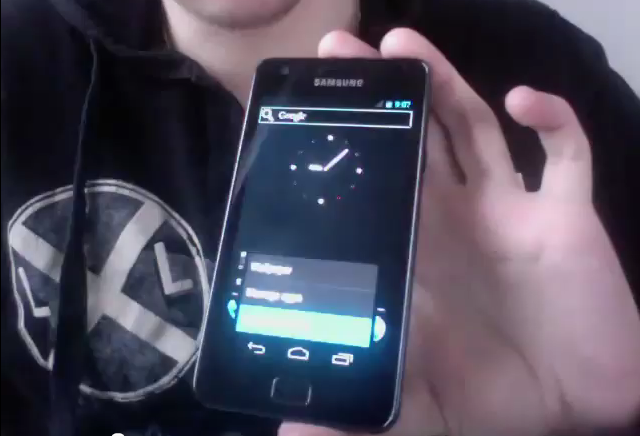
Ice Cream Sandwich on Galaxy S IIIt has been a busy week for the Android hacking community. On Monday Google released the source code for its latest version of Android, named Ice Cream Sandwich. Hackers have been able to successfully port ICS over to the popular Galaxy S II, in less than a week.

In the video below you will be able to see a semi-functional version of ICS running on a non-U.S. version of the Galaxy device. We are calling it a semi-functional version mostly because none of the radios work on the phone. That means that the phone doesn’t work as a phone and can’t connect to WiFi or Bluetooth. This mostly serves as a proof of concept, that it can be done, and will be done long before an official version of Ice Cream Sandwich are released for the phone.

Recommended Videos

Astute viewers will also notice that the phone is displaying the software buttons, even though the Galaxy S II has physical buttons on the phone. In official versions of the software those virtual buttons will not be displayed. The makers of the video explain that they are working on removing them from their unofficial port, but haven’t done so yet.

Earlier this week we predicted that unofficial ports of ICS would start making their way to phones in a couple of weeks. Seeing as this is not a fully functional version our prediction is still on course. It is very likely that a stable and functional version of ICS will be out very soon.

If you are like the majority of Android users and do not want to risk this type of installation you will have to wait. All major phone companies are slowly rolling out their plans for which phones will be updated, and hopefully your phone is on the list of lucky phones getting the upgrade.

Mike Dunn
Former Digital Trends Contributor
Mike graduated from University of Arizona with a degree in poetry, and made his big break by writing love sonnets to the…
The best phones in 2026: our 14 favorite smartphones right now
We tested phones across all price brackets so that you can make the best pick based on your needs and budget.
Google Pixel 10 Pro Fold vs Galaxy Z Fold 7 cameras

Choosing the right smartphone in 2026 is no easy task. Apple and Android manufacturers now have strong options at almost every price, while better cameras, longer battery life, improved software support, new AI features, and more refined foldable designs have made the market more competitive than ever. But picking one is not easy, especially if your budget is tight, or you are just legitimately concerned about getting the best value for your money and need a reliable daily driver for long-term usage.

We have tested and compared the leading smartphones available today, looking beyond the spec sheet to see how they actually perform in daily use. Camera quality, battery life, performance, display quality, software, design, and long-term value all play a part in our recommendations. Whether you are looking for a powerful flagship, a dependable budget phone, a compact device, or a foldable, this guide should help narrow down your choices.

Read more
Snapchat Planets Meaning: Order, Rankings, and How Friend Solar System Works
Snapchat Planets turns your best friends list into a solar system, and yes, your orbit says a lot
Snapchat Planets being shown on the Snapchat app on iPhone.

Snapchat+ includes several exclusive features, but few have generated as much curiosity as Snapchat Planets. Part of the app's Friend Solar System, it transforms your Best Friends list into a planetary ranking, assigning each of your top eight friends a planet based on how often you interact.

From Mercury, which represents your closest friend, to Neptune, which represents your eighth closest, the system offers a quick visual snapshot of your interactions. But what do the different planets actually mean, and how does Snapchat decide who gets which one?

Read more
How to use WhatsApp Web
We'll show you how to use WhatsApp on your desktop or laptop
WhatsApp Web

As one of the most popular messaging services, you’ve already heard of WhatsApp. From its humble beginnings in 2009—two years before Apple introduced iMessage—to its acquisition by Facebook (now Meta) in 2014, WhatsApp has become the dominant messaging platform around the globe.

In recent years, it's grown even more potent with new features like video messages, self-destructing voice messages, the ability to edit sent messages, and more. We even finally got an WhatsApp iPad app in May 2025.

Read more