 Not that long ago, the industry was labeling Cyber Monday nothing but a marketing myth. Skeptics said it was far from the biggest online shopping day of the year, that nothing would be able to trump Black Friday, and that it would be nothing but a promotional term.
And now we know they were wrong. Cyber Monday has legitimized itself and then some this year, not only by trumping its own numbers, but by impacting Black Friday’s as well. According to an IBM Benchmark report, online spending yesterday was 33-percent over that of Cyber Monday 2010—and it was 29.3-percent higher than on Black Friday, which saw a particularly high amount of e-commerce traffic as well.
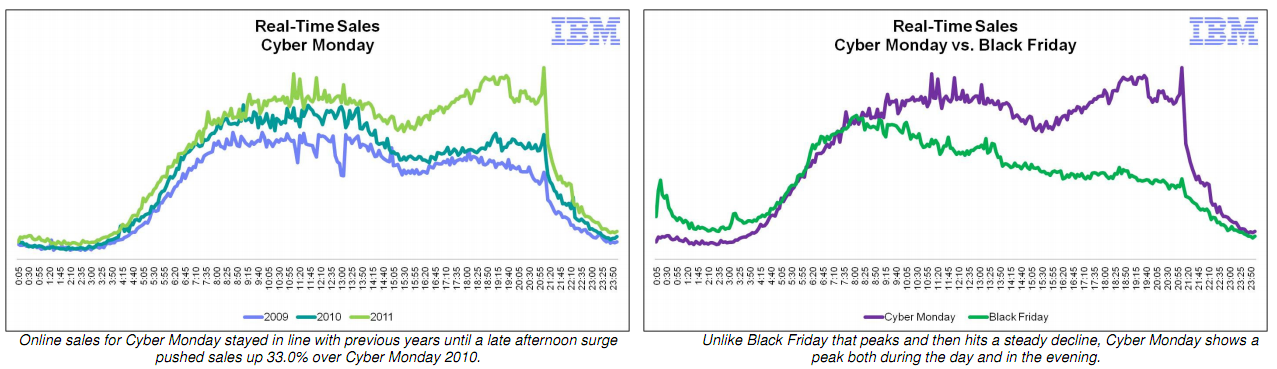 Not only were more people partaking, they were also spending more money. The average order value increased from $193.24 last year to $198.26, 2.6-percent. But the real number worth noting is this: for the first time, Cyber Monday was the biggest online shopping day of the year in terms of sales, as well as the first day that online spending was over $1 billion.
What began as marketing buzz and e-retailers fervent hope that they could ride some of the Black Friday hangover is now a very real shopping phenomena. What’s even more interesting is that many online shops are witnessing Cyber Monday as the gateway to a months-long shopping spree. The Internet is a procrastinator’s best friend, and there’s no time like the holiday gifting season to prove it.
While online shopping has solidified its place in Black Friday weekend, the next emerging trends will be mobile and social. This year’s numbers proved more and more consumers are visiting retailers’ sites from mobile devices, with sales growing as well (both of these numbers were larger on Cyber Monday). And social networking proved to be a popular tool for discovering and discussing the weekend sales.
It seems to be an everybody-wins situation. Consumers have more options to shop how they want, when they want, and where they want, as well as social media outlets for optimizing the experience–whether that’s reporting unsavory retailer security guards or advertising cheaper online options. Online retailers are getting their due (and then some), and it’s not exactly as if this is at the expense of brick-and-mortar stores (at least not yet). The online hype surrounding the day and the amount of social media chatter and mobile apps devoted to it has likely increased interest.
But that’s short term. Long term, the game is changing—quickly. E-retail is undergoing an evolution of sorts, and what effect that will have on the holiday shopping season remains to be seen.