1. Home
  2. Space
  3. Emerging Tech
  4. News

NASA just gave $100K to a company that wants to steer asteroids toward Earth

Add as a preferred source on Google

Countries around the world are betting big on asteroid mining. Last year, President Obama approved measures to give companies permission to mine and own resources harvested from outer space.  Back in May, Luxembourg announced the Prospector-X concept spacecraft, which it plans to launch into Earth’s orbit to test resource extracting technologies.

Now, NASA has awarded funding to California-based company Made in Space to develop technology that may see asteroids become self-propelled spaceships, reports Space.com. With the initial $100,000 funding, Made in Space has nine months to prove its system is viable.

Recommended Videos

Made in Space’s end goal is to facilitate asteroid mining projects by bringing the bodies closer to home. Rerouting asteroids towards us puts more resources within our reach, while taking tasks like manufacturing off of Earth may make mining more efficient.

“Today, we have the ability to bring resources from Earth,” Made In Space co-founder and CTO, Jason Dunn, told Space.com. “But when we get to a tipping point where we need the resources in space, then the question becomes, ‘Where do they come from and how do we get them, and how do we deliver them to the location that we need?’ This is a way to do it.”

In its Reconstituting Asteroids into Mechanical Automate (RAMA) project, Made in Space will launch high-tech, robotic spacecrafts to land on near-Earth asteroids. These spacecraft, known as “Seed Craft,” would mine parts of the asteroid and use those resources to build primitive propulsion and navigation systems. With these systems in place, the asteroid would then be directed towards Earth, where a single mining station could access its resources more easily.

RAMA is a long term project, which may take as little as two decades to develop and implement, Dunn told Space.com. In that time, other space mining companies may have already begun to mine asteroids but, for Made in Space, the additional efficiency and economic viability afforded by RAMA is worth the wait.

Dyllan Furness
Former Contributor
Dyllan Furness is a freelance writer from Florida. He covers strange science and emerging tech for Digital Trends, focusing…
SpaceX Starship reaches orbit for the first time but its historic flight ends early
Starship reaches orbit for the first time and deploys 26 Starlink satellites before an early splashdown.
spacex-starship

After 13 suborbital test flights and more than $15 billion in development costs, SpaceX's Starship has finally reached orbit. The 407-foot megarocket, the most powerful ever built, lifted off from Starbase, Texas, on Monday and delivered its first real payload on it's 14th attempt. The celebration came with an asterisk, though, since SpaceX had to cut the planned 10-hour mission to roughly three hours.

https://twitter.com/SpaceX/status/2104601695711904180

Read more
Starship is finally going orbital, and SpaceX has picked September 22
Flight 14 is aiming for orbit, Starlink V3 deployment and a very long day in space.
Starship rocket.

SpaceX is finally ready to give Starship its biggest test yet. The company says the massive rocket's 14th test flight is scheduled for September 22, when it will attempt to put the upper stage into Earth orbit for the first time. The launch is currently pending regulatory approval, with a 75-minute window opening at 7:15 a.m. CT.

Starship has 26 Starlink satellites to deliver

Read more
Want a city on the Moon? Scientists say there’s not enough water
A billion tons still comes up short
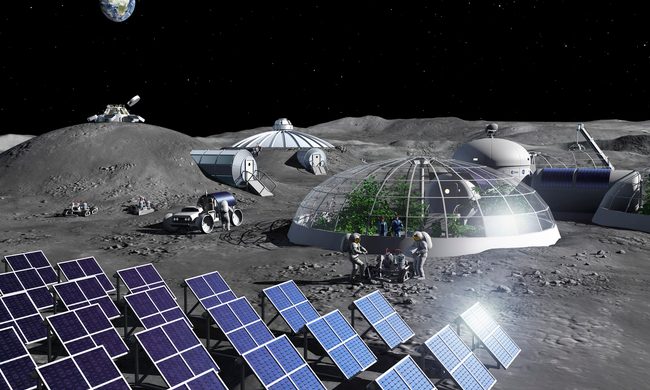
Artist impression of activities in a Moon Base.

For decades, humanity has looked up at the Moon and wondered what it would be like to live on it. Think sprawling cities, factories, research centers, and permanent human settlements. Unfortunately, there is one fairly fundamental problem with that vision.

A new study published in Frontiers in Space Technologies argues that even the Moon's potentially enormous reserves of frozen water may be nowhere near enough to support city-sized populations sustainably. Researchers Martin Elvis and Jonathan McDowell estimate that the permanently shadowed regions near the lunar poles could contain roughly one billion tons of water. It sounds like an extraordinary amount until you put a million thirsty humans next to it.

Read more