After a series of setbacks and tragedies, Sir Richard Branson’s Virgin Galactic aerospace company announced it’s ready to jump back into the private spaceflight race again, officially unveiling its next-generation SpaceShipTwo. Revealed via a published press release, the company praised the hard work of its engineers and technicians in the manufacturing, testing, and assembly of what Virgin calls a “beautiful new vehicle.” Though images weren’t initially made available — it released those several hours after the original announcement — the company used its press release space to talk of its prior shortcomings, the trails it plans on blazing moving forward, and the process (and difficulty) of testing.
Considering Virgin Galactic’s rather tumultuous timeline over the past 16 months, the fact the organization focused on testing should come as no surprise. Aside from merely showing off its latest spaceship model, Virgin must accomplish the incredibly difficult task of convincing its investors, partners, and customers — you know, the people who will one day trust it to take them to space. Understanding this uphill battle, the method Virgin employed was exhaustive, to say the least. According to the release, the company “poked, prodded, stretched, squeezed, bent, and twisted” every single piece that went into the final version of the SpaceShipTwo.
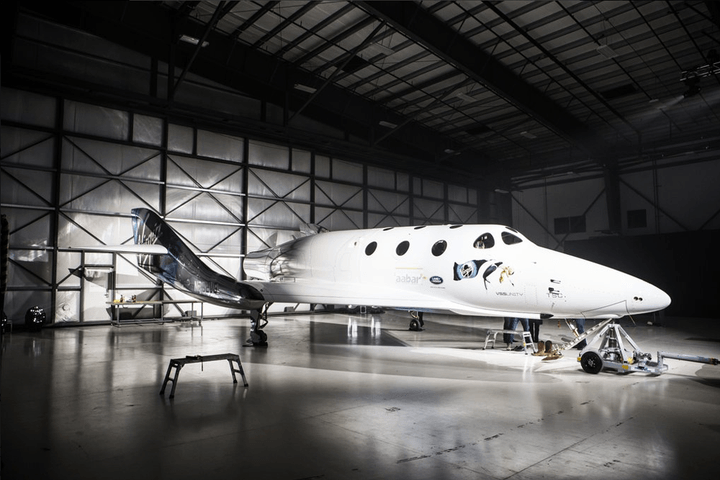
“Even before we unveil this brand new vehicle — indeed, even before we’d assembled the parts together into something that looked like a spaceship — we had begun a rigorous test campaign patterned off the relevant industry standards,” the release reads. “We’ve run a spaceship cabin through thousands of pressure cycles simulating flight from ground level to space and back; we’ve conducted nearly 100 full-scale tests of our rocket motor system; we’ve bent and torqued our megastructures in ways significantly exceeding what they’d see in flight.”
Aside from the trials Virgin admitted to doing thus far, it also acknowledged further testing would never be considered complete and cited a need to “always” do testing on all of its parts. Virgin did also point out that because the updated SpaceShipTwo is so close in design to the original, its previous 55 flights (and lone, fatal crash) still represent a trove of useful data moving forward. In addition to the kinds of tests Virgin deems “obvious to the layperson,” it also knows it must be inventive and “strange” to make sure it’s capable of taking a dramatic leap regarding private space flight.
Before readers of the release got too excited about the prospect of seeing the SpaceShipTwo in action Friday, Virgin Galactic quickly grounded expectations of any flight demonstration during the unveil. Calling the event a “ground-based celebration,” Virgin revealed plans to conduct full-vehicle testing on the rig to get an idea how each of the individual part works in unison with one another. Once completed, it intends to move on to captive carry flight testing to prepare for a series of glide flights at roughly 45,000 feet in altitude. Over time, subsequent tests will take the SpaceShipTwo to higher altitudes and faster speeds.
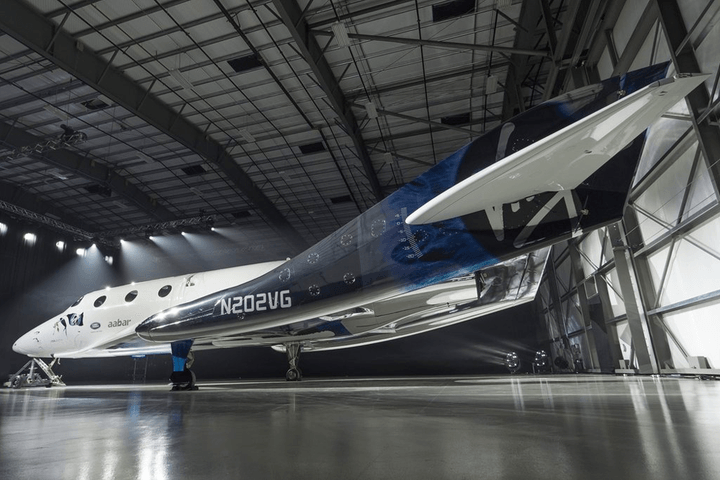
“When we are confident we can safely carry our customers to space, we will start doing so,” the release continues. “We feel incredibly honored that our earliest paying customers already number more than the total number of humans who have ever been to space. No one is more eager than us to complete those milestones — nor to share this journey, with all its challenges and triumphs, with a global public that craves inspiring and ambitious stories to balance out the daily barrage of the 24-hour news cycle.”
Towards the end of its official release, the company claimed its space program isn’t involved in any race but rather that, through thorough testing, it will be able to overcome the difficulty of traveling from “Earth to the stars.” Whether Virgin considers itself embroiled in a competition to get the first paying customers to space or not, we’re positive the thought that’s been haunting Richard Branson the last several months is “who says Elon Musk and Jeff Bezos gets to have all the fun?”