


The smartwatch market becomes increasingly competitive each year, with tech leaders like Apple and Samsung innovating in health features, while new players bring fresh perspectives. The Apple Watch and Samsung Galaxy Watch are top devices that enhance health tracking and connectivity.
Smartwatches also serve as fashion accessories, making personal style a key factor in choosing a device. The Apple Watch Series 10 remains the best option for iPhone users, while Android fans can turn to the OnePlus Watch 3, Pixel Watch 3 or Samsung’s Galaxy Watch 7, which offers improved performance and health insights.
Other options include OnePlus’s Wear OS smartwatches with excellent battery life, Garmin’s fitness-focused wearables, and luxury offerings from Tag Heuer. Here’s a look at the best smartwatches available in 2025.



The best smartwatch for Android
Google Pixel Watch 3
- It finally comes in a bigger size!
- Gorgeous, well-made hardware
- Smaller bezels, more display
- Well over 24-hour battery life
- Excellent running features
- Robust health tracking
- Reliable and easy-to-use software
- Underside scratches easily
- Some Fitbit features require a subscription
| Specification: | |
| Case size | 41mmn45mm |
| Compatibility | Any phone running Android 10 or newer |
| Operating system | Wear OS 5.0 |
| Battery life | 36 hours |
Why you should buy this: It’s simply one of the most well-rounded Wear OS smartwatch on the market.
Who it’s for: Android phone owners who own a Pixel watch and also want the best smartwatch available.
Why we picked the Google Pixel Watch 3: Google may have come late to the smartwatch game, but it’s made up for lost time pretty quickly. After a weak initial start, Google quickly refined its designs and technology, leading to the Google Pixel Watch 3 joining the cream of the crop of Android smartwatches.
The Google Pixel Watch 3 is as close to a “Goldilocks” smartwatch as any we’ve seen. It combines a solid build with an attractive design, an excellent display, strong battery life, and sophisticated health and fitness features — and it does it all at a remarkably affordable price. It’s what we hoped the original Pixel Watch would be, and we’re thrilled to see that it’s only taken Google three iterations to hit that sweet spot.
The Pixel Watch 3 has finally grown up in more ways than one. The first two generations were limited to a smaller 41mm size, which left many folks giving it a pass as it was less readable than most of its competitors and looked awkwardly toylike on larger wrists. This model finally adds a 45mm body to the mix. The design remains unchanged otherwise, but it’s remarkably minimalist. Google has gone for a tech-forward look similar to the Apple Watch, but with a round design that’s all its own. It’s not for everyone, but we think the more modern aesthetic is sleek and subtle. It’s also more durable than it looks, thanks to Gorilla Glass 5 on the display and the same IP68 and 5ATM ratings of its flagship competitors.
The display also gets reduced bezels, which, when combined with the 45mm screen, lets you see a lot more information at a glance. Google has improved the brightness to the 2,000-nit level that we’ve come to expect on a modern smartwatch, so you’ll have no problem seeing it outdoors on even the sunniest days, yet it also drops to a single nit so you won’t be blinded when you need to check the time in the middle of the night.
When it comes to health and fitness, the Pixel Watch 3 retains its identity as a glorified Fitbit, but in this case, we’d say you’re selling it short if you see it as nothing more than that. It still uses the Fitbit app, so you have to be comfortable with the way it tracks data like steps and floors, but Google has taken things to a new level with powerful new Cardio Load and Readiness health metrics that should deliver deeper insights into your health and fitness. On the surface, these translate into simple numerical ratings to help you easily know where you stand — Cardio Load for workout intensity and Readiness for your general health — and how ready you are to face the day based on factors like heart rate and sleep. We found both those scores to be remarkably accurate, lining up with similar metrics we get from other smartwatches and even smart rings like the Oura Ring.
Runners will also appreciate a new set of features, such as alerts for intervals, splits and real-time coaching based on your goals, and AI-powered running recommendations. While Google’s suite of running features doesn’t necessarily exceed what Apple and Samsung offer, they’re well-thought-out and put the Pixel Watch 3 on par with its competitors. The only catch? You’ll still need a Fitbit Premium subscription to get the most out of these, as most of the AI-powered recommendations and things like detailed sleep tracking are locked behind that paywall. Basic health and fitness tracking is still free, and the $10 monthly or $80 annual price tag isn’t too bad, but it’s still disappointing that Google feels the need to charge for features that its biggest rivals include in the purchase price.
The Pixel Watch 3 gets excellent battery life that exceeds its manufacturer’s claims. Google promises 24 hours on a single charge, but in our experience, it lands closer to 36 hours of normal use. The Pixel Watch 3 appears to have borrowed a page from OnePlus here with a hybrid approach that uses a Cortex M33 coprocessor to take the load off the more power-hungry Snapdragon W5 chip for routine background tasks, making much better use of the battery. It also has fast charging, getting back up to 100% in about an hour.
The Pixel Watch 3 isn’t just for Google Pixel users; it’s the best smartwatch for most folks no matter which Android phone you’re using. You won’t find a better smartwatch without switching to an iPhone. While other smartwatches may serve those with more specific needs, the Pixel Watch 3 is the best of all worlds, checking every box to create an incredibly well-rounded package that won’t disappoint.

The best runner-up smartwatch for Android
OnePlus Watch 3
- Classy design
- High quality materials
- Fantastic performance
- Long battery life
- Comprehensive health and fitness features
- Only one size available
- Cheap, awkward charging puck
| Specification: | |
| Case size | 47.6mm |
| Compatibility | Android |
| Operating system | Wear OS + RTOS |
| Battery life | Up to 5 days between charges |
Why you should buy this: It’s one of the best smartwatches for Android users.
Who it’s for: Android phone owners who want the best smartwatch available and don’t care about spending more
Why we picked the OnePlus Watch 3:
The OnePlus Watch 3 is an appealing option for Android users looking for a feature-rich smartwatch. Its sleek, circular design offers a classic look, while the vibrant AMOLED display ensures excellent visibility. A notable strength of this watch is its dual-processor system, which combines Wear OS for smart features with RTOS for extended battery life. It can last up to five days in smart mode and even longer in power saver mode.
This watch was our favorite smartwatch for Android users. Unfortunately, rising prices because of tariff issues has dropped this to the runner-up position.
Fitness enthusiasts will appreciate the comprehensive suite of health and activity tracking features, which includes heart rate monitoring, SpO2 measurement, sleep tracking, and various workout modes. Additionally, the seamless integration with the OnePlus ecosystem, along with helpful features like notifications, music control, and built-in GPS, enhances the overall user experience.
If you value a blend of style, functionality, and battery performance in an Android-compatible smartwatch, the OnePlus Watch 3 is definitely worth considering.

The best budget smartwatch for Android
OnePlus Watch 2R
- Rugged, durable design
- Easily replaceable watch bands
- Fluid interface with Wear OS
- Exceptional battery life and charging
- No features locked to OnePlus phones
- Average looks
- Unimpressive health features
- No backup and restore via cloud
| Specification: | |
| Case size | 46mm |
| Compatibility | Phones running Android 8 or later |
| Operating system | Wear OS 4 |
| Battery life | 48 hours (heavy use in Smart mode)n100 hours (Smart Mode) |
Why you should buy this: It’s a very affordable smartwatch that delivers good bang for your buck and incredible battery life.
Who it’s for: Anyone who wants a Wear OS smartwatch that can run for days between charges.
Why we picked the OnePlus Watch 2R: OnePlus has been on a roll lately when it comes to its more affordable “R” series products, and the Watch 2R is no exception. The OnePlus 12R is possibly the best value Android smartphone out there, and OnePlus’ budget smartwatch follows in its footsteps while continuing to excel in the area that OnePlus is best known for: exceptionally fast charging and long battery life.
Like most Wear OS smartwatches, the OnePlus Watch 12R can pair with any Android smartphone that meets the minimum requirements — which are a pretty low bar at Android 8.0 or later. However, it’s unique in that you don’t get any special advantages at all to using it with a OnePlus phone; it works just as well with a Google Pixel 9 or Samsung Galaxy S24 FE.
That’s arguably because it doesn’t offer all the sophisticated features of more advanced smartwatches, but we think what it does provide is perfectly reasonable for its $230 asking price. You’re getting the same Snapdragon W5 Gen 1 chip as its more expensive sibling, the OnePlus Watch 2, which means the performance is snappy and lag-free. OnePlus has also baked in the proprietary RTOS operating system of its earlier smartwatches to provide a low-power mode that sips battery. You’ll lose Wear OS functionality and most health-tracking features will stop, but it can extend your battery for nearly two weeks between charges.
However, you don’t need to fall back on the low-power mode to get great battery life. We had to charge it once during the five days that we reviewed it, which is a runtime that most competing smart watches can only dream of. You’ll also be able to fully charge it up in under an hour, and the charging puck is unique in offering a detachable USB-C cable, making it easier to travel with.
So, what’s the biggest downside to this budget smartwatch? You won’t get the robust health-tracking features of more premium models. There’s a generous assortment of workouts, with basic stats like heart rate, distance, calories burned, and VO2 max, plus blood oxygen sensing and sleep tracking. However, you don’t get an electrocardiogram sensor, skin temperature sensor, or more sophisticated body composition analysis features. Our testing has also left us with concerns about OnePlus’ dubious accuracy compared to other smartwatches. None of those are deal-breakers for a $230 smartwatch as long as you’re going into it with your eyes open.
These drawbacks are also largely irrelevant if health features aren’t your priority. The OnePlus Watch 2R provides excellent battery life, solid performance, plenty of onboard storage, and an enjoyable Wear OS experience that makes it an ideal pick for someone who primarily wants a smartwatch for basic workout tracking and more traditional features like notifications, customizable watch faces, apps, and music.

The best premium smartwatch for the iPhone
Apple Watch Ultra 2
- Titanium design is still gorgeous
- Stunning, super bright display
- Unmatched performance
- Siri is better than ever
- Twice as much storage
- Excellent battery life
- WatchOS 10 is fantastic
- Double Tap is underutilized
- Virtually identical to last year's model
| Specification: | |
| Case size | 49mm |
| Compatibility | iPhone XS or later |
| Operating system | Watch OS |
| Battery life | 36 hours (normal use)n72 hours (Low Power Mode) |
Why you should buy this: It’s the ultimate smartwatch for the iPhone, and astonishingly capable too.
Who it’s for: Adventurers, divers, hikers, runners, and anyone who wants a no-compromise, statement-making smartwatch on their wrist.
Why we picked the Apple Watch Ultra 2: Apple may promote the Apple Watch Ultra 2 as an adventure smartwatch, suitable mostly for those who enjoy all kinds of outdoor pursuits. But if that’s not you, don’t ignore this superb smartwatch. It does everything the Apple Watch Series 9 does, with a 49mm titanium case, sapphire crystal over the screen, ceramic on the case back, and a battery that can last multiple days on a single charge. It’s big, tough, and bold, but also supremely capable. While Apple skipped a significant update for the Ultra in 2024, it did add a sleek new dark titanium finish that looks gorgeous and should appeal for folks who weren’t fans of the more natural metallic look.
Like the Apple Watch Series 9, the Apple Watch Ultra 2 has the S9 chip, which allows for on-device Siri processing, with no data connection required. It also has the new Double Tap gesture, allowing you to perform certain actions on the watch using your index finger and thumb, offers Precision Finding with the iPhone 15 and iPhone 16, and supports the latest new watchOS 11 features like Double Tap improvements and sleep apnea notifications.
What does it do beyond the Series 10? The screen is bigger and brighter (it reaches up to 3,000 nits peak brightness), there’s the customizable orange Action button on the side of the case, LTE comes as standard, it has an emergency alert siren to attract attention, and it’s suitable for dive use. The Low Power battery mode extends use to more than 60 hours, the case meets MIL-STD-810H standards and is IPX8 dust resistant, and the watch has a 100-meter water resistance too. It comes with your choice of unique Ultra band, designed to suit your activity of choice, but works with any Apple Watch strap too. Plus, don’t let the Series 10’s new S10 chip fool you, as it’s basically just a repackaged version of the S9, which means you’ll get the same performance.
The biggest catch with the Apple Watch Ultra 2 for buyers in the U.S. is that you’ll no longer get the blood oxygen sensor. In January, Apple was forced to disable it due to an ongoing patent dispute, and there’s no sign that will be resolved anytime soon. This doesn’t affect anyone who bought an Apple Watch Ultra 2, before the ban took effect, and it also doesn’t apply to models sold in Canada and other countries, but if you buy a new Apple Watch Ultra 2 in the U.S., you’ll be missing that feature.
Nevertheless, all the other features are well-thought-out, right down to the design and choice of materials, and while it’s still twice the price of the Series 10 and has otherwise very similar functionality, there’s something unique about the Ultra 2. It has some character to it, and that’s rare to find in a smartwatch. Most people will be fine owning the Series 10, which is more wearable overnight, but if you’re tempted by the Ultra and think you’d make use of its adventurous credentials, we say go for it. You won’t be disappointed by this very special smartwatch.

Best smartwatch for Samsung phones
Samsung Galaxy Watch 7
- Attractive, enduring design
- Choice of size, color, and band
- Fast processor
- Bright, clear screen
- All the durability you need
- One-day battery life
- Slow charging
- Some features require a Samsung phone
| Specification: | |
| Case size | 40mmn44mm |
| Compatibility | Samsung Galaxy smartphone running Android 11 or later |
| Operating system | Tizen |
| Battery life | Up to 30 hours with always-on display |
Why you should buy this: Fast performance, Wear OS 5, and sophisticated health features make this one of the best smartwatches on the market, especially for Samsung users.
Who it’s for: Anyone who wants a proven design with some of the most comprehensive health features available on a smartwatch today.
Why we picked the Samsung Galaxy Watch 7: While the Galaxy Watch 7 may look the same as 2023’s Galaxy Watch 6 on the outside, Samsung has made some impressive changes under the hood to beef up performance and bring its staple health-tracking feature to new heights.
First up, it gets a new 3nm Exynos W1000 processor that delivers true, lag-free performance and ensures that notifications come through without hesitation. Navigation is buttery smooth, and apps open almost instantly. It’s a threefold boost in performance over the Exynos W930 used in the Galaxy Watch 6, and it makes a noticeable difference.
Samsung has used that extra horsepower to make the Galaxy Watch 7 the first smartwatch to introduce sleep apnea monitoring, beating Apple to the punch by about two months. As Samsung explains, this allows the latest Galaxy Watch models to “detect signs of moderate to severe obstructive sleep apnea over a two-night monitoring period.” As with Apple’s implementation, it’s no substitute for a professional medical diagnosis, but it’s a good way of alerting users to a potential condition that goes undetected in many people.
Beyond that, Samsung offers the stable of health and fitness features that its smartwatches are known for, including an improved BioActive Sensor that should deliver even more accurate readings for metrics like heart rate, muscle and fat mass, body water, body fat, and basal metabolic rate (BMR). And its bioelectrical impedance analysis (BIA) provides a more comprehensive profile of your body composition, such as fat and muscle mass. The result is a more holistic view of your health than many other smartwatch platforms offer.
Along those same lines, Samsung has brought Galaxy AI into the mix to analyze your sleep, activity, heart rate, and more to deliver a new Energy Score metric that gives you greater insight into your health and offers recommendations and coaching on how to improve it.
Perhaps unsurprisingly, the Galaxy Watch 7 is the best smartwatch to buy if you have a Samsung smartphone. It’s a brilliant smartwatch that sticks with an established and proven design and ramps things up significantly under the hood with new levels of performance and an even stronger focus on providing a deeper and more comprehensive view of your health. The only marks against it are that you’ll need a Samsung smartphone to get the most from it, and the battery life isn’t as impressive as we’d hoped. However, that last part just means you’ll have to charge it at least once a day, but we think that trade-off is worth it given everything else the Galaxy Watch 7 offers.

The best premium smartwatch for Android
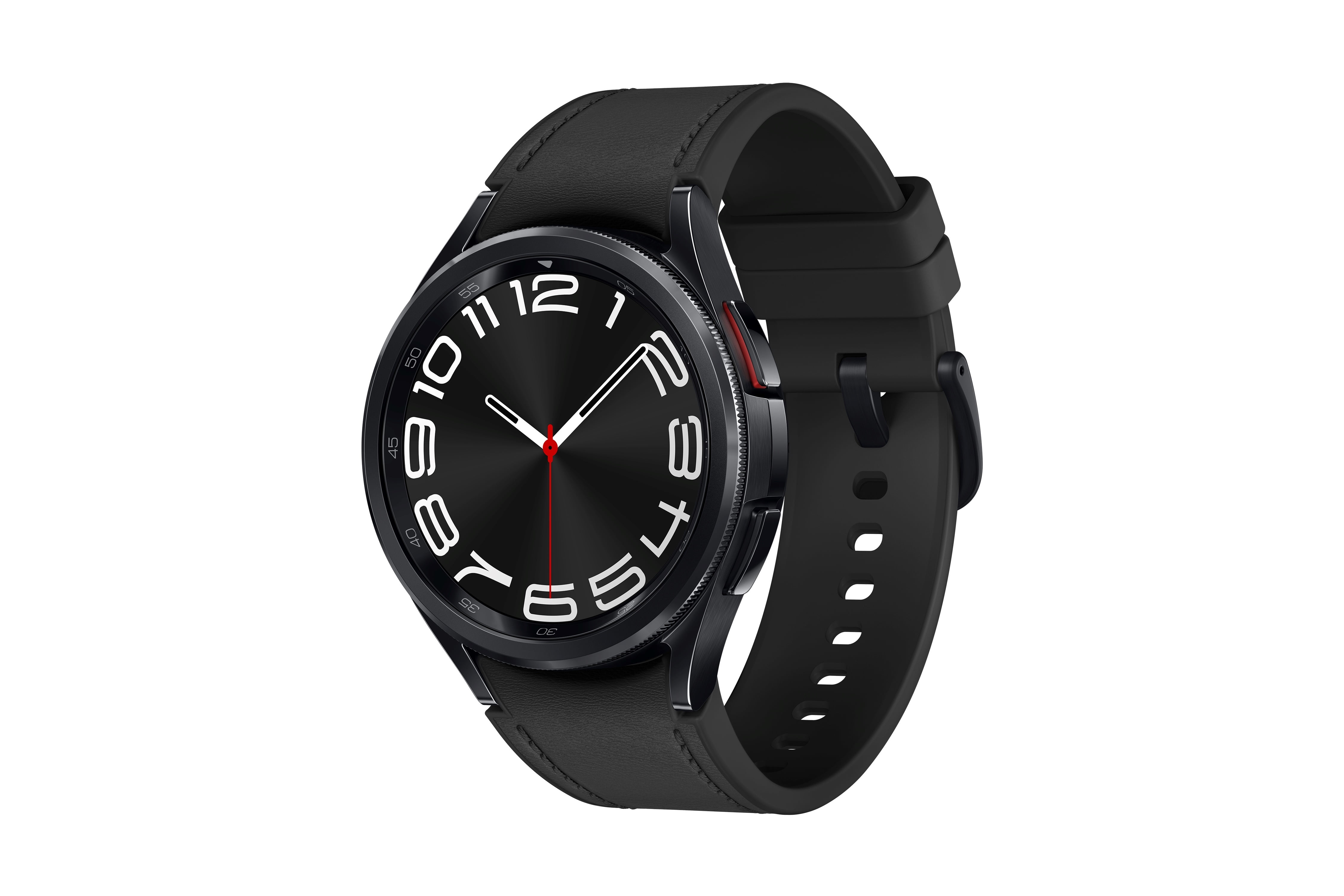
Samsung Galaxy Watch 6 Classic
- Rotating bezel
- A choice of case size
- Supreme 24/7 comfort
- High quality materials
- Comprehensive health and fitness tracking
- Spotty notification reliability
- Performance doesn't always impress
| Specification: | |
| Case size | 43mmn47mm |
| Compatibility | Smartphones running Android 8 or later |
| Operating system | Android |
| Battery life | 30 hours (with always-on display)n40 (without always on display) |
Why you should buy this: It’s incredibly comfortable, looks great, and is made from high-quality materials.
Who it’s for: An Android user who wants a premium smartwatch with a unique design and has no problem paying more to get it.
Why we picked the Samsung Galaxy Watch 6 Classic: The Samsung Galaxy Watch 6 Classic was released as a more expensive companion to the Galaxy Watch 6, and it still fills that spot, even alongside the more powerful Galaxy Watch 7.
While the Galaxy Watch Ultra is another option if you’re willing to spend even more, that design isn’t for everyone. The Galaxy Watch 6 Classic is the better option for those who want a Samsung smartwatch with a more sophisticated style.
Plus, even though the Galaxy Watch 6 Classic may seem like it’s now almost two years behind, it’s gotten Wear OS 5, which should put it on par with the Galaxy Watch 7 in terms of software features.
What makes the Galaxy Watch 6 Classic remain a worthwhile buy is its elegant design that looks as close to a classic watch design as you’ll find among flagship smartwatches. From the classy stainless steel case and sapphire crystal glass display to the rotating bezel and leather strap, it’s as much a fashion statement as a smartwatch. Plus, WearOS 5 has arrived, which means you can access a much broader range of attractive watch faces to complement its style.
Don’t let its looks fool you, though, as it doesn’t pull any punches on features. You get solid battery life that actually beats out the Galaxy Watch 7, plus all of Samsung’s great health- and fitness-tracking features, from the BioActive Sensor that tracks your heart rate, body temperature, and blood oxygen levels to the bioelectrical impedance analysis that will give you insights into your body composition.
The Galaxy Watch 6 Classic is the smartwatch to buy if you want the Samsung health and Wear OS experience in style. With a gorgeous high-quality build, a rotating bezel, and a much larger screen, it’s one of the best premium smartwatches for Android phones.

The best dual-screen smartwatch
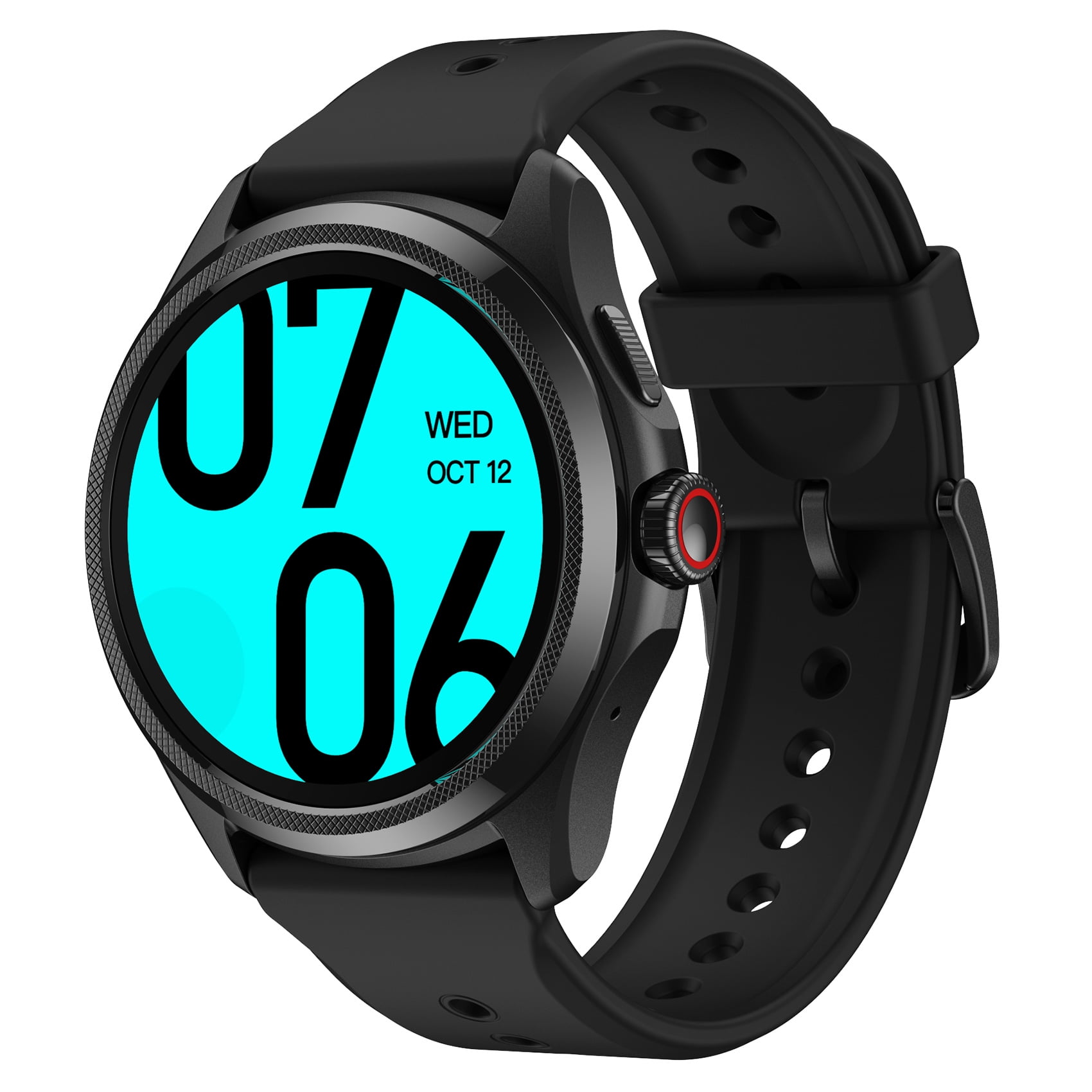
Mobvoi TicWatch Pro 5
- Clever dual-screen system
- Four-day battery life
- Highest-performance smartwatch
- Clean and reliable software
- Quality haptic feedback
- One size and color only
- No cellular option
- Fitness-tracking bug requires fixing
| Specification: | |
| Case size | 50mm |
| Compatibility | Android 8 or later |
| Operating system | Wear OS 3 |
| Battery life | Up to 80 hours |
Why you should buy this: The latest chip, four-day battery life, and slick software make this a truly excellent smartwatch.
Who it’s for: Anyone who wants the best dual-screen tech and the longest battery life from their smartwatch.
Why we picked the Mobvoi TicWatch Pro 5: The Mobvoi TicWatch Pro 5 is going to cost you $350, but it’s worth the additional cost over what you’d spend on the basic $300 Samsung Galaxy Watch 6 if you want a dual-screen watch with great battery life. It’s one of the fastest, smoothest-performing Android smartwatches we’ve used, and it returns battery life most others cannot come close to matching.
Mobvoi’s clever dual-screen layout is the star here. In this clever feature, a standard OLED screen is overlaid by a different panel used solely for always-on duties. It’s more useful than on previous TicWatch models, showing additional information outside of just the time and date, and it’s instrumental in making the battery last as long as it does. It requires no effort to use, but is hugely beneficial.
Inside the TicWatch Pro 5 is the Qualcomm Snapdragon W5+ Gen 1 processor. It’s the first smartwatch to feature the chip, and it’s a seriously impressive performer. Wear OS 3.5 is very fast and super smooth, banishing the memory of so many poor-performing Android smartwatches from the past. It’s seemingly efficient, too — when paired with the dual-screen layout, the TicWatch Pro 5’s battery lasts for around four days before it needs recharging.
To get this truly premium smartwatch experience, you’ll have to put up with the TicWatch Pro 5’s size. It has a 46mm case, and that’s the only size available. The design is slick, but it only comes in black and on a silicone strap, so there’s not much room for personalization here. It is durable, though, with MIL-STD-810G toughness and water resistance.
The Mobvoi TicWatch Pro 5 is a technical powerhouse. It shows off Wear OS better than any other smartwatch, and it has battery life that makes other models blush. If you value materials like sapphire crystal on your premium smartwatch over power and specs, then take a look at the Samsung Galaxy Watch 6 Classic instead.

The best hybrid smartwatch
Withings ScanWatch 2
- Beautiful design
- Comprehensive health monitoring
- FDA approved for atrial fibrillation
- 38mm or 42mm case sizes
- Long battery life
- Unreliable notifications
- Subscription needed to unlock features
- App design can frustrate
| Specification: | |
| Case size | 38mmn42mm |
| Compatibility | iOS 16 or laternAndroid 12 or later |
| Operating system | Unknown |
| Battery life | 30 days |
Why you should buy this: It’s the ideal mix of good watch design and fitness-tracking technology.
Who it’s for: Anyone who doesn’t want their smartwatch to look too techy, but isn’t willing to compromise on health and fitness tracking.
Why we picked the Withings ScanWatch 2: A hybrid smartwatch is one that looks more like a traditional watch with analog hands and no touchscreen, but still includes all the smart connected features and health tracking we love about more techy models. The Withings ScanWatch 2 fits the bill perfectly, with its classy stainless steel case and sapphire crystal, plus an almost hidden OLED screen showing all the information you need.
On the back is a heart rate sensor and body temperature monitor, plus the ScanWatch 2 separates itself from other smartwatches by having Food and Drug Administration (FDA) approval for its atrial fibrillation detection. It also tracks your workouts, measures blood oxygen levels and body temperature during exercise, and a lot more. It’s also an excellent sleep tracker, with masses of data available.
The lack of a touchscreen means the battery has less work to do, and should last for about two weeks on a single charge when you use all the features (or longer if some are inactive). The app is informative, but not all that well laid out, and there are a lot of niche features — plus an unwelcome subscription to pay if you want more. Otherwise, the ScanWatch 2 is a superb choice if a full touchscreen smartwatch doesn’t appeal to you.
Alternatively, if the design isn’t sporty enough, the Garmin Vivomove Trend may be more suitable, and we love its cool looks and hidden screen, along with Garmin’s excellent health and fitness platform. Failing that, Casio’s connected G-Shock watches like the GPR-H1000 Rangeman and the GBD-H2000 are both excellent too.

The best luxury smartwatch
Tag Heuer Connected Calibre E4
- Tag Heuer Sports app is excellent
- Luxury sapphire, ceramic, and steel build
- Sharp, high-resolution screen
- 42mm size suitable for most people
- No Sp02 sensor
- Can't take calls
| Specification: | |
| Case size | 42mm |
| Compatibility | Android 8 through 15niOS 15 through 18 |
| Operating system | Wear OS |
| Battery life | 24 hours |
Why you should buy this: It’s the definitive smartwatch made by a luxury watchmaker.
Who it’s for: If you appreciate a luxury watchmaker’s approach to design and wearability, the Connected Calibre range is for you.
Why we picked the Tag Heuer Connected Calibre E4: There are two different Connected Calibre E4 models, one with a 42mm case and the other with a 45mm case. We recommend the 42mm case overall, as it’s going to suit more wrist sizes, but if you’re happy wearing a bigger watch, the 45mm Connected Calibre E4 has a slightly different design that may appeal more. Tag Heuer has also released various special editions, including a golf-specific model and one in collaboration with Porsche.
But why buy a luxury smartwatch? It’s all about the design, materials, and strap. The Connected Calibre E4 is made from stainless steel and has a ceramic bezel, and comes with either a steel, rubber, or leather strap equipped with Tag Heuer’s excellent folding clasp. The pushers feel almost mechanical, the crown rotates, and the design is elegant and classy. It’s a world apart from tech-forward smartwatch designs.
On the back is a heart rate sensor so it’ll track all your workouts, the watch receives notifications from your phone, and it is compatible with both Android and iOS. It comes with Google’s Wear OS software, and the good news is an update to Wear OS 3 should be available as you read this, bringing the smartwatch right up to date. It also keeps it competitive, as the Montblanc Summit 3 had Wear OS 3 installed at launch. The Montblanc smartwatch is a good alternative if you don’t like the Tag Heuer design or its watch face options.
Any luxury watch must make you feel special when you wear it, and the Tag Heuer Connected Calibre E4 manages to bring that special something into the world of smartwatches.

The best fitness smartwatch
Garmin Forerunner 265
- Extremely comfortable
- Lovely AMOLED screen
- Incredible health/fitness tools
- Highly customizable
- 4-plus days of battery life
- Doesn't require any subscriptions
- Limited smart features
- Proprietary charger
| Specification: | |
| Case size | 46mm |
| Compatibility | Unknown |
| Operating system | Garmin OS |
| Battery life | 13 days (smartwatch mode)n20 hours (GPS mode) |
Why you should buy this: You get all Garmin’s fitness expertise and features in a neat smartwatch with a touchscreen.
Who it’s for: It’s best for runners and sports addicts, but can also prove motivational for anyone wanting to improve their fitness.
Why we picked the Garmin Forerunner 265: Garmin’s Forerunner series, as the name suggests, targets runners — and the 265 model sits in the middle of the options available. But just because it’s most suited to running, don’t think that it can’t do anything else, because this is a fully featured fitness wearable that will keep most fitness addicts motivated and satisfied.
The 46mm case and 47 gram weight mean it’ll look and feel sizable on your wrist compared to the Apple Watch Series 8 or the Galaxy Watch 5, but the 22mm band has lots of adjustment or can be quickly swapped for another one if you want to jazz up the rather plain look. Data is presented on a high-resolution AMOLED touchscreen, and there are buttons on the case to make it easy to navigate on the move or when wearing gloves.
It has a full sensor array to monitor heart rate and blood oxygen levels, plus Garmin’s platform provides masses of additional data on your workouts, lifestyle, and sleep. It returns plenty of motivation too and can help you improve your fitness and try different plans to keep things interesting. The battery lasts for between four and seven days, depending on your use, and it recharges in around an hour.
If the Garmin Forerunner 265’s high price and chunky design puts you off, then we recommend checking out the slightly cheaper and more stylish, but equally capable, Polar Pacer Pro instead.

The best smartwatch for outdoor sports
Garmin Epix Pro (Gen 2)
- High quality materials
- Durable construction
- Hugely customizable
- Comprehensive sporting platform
- No subscription needed
- No Qi wireless charging
- Operating system takes some learning
| Specification: | |
| Case size | 51mm |
| Compatibility | AndroidniOS |
| Operating system | Android niOS |
| Battery life | 31 days |
Why you should buy this: It’s the best smartwatch for outdoor enthusiasts and the seriously sporty.
Who it’s for: This watch is for anyone serious about their sport.
Why we picked the Garmin Epix Pro (Gen 2): If you’re a hiker, cyclist, runner, or adventurer, then you’ll want a smartwatch that can keep up, and probably one that’s both durable and customizable too. The Garmin Epix Pro (Gen 2) is just about the most feature-rich sports smartwatch you can get, as it’s filled with focused features and linked to the in-depth Garmin health platform.
There are several versions of the Epix Pro (Gen 2) to choose from, including massive 51mm versions with a sapphire crystal. And when you get it, the entire look of the software on-screen can be tailored to match your sport of choice. It’s very focused, and expects you to be focused too.
The battery can last up to a week. There’s GPS, a compass, altimeter, thermometer, a heart rate and blood oxygen sensor, and even a tiny flashlight built in. The Epix Pro (Gen 2) has new metrics for endurance and hill climbing, and even more internal storage space compared to the old model. There’s a steep learning curve attached to the software, and you really have to be dedicated to a particular sport to get the most from it, but the Epix Pro (Gen 2) is an incredibly feature-packed smartwatch.
How we test the smartwatches
We review smartwatches that are sent to us by companies we know and trust, including Apple, Garmin, and Samsung. We work to ensure that they are compatible with most smartphones regardless of their operating systems, can accurately read biometrics, and can withstand the elements. Those factors help us inform our decision to add the smartwatches to the list.
Why trust us
Digital Trends has been reporting on the latest in consumer technology since 2006. Our writers and editors love wearing their smartwatches on a daily basis and take advantage of the features that come with them, especially features that help monitor their overall health regardless of their level of physical activity.


