
Acer just took the wraps off the Chromebook 13, which is the first Chrome OS-powered notebook to run on Nvidia’s Tegra K1 processor, a chip designed to tackle graphics-intensive tasks while sipping on its host system’s battery.
Related: Acer stuffs a Core i3 CPU into its C720 notebook
We recently had an opportunity to play with the Chromebook 13 during a private briefing with Acer, and we approached it with a certain question in mind: Does it makes sense to go for the Chromebook 13, which starts at $279.99, or should you get your mobile Chrome OS fix elsewhere?
Taking it to task
Acer heavily touted the Chromebook 13’s graphics processing chops, and talked about how it’s much better equipped to handle such tasks compared to the average Chromebook, typically equipped with low-power Samsung Exynos and Intel Celeron/Pentium processors with integrated GPUs.
Acer showcased the Chromebook 13’s graphics capabilities by opening The Bio Digital Human, a website that provides the user with a virtual, interactive representation of the body, individual organs, multiple bio-systems, and more. Indeed, the experience was pretty smooth. The site was made using WebGL, an API used to render 3D graphics in a Web browser. You can check out The Bio Digital Human site for yourself here.
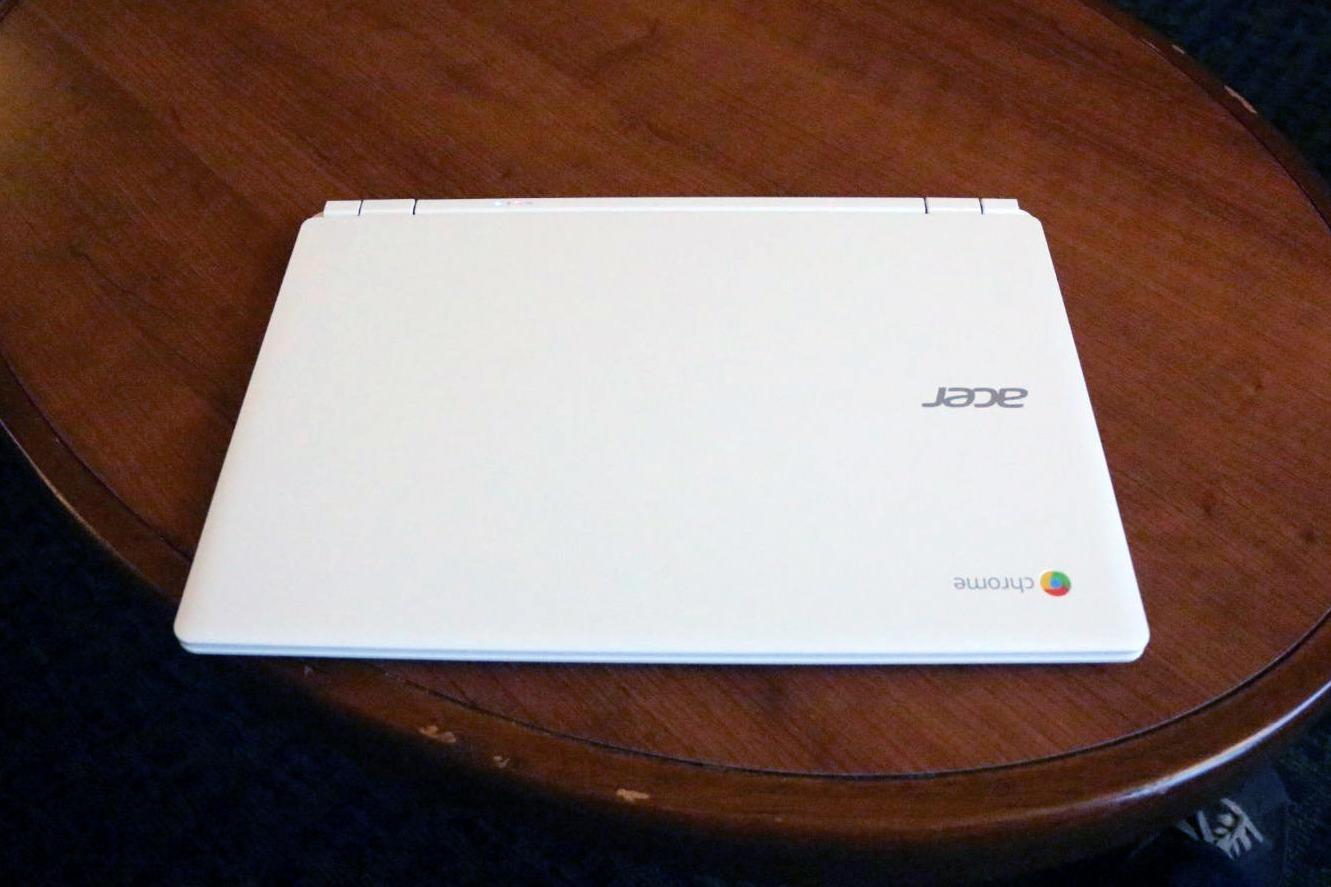
While the graphics-intensive site ran pretty well on the Chromebook 13 when we used it, we were told by an Acer rep that any Chromebook equipped with a processor aside from the Tegra K1 would have difficulty opening and navigating the site. Fortunately, we had an Acer C720p on hand to test that claim. The Bio Digital Human, and other WebGL sites like it, may run better or look prettier on the Acer Chromebook 13. But the Acer C720p, which is built around an Intel Celeron 2955U chip and an Intel HD Graphics GPU, opens and runs the site just fine as well.
When using the C720p, we dove into and out of the cardiovascular, skeletal, and other systems while experiencing only minor stuttering. The Acer Chromebook 13 may have superior graphics capabilities, but the contrasting weakness of competing Chromebooks when tackling comparable tasks was, at least in this case, overstated.
It’s worth noting that the Bio Digital Human site looks a lot better on the Chromebook 13 than it does on the C720p. Very few websites are built using WebGL at this point, however, so this particular perk is of questionable value to the average user. At the end of the day, Chromebooks are mostly used for basic Web browsing, word processing, and other everyday tasks. Can the Acer Chromebook 13 handle that? Yes, but so can other Chromebooks in its price range ($280 to $380).
Related: Asus outs a pair of Chromebooks powered by Intel Bay Trail CPUs
Acer also touted the Chromebook 13’s ability to handle multitasking. Yet when we opened multiple browser tabs and darted from one page to another, we experienced a noticeable amount of stuttering. The Acer Chromebook 13 didn’t lock up or exhibit any behavior like that, but we wouldn’t describe the experience as buttery-smooth either.
If the Chromebook 13 excels at anything, it’s staying on for as long as possible. Acer rates the Chromebook 13’s battery life at 13 hours for the 720p model, and 11 hours for the 1080p version. While we won’t be able to test these claims until we get a review unit in our hands, that’s quite impressive. For what it’s worth, Asus revealed a pair of 11.6-inch Chromebooks that the company said should get “up to” 10 hours of battery life.
When typing on the Chromebook 13’s keyboard, we felt that its keys had decent travel, and the touchpad was respectably sized. We didn’t get the sense that its plastic shell could take a hard beating, but it shouldn’t fall apart easily either.
Should you, or shouldn’t you?
Whether you should or shouldn’t get the Acer Chromebook 13 depends on where your priorities lie.
If battery life is high on your list of must-haves for any notebook, then you should probably give the Chromebook 13 a shot. If processing power is a bigger concern for you, then you should take a look at Acer’s C720, which the company announced not too long ago, and is one of the few Chromebooks with an Intel Core i-class (Core i3, to be exact) CPU.


