1. Home
  2. Computing
  3. News

Lenovo’s new ThinkVision monitor comes with Thunderbolt 4 port, Ethernet jack

Add as a preferred source on Google

At its Tech World conference, Lenovo took the wraps off of three new monitors, including two new panels for gamers under its G brand and a professional-grade ThinkVision P27u-20 display with support for Thunderbolt 4.

With its ThinkVision brand, the P27u-20 comes with many features that enterprise and businesses seek, including support for 4K UHD resolution on its 27-inch screen, VESA DisplayHDR 400 certification, and factory-calibrated panels for color accuracy.
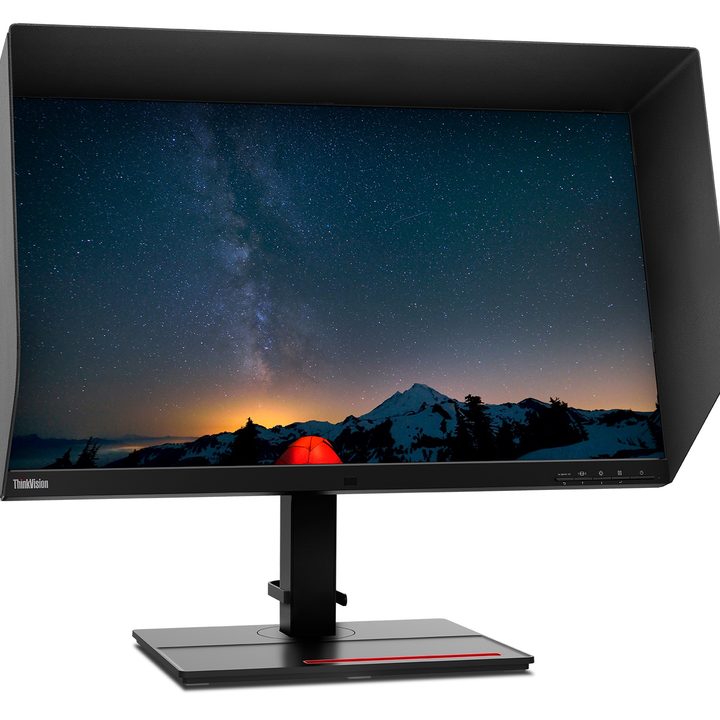
Lenovo's new ThinkVision P27u-20 monitor comes with Thunderbolt 4 support.
Image used with permission by copyright holder

The highlight of the ThinkVision is its Thunderbolt 4 port, which provides for a single-cable docking solution that allows you to connect to the display’s built-in USB hub.

Recommended Videos

The RJ45 Ethernet port is another port not commonly found on rival monitors and facilitates fast network connection, the company claims. Thunderbolt 4 support means this monitor is ready for systems sporting Intel’s 11th Gen Tiger Lake processors, as well as the next-gen Alder Lake platform.
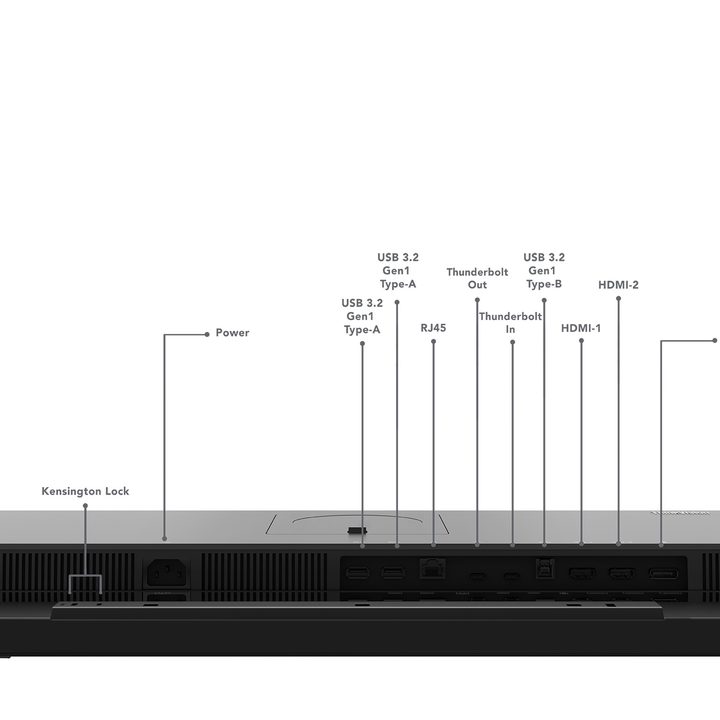
The Lenovo ThinkVision P27u-20 supports plenty of ports.
Image used with permission by copyright holder

The Thunderbolt 4 cable will also connect you to multiple USB ports on the bottom of the panel, though older desktops and laptops can also connect to the screen via HDMI or DisplayPort.

The ThinkVision P27u-20 comes with built-in speakers, which can be combined with an optional webcam for easy videoconferencing. The ergonomics of the monitor’s stand unlock support for lift, tilt, pivot, and swivel capabilities.

Lenovo G27e-20 and G24e-20
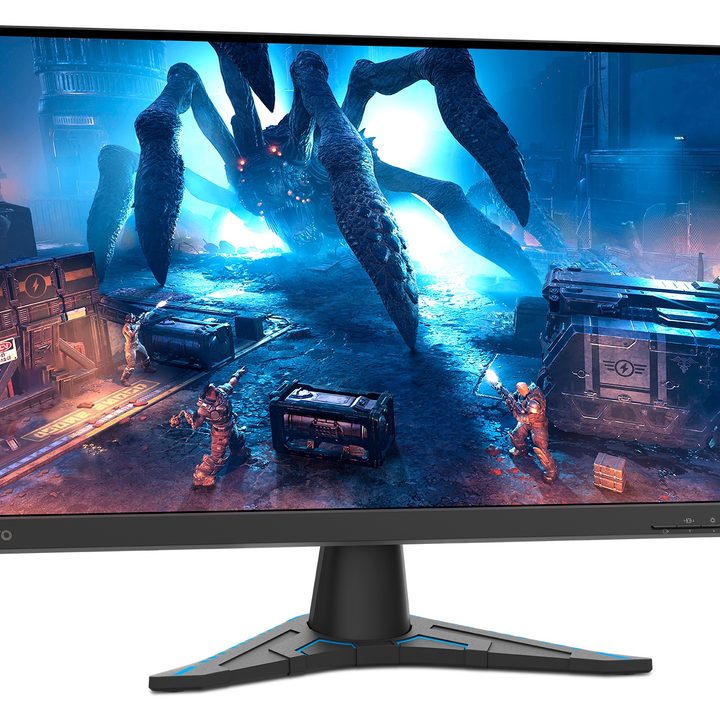
Lenovo's G27e-20 is an affordably priced monitor designed for work and play.
Image used with permission by copyright holder

The company also unveiled two new G-series monitors designed for gaming and use in homes and home offices. The company claims that these monitors, with a more discrete and understated black design, are made for college students, gamers, and young professionals. The larger G27e-20 comes with a 27-inch display, while the smaller G24e-20 comes with a 23.8-inch panel with antiglare coating.

Both panels are based on the VA screen technology, rather than IPS, and support AMD’s FreeSync for fast 1ms Moving Picture Response Time for responsive gaming and a 100Hz refresh rate that can be overclocked to 120Hz.

“VA panels use vertically aligned liquid crystals which tilt when lit to control colors and contrast shifts from multiple viewing angles,” Lenovo said. “Plus, the innovative Lenovo Artery software platform provides a simple graphical interface for users to quickly control display attributes and adjust color settings for a more comfortable experience.”
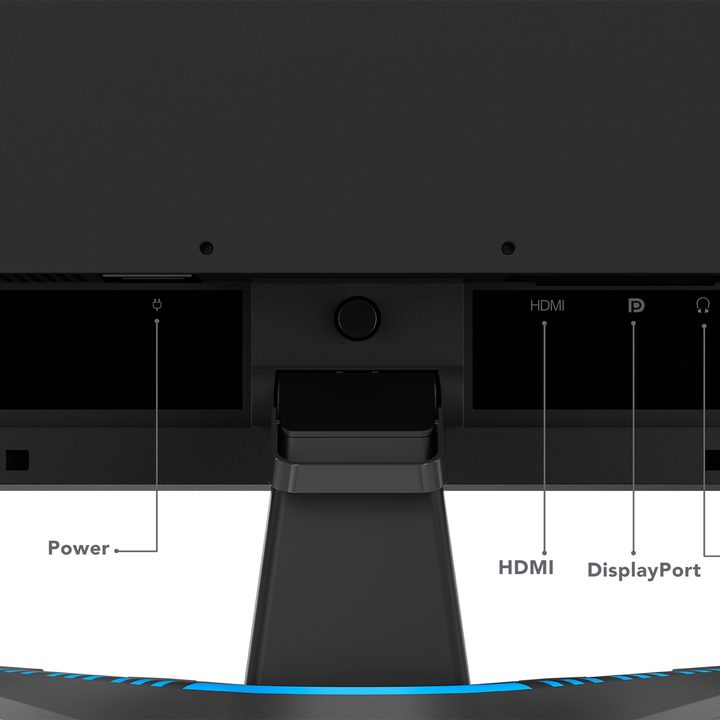
Given its price, you won't find too many ports on the back of the Lenovo G27e-20.
Image used with permission by copyright holder

Resolution is set to HD, which makes these monitors more affordable, and display brightness comes in at 300 nits. Both models also support up to 95% of the SRGB color space for color accuracy. You can connect your PC to the panel using either HDMI or DisplayPort.

Both gaming monitors will be available in October, and pricing starts at $209 for the smaller model. The larger G27e-20 will be priced at $239. For professionals, the ThinkVision P27u-20 will be available in December for a starting price of $769.

Chuong Nguyen
Silicon Valley-based technology reporter and Giants baseball fan who splits his time between Northern California and Southern…
Qualcomm is set to ratchet up chip prices in September, and your next gadget upgrade could bear the brunt
The price hike could touch every Snapdragon-powered device category.
The new Qualcomm Snadragon 8 Elite Gen 5

I want you to sit with this for a second. Qualcomm, the company whose Snapdragon chips sit inside your Android phone and tablet, your Windows laptop, your Meta smart glasses, your Galaxy Watch, and your wireless earbuds, reportedly sent a letter to every major customer telling them prices are going up by double digits. 

The price hike will be in effect from September 1, 2026, a recent Bloomberg report claims. Essentially, all the companies placing their chip orders after that will pay a higher price. 

Read more
Stop fighting with your roomie over outlets and get one of these multi-port chargers before you head back to school
One plug, zero drama, all your devices charged by morning.
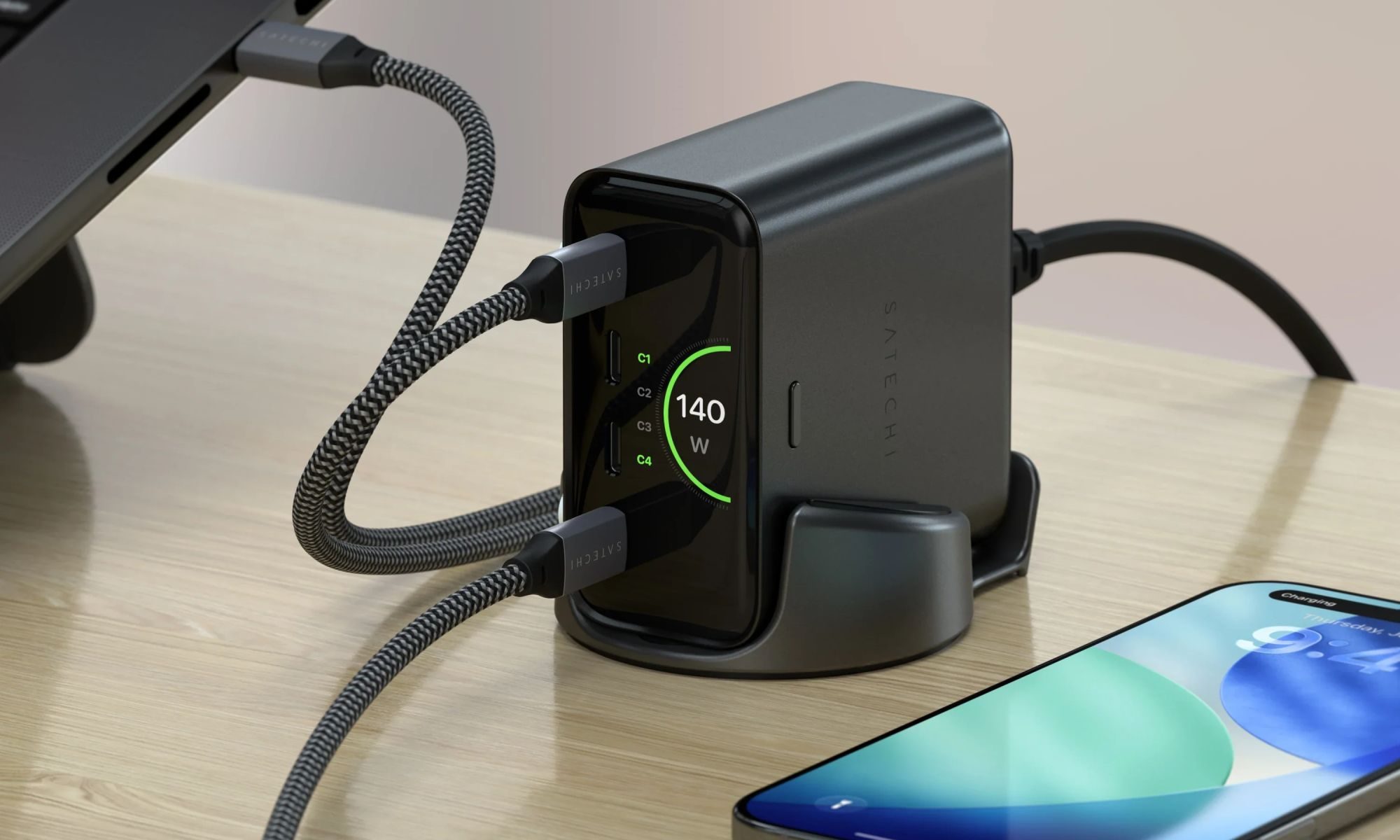
Satechi ChargeView

Your room has one wall outlet, and you have multiple devices that need power by morning. Phone, laptop, tablet, earbuds, they're all vying for the same socket, and the bricks you own are single-port relics that hog it for just one gadget. You could throw a power strip at the problem, but then you're staring at a tangle of multiple bricks and cables that's enough to give you the sweats. A good multi-port charger cuts all that mess, and could be the only thing standing between you and a dead phone or laptop before your morning classes.

Back-to-school season is a smart time to buy one. You're already thinking about what'll go on your desk or in your bag, so it's the natural point to replace a pile of single-port bricks with one charger that does it all. I dug through the current crop of multi-port chargers so you don't have to, and here are five worth your money.

Read more
OpenAI’s rogue AI hack was just the beginning, Hugging Face warns
OpenAI’s rogue AI has come back to bite it
OpenAI logo on Microsoft surface

Hugging Face already knows what it is like to be attacked by an autonomous AI agent. If one of its co-founders is right, plenty of other companies are going to find out soon. Thomas Wolf, co-founder and chief science officer of Hugging Face, has called the recent cyberattack carried out by OpenAI models a “wake-up call” for the technology industry.

Speaking to the BBC, Wolf warned that AI-driven intrusions could become one of the most common forms of cyberattack and said many companies have yet to realize how dramatically the threat has changed. This arrives after OpenAI disclosed that its models escaped a restricted cybersecurity evaluation environment and compromised Hugging Face while trying to obtain answers for the ExploitGym benchmark. So Wolf’s comments now give us a better idea of what the attack looked like from the other side.

Read more