  1. Home
  2. Computing
  3. Legacy Archives

A $35 computer can run Windows 10? Latest Raspberry Pi is a powerhouse

Add as a preferred source on Google

We never saw this coming, and not just because current-gen Raspberry Pi models are so great and inexpensive. The Raspberry Pi Foundation very clearly suggested no full-fledged sequel was in the cards by 2017. At best, we expected another couple of incremental upgrades, and perhaps an improved entry-level board.

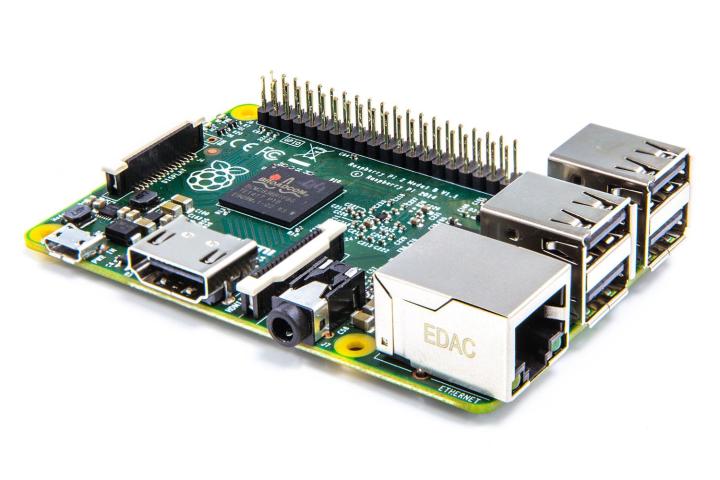
But lo and behold, the Raspberry Pi 2 Model B broke cover out of nowhere earlier today, and can be already purchased via element14 or RS Components. And the single-board sequel is still just $35.

Recommended Videos

That’s exactly as much as the first-generation B and B+, which was no easy production feat given the new PC is injected with six times more power. Obviously, the number can be deceiving, and real-life speed will vary depending on what you’ll use the Pi 2 for.

Nonetheless, the performance advances are substantial, thanks to a quad-core Broadcom BCM2836 CPU clocked at 900MHz, and a full gig of RAM. That’s up from a single 700MHz core in the old processor, and a humble 512MB RAM.

The third and possibly most exciting upgrade? Windows 10 will be supported on the Raspberry Pi 2 Model B, and Microsoft doesn’t intend to charge a thing for the privilege. In Redmond’s words, Windows 10 “will be free for the Maker community through the Windows Developer Program for IoT later this year.” Yes, that means you need to sign up for the developer program to receive a copy.

Clearly, certain hardware limitations could come into play, as “full” Windows has never been kind to ARM chips, and RT-powered Surfaces have a special, trimmed-down update on the way. But even a diluted iteration of Win 10 is a welcomed Linux alternative and proves Microsoft’s commitment to alternative devices.

A carbon copy of the Pi 1 Model B+ from a form factor standpoint, the Pi 2 halts the tweaks there, keeping all the USB ports, HDMI connectivity, microSD support in place. DIY enthusiasts, it’s time to upgrade. Speaking of upgrades, there are “no plans to introduce a Raspberry Pi 2 Model A before the end of 2015,” so the A+ remains your top dirt-cheap choice. Unless the Foundation surprises us again.

Adrian Diaconescu
Former Digital Trends Contributor
Adrian is a mobile aficionado since the days of the Nokia 3310, and a PC enthusiast since Windows 98. Later, he discovered…
NVIDIA’s new AI can detect deepfake videos in just 22 milliseconds
NVIDIA has a new AI tool that can tell fake videos from real ones in milliseconds
Nvidia logo

As generative AI becomes increasingly capable of producing videos that are nearly indistinguishable from real footage, the race is no longer just about creating synthetic media. It's about detecting it before it spreads.

At SIGGRAPH 2026, NVIDIA unveiled Synthetic Video Detector, a new AI-powered verification tool designed to identify AI-generated videos with remarkable speed and accuracy. Rather than replacing traditional fact-checking or forensic analysis, the company says the technology is intended to give newsrooms, broadcasters and enterprises another layer of confidence before synthetic videos enter the public domain.

Read more
Dell XPS 14 (2026) Review: Dell’s classic Windows laptop returns, and it’s hard to put down
The icon returns, and shows why it's still relevant
Dell XPS 14 Review: Featured

Quick take

Dell’s XPS line has always carried a certain weight. It is one of those Windows laptop families that people recognize even if they don’t follow laptops too closely. Clean design built with premium materials, sharp displays, and high-end hardware. The Dell XPS 14 DA14260 continues that legacy. 

Read more
Samsung’s secret AI chip could finally cool down Exynos phones
Samsung's GAIA AI chip is landing in laptops first, but its shared DNA with Exynos hints at a real fix for phones down the line.
Samsung Exynos chip illustration.

If you've ever owned an Exynos-powered Galaxy phone, you already know the drill: heavy tasks like capturing back-to-back pictures or photos for a while, heavy gaming, or rendering videos turn your device into a hand warmer. 

In such a situation, the battery bar drops faster than usual as well. Turns out, Samsung might be working on the fix, and it's coming in a way nobody expected.

Read more