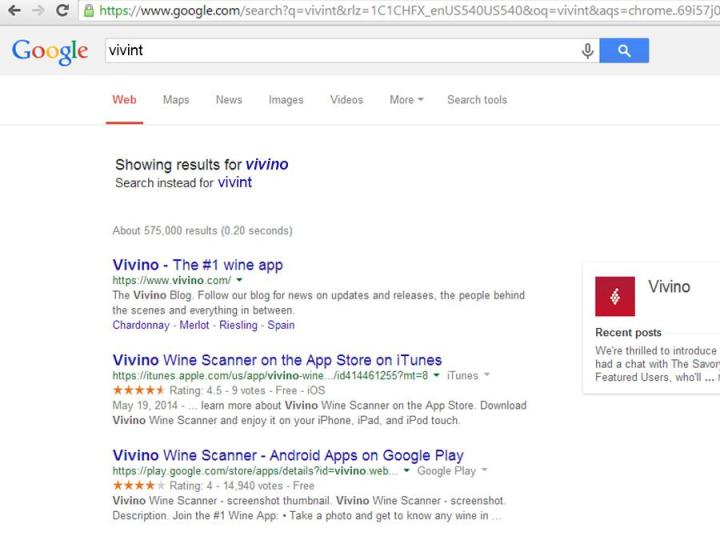
Every now and again, Google doesn’t exactly live up to it’s unofficial motto “Don’t Be Evil.” According to a recent report from Pando, shortly after the search giant acquired connected thermostat maker Nest for $3.2 billion, it quickly scrubbed one of its biggest competitors from search results.
Just two weeks after the acquisition went through, Vivint –a Utah-based home automation company that also produces smart thermostats– suddenly found itself exiled from the most popular search engine one the web. Search for the company’s name, and it was like they didn’t exist at all. According to one search marketing expert who followed the incident as it happened, Vivint was delisted for all but three of the 3300 search terms that were linked to its website.
When Vivint reached out to Google to determine why it had suddenly been erased, Google said it had found external links to Vivint’s website that were apparently outside of its “quality guidelines.” But when asked to identify the links and elaborate on why they weren’t up to snuff, Google reportedly stayed silent, forcing Vivint to guess what it had done wrong and make numerous requests for reinstatement.
This began around January 29, about 16 days after Google’s Nest acquisition was announced, and it wasn’t until earlier this week –a full four months later– that Vivint started appearing in searches again.
Technicially speaking, Vivint was guilty of some improper linking, but the punishment Google gave them for it was considerably more severe than what it’s dealt out to other offenders. For example, when Rap Genius got caught gaming the system and letting bloggers link to its website in exchange for social media exposure, the incident was ironed out in just two weeks.
Everything about Vivint’s exile –the timing, the severity, and the seemingly purposeful lack of transparency and cooperation on Google’s behalf– seems highly suspect. But sadly, this isn’t anything new for Google. We’ve seen this happen in the past with companies like Expedia, Overstock.com, and RapGenius, so regardless of whether this Vivint incident is an example of deliberate sabotage or not, it’s yet certainly another case that demonstrates the magnitude of Google’s anticompetitive power.
[via PandoDaily]
Editors' Recommendations
- Get $50 off Google’s Nest Learning Thermostat for a limited time
- Google Nest sale: Get up to 22% off cameras and doorbells
- The most common Google Nest Mini problems and how to fix them
- Google Home adds new camera features and support for Nest Cam Outdoor
- Best Google Nest deals: Save on Nest Thermostat, Hubs, and Doorbell