When the Academy Awards roll around each year, several traditions kick into high gear: guessing who will be nominated, lamenting over who got snubbed, judging the red carpet looks a little too harshly, and wincing at the cheesy musical numbers at the ceremony.
Another tradition is arguing with your friends (or yourself) about who should’ve won the Oscar in years past. The Best Picture category is the most recognizable category of the Oscars, so it makes sense that it’s the one that inspires the most passionate discussion. Should Oppenheimer win over Barbie? What about The Zone of Interest? The below list details five times the Academy got it wrong with their Best Picture winners, and which other nominated movie should’ve won the statuette.
Need more Oscar recommendations? Check out how to watch the 2024 Oscars for free, 2024 Oscar predictions, 10 biggest Oscar snubs ever, 10 best Oscar-winning movies ever, 10 most Oscar-nominated movies ever, and 5 great Oscar-winning movies on Amazon Prime Video.
Call Me by Your Name over The Shape of Water (2017)
Other nominees: Darkest Hour, Dunkirk, Get Out, Lady Bird, Phantom Thread, The Post, The Shape of Water, Three Billboards Outside Ebbing, Missouri
It’s not that The Shape of Water is bad. As Best Picture winners go, it’s above average, and it was great to see a genre master like Guillermo del Toro finally get recognized by the Academy. But 2017 was a great year for movies, and the Academy had better films to select for its top prize. A convincing case can be made for Phantom Thread, Dunkirk, Get Out, or Lady Bird, and even The Post and Three Billboards Outside Ebbing, Missouri have their fans, but there’s one film that bests them all in my mind.
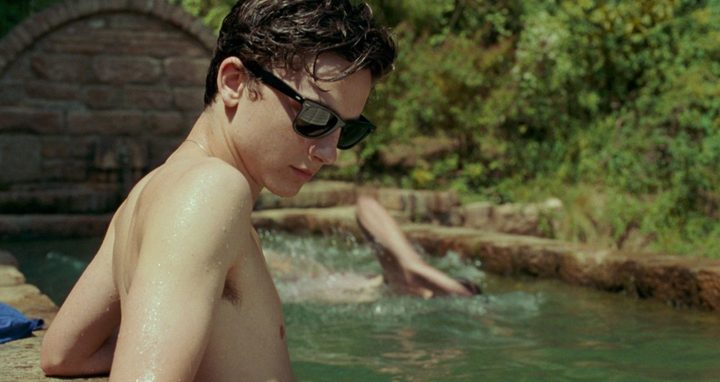
That Luca Guadagnino’s Call Me by Your Name was nominated at all was a small miracle, as the film is bit too … European for the normally conservative Academy. Sensual, lyrical coming-of-age tales aren’t usually fully embraced by the Oscars, but this one should have been as it contains some of the best cinematography, acting, song selection (justice for Sufjan Stevens!), and writing in the last few decades. James Ivory’s adapted screenplay deservedly won an Oscar, but the Academy shouldn’t have stopped there and given its ultimate prize to this fine movie.
The Social Network over The King’s Speech (2010)
Other nominees: Black Swan, The Fighter, Inception, The Kids Are All Right, 127 Hours, Toy Story 3, True Grit, Winter’s Bone
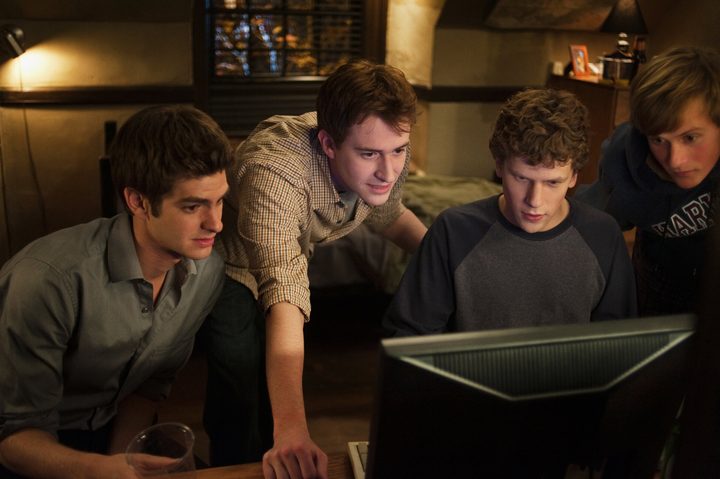
This one still hurts. There’s no reason why The Social Network shouldn’t have won Best Picture in 2011. It was the rare intelligent drama movie that played well with younger audiences, was adored by critics, and was a commercial success. It was filmmaker David Fincher’s best and most accessible film to date while still displaying his trademark dark humor and stylish direction. Plus, it was about something everyone could understand and relate to: Facebook.
The Academy, however, just couldn’t resist going for The King’s Speech, a moldy, routine picture that combined two genres the Oscars love: WWII movies and biopics. Colin Firth, Helena Bonham-Carter, and Geoffrey Rush all gave good performances in the film about King George VI overcoming a speech impediment, but they couldn’t compare with Jesse Eisenberg and Andrew Garfield as real-life tech bros who inadvertently change how people communicate forever. Time has treated The Social Network well, while barely anyone even remembers The King’s Speech.
Pulp Fiction over Forrest Gump (1994)
Other nominees: Four Weddings and a Funeral, Quiz Show, The Shawshank Redemption
It wasn’t a surprise that Forrest Gump won Best Picture on March 27, 1995. The Robert Zemeckis picture had been a critical and commercial smash in the summer of ’94, and had already situated itself in pop culture forever with the immortally stupid line, “Life is like a box of chocolates. You never know what you’re gonna get.”
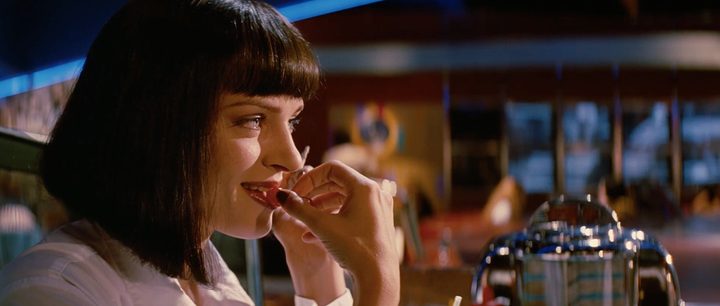
Whatever. Even as Gump was winning every award in sight, everyone knew that Pulp Fiction was better and more memorable. In fact, I’d argue that Gump is the worst nominee of the bunch; I’d much rather watch Four Weddings and a Funeral, Quiz Show, or The Shawshank Redemption again than that sentimental schlock. But Pulp Fiction not only was the best of the bunch, it was groundbreaking, helped cement the indie scene as the dominant force in 1990s filmmaking, and signaled the arrival of one of cinema’s most talented directors ever, Quentin Tarantino.
E.T. the Extra-Terrestrial over Gandhi (1982)

Other nominees: Missing, Tootsie, The Verdict
When the Academy honored Gandhi with the Best Picture Oscar in 1983, it was generally not seen as a crime to do so. The Richard Attenborough film was admired by many (although New Yorker critic Pauline Kael hated it) and was typical of what a Best Picture winner looked like: big, expensive, classy, and about something important. Today, it’s seen as well-intentioned, but seriously dull and uninspired.
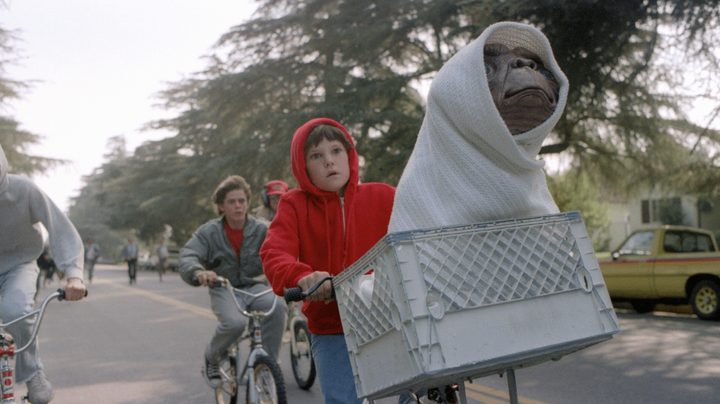
The Academy ignored two outright classics that year: Tootsie and E.T. On another day, I’d pick Tootsie as my winner since it’s one of the funniest comedies ever made, its’ screenplay is often cited in film schools as one of the best ever written, and Dustin Hoffman, Teri Garr, Bill Murray, and Jessica Lange all turn in career-best work. But it’s hard to ignore the timeless magic of E.T., Steven Spielberg’s wonderfully warm and good-hearted sci-fi story about a boy and his pet alien. Its images are burned into every ’80s and ’90s kids’ brain and its score is the soundtrack to a generation’s dreams of soaring into the sky. No film made before or since can quite touch it, and that’s why E.T. deserved to win the Best Picture Oscar.
Chinatown over The Godfather, Part II (1974)

Other nominees: The Conversation, Lenny, The Towering Inferno
It’s a testament to just how great 1974 was for movies that The Godfather, Part II is rightly considered a classic, and yet, I still don’t think it should’ve won Best Picture in 1975. In fact, it’s not even the runner-up; Francis Ford Coppola’s other 1974 movie, The Conversation, is my No. 2 that year. No, the proper winner that year should’ve been Roman Polanski’s cynical, pitch-black noir Chinatown, a film that ranks as the best movie of the 1970s and of all time.
It’s not hyperbolic to claim its all-time status; if you’ve watched it, then you’ll understand why. Polanski’s dark story about corruption in sunny California revolutionized the genre, cemented Jack Nicholson as both an actor and star for the ages, gave Faye Dunaway one of her best roles ever, and had one of the most memorable endings in the history of movies. “Forget it, Jake, it’s Chinatown,” is the last line uttered, but few have forgotten the film 50 years later.