1. Home
  2. Phones
  3. Android
  4. Business
  5. Computing
  6. Emerging Tech
  7. Mobile
  8. Smart Home
  9. Web
  10. News

Digital Trends may earn a commission when you buy through links on our site. Why trust us?

Alphabet wants to beam high-speed Internet to your home

Add as a preferred source on Google

Google has been laying down fiber cables for four years, but parent-company Alphabet is already thinking about a future where you don’t have to dig “up your garden” to get high-speed internet access. In another moonshot project, Alphabet wants to wirelessly beam it into your home.

Why? It’s cheaper, and apparently the technology today makes it viable, according to Alphabet’s Chairman Eric Schmidt at the annual shareholder meeting. Thanks to improved computer chips and accurate “targeting of wireless signals,” Alphabet executives believe they can transmit internet connections at a gigabit per second — the same speed Google Fiber promises with its fiber-optic network, according to the Wall Street Journal. It would likely require a special device in the home to receive these wireless signals.

Recommended Videos

This technology is reportedly being tested in Kansas City, the first city to be graced with Google Fiber’s presence. Alphabet hopes to set Kansas City up as a demonstration by next year, and is testing “several wireless technologies,” according to the Wall Street Journal.

Connecting homes to high-speed internet without the hassle of laying down any wire would be a boon for Google, which depends on people going online to use its services. Schmidt said he met with Alphabet CEO Larry Page and CFO Ruth Porat to discuss the technology.

It’s not the only exciting project Schmidt teased. Some upcoming promising experiments include plant-based imitation meat, 3-D printed buildings, and more work in virtual reality and artificial intelligence.

“The best way to predict the future is to invent it,” he said. “We start from that premise here at Alphabet.”

In an effort to push Google to address gender-pay disparity, CEO of Proxy Impact Michael Passoff pressed Schmidt during the shareholders meeting, asking the search giant to release complete data on the pay men and women earn at the company. The exchange was tense, the Journal reports, and Schmidt says he wouldn’t commit to releasing a report, but “would work to convince you this is true.”

Julian Chokkattu
Former Mobile and Wearables Editor
Julian is the mobile and wearables editor at Digital Trends, covering smartphones, fitness trackers, smartwatches, and more…
Geekbench now lets you check how a phone will actually handle your boring daily chores
New tests, smarter scores, and finally some love for NVIDIA GPUs.
Geekbench 7 open on iPhone

Geekbench, the popular cross-platform benchmark from Primate Labs, just got a major update. Geekbench 7 is out today, and you can download it on Android, iOS, Windows, macOS, and Linux. If you like to know exactly how your CPU and GPU stack up, this update brings a bunch of changes worth knowing about.

What's new in the CPU tests?

Read more
Latest Pixel 11 series leak offers the clearest look yet at Google’s next flagship
Google's next Pixel has leaked again, but this time almost nothing is left to imagine
Pixel 11

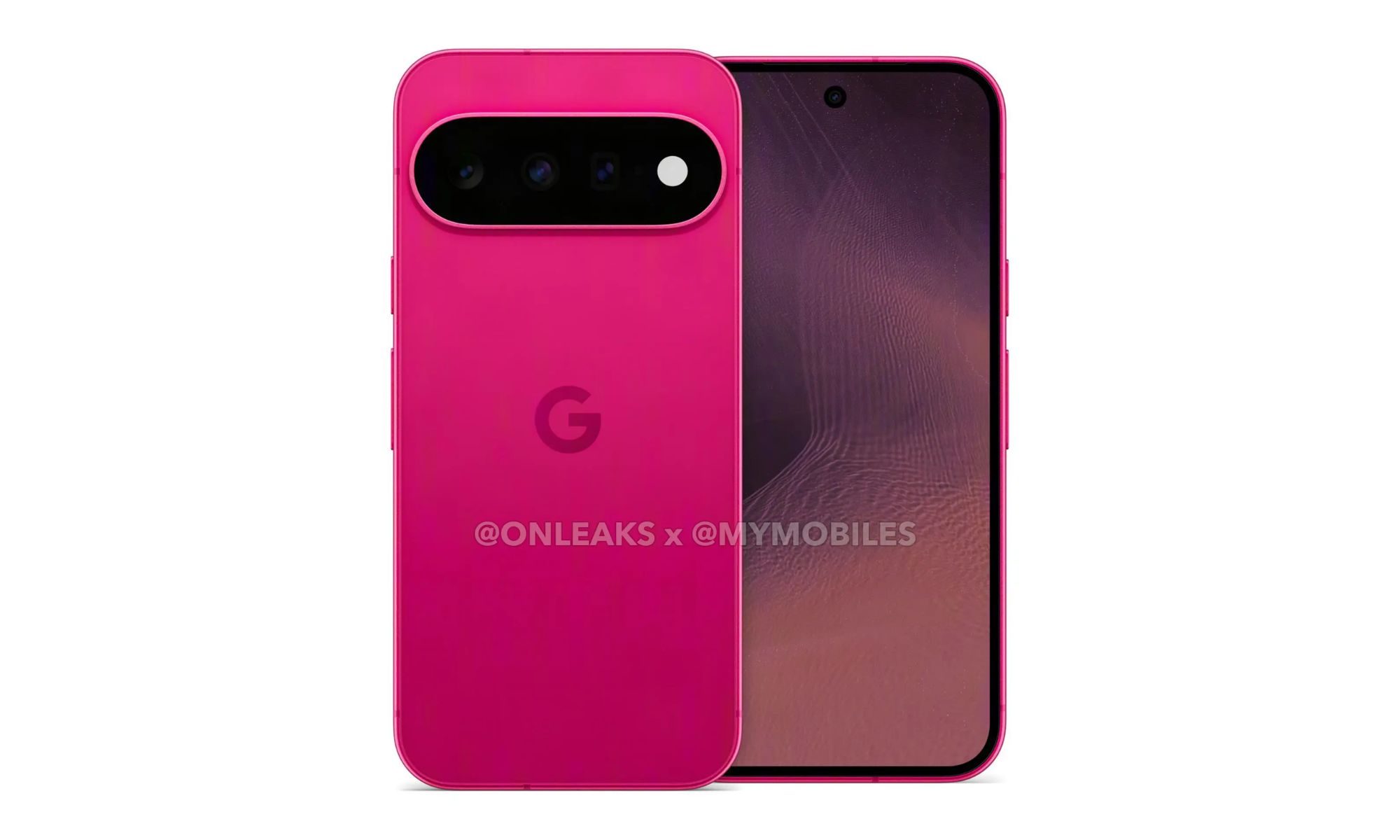
Google's Pixel launches have become increasingly difficult to keep under wraps, and the Pixel 11 series appears to be no exception. Weeks before Google's scheduled August 12 launch event, a fresh leak has revealed what is claimed to be the complete set of official press renders for the Pixel 11, Pixel 11 Pro and Pixel 11 Pro XL, showcasing every colour option across the lineup.

The renders, published by MyMobiles in collaboration with tipster OnLeaks, offer what is arguably the most comprehensive look yet at Google's next flagship family. If authentic, they not only confirm earlier design leaks but also reveal Google's colour strategy for 2026, including a vibrant Fuchsia finish for the standard model and a new copper-inspired "Dune" variant for the Pro series.

Read more
Galaxy Z Flip 8 vs. Motorola Razr Ultra (2026): Samsung’s flip phone is cheaper, but is it better?
One flip phone wins on value. The other wins on hardware.
Electronics, Phone, Mobile Phone

Flip phones have quietly become one of the most competitive corners of the smartphone market. It provides buyers with a satisfying folding snap, reducing the footprint to half the original size, and that’s the entire point. Motorola never really left the format after reviving the Razr name, while Samsung has spent generations treating the Flip line as its scrappy, budget-friendlier sibling to the Fold. 

This year, though, the gap between the two camps has narrowed to the point where picking a winner requires genuinely reading the spec sheet and learning about the phones before putting your money into one. One phone leans hard into raw display firepower, while the other leans into a deeper software ecosystem and a friendlier price tag. 

Read more