Intel announced its ‘Ice Lake’ processor line at CES 2019. Based on the Sandy Cove architecture and built on the (years delayed) 10-nanometer production process, the Ice Lake processors could be the big leap forward we’ve been wanting.
You still must wait, unfortunately. Intel’s CES announcement was a reveal of future chips, not an announcement of processors set to launch at this year’s show. Devices with Ice Lake won’t ship until the 2019 holiday season.
That doesn’t mean we’re in the dark, however. Multiple manufacturers brought early prototypes and design concepts to CES 2019, and they paint a picture of what Ice Lake will mean for the laptop you’ll see on shelves by the end of this year. And wow – it’s a work of art.
Thin and light on a whole new level…
Laptops are much thinner today than they once were, but they remain thicker and heavier than other devices we carry day-to-day. Progress has seemingly stalled in the last few years. It’s not crazy to speculate that it’s because Intel struggled to deliver the efficiency gains it’d originally projected.
Ice Lake should deliver, and the benefits are starting to become clear. Multiple sources showed Digital Trends prototype laptops based on Ice Lake, and all were outrageously thin. We’re talking an iPad Pro-level of sleek. A few laptops sold today, like the Acer Swift 7, manage a profile less than 10 millimeters thick, but Ice Lake could make that the norm.
…without the usual sacrifice
And that’s only half – hell, perhaps less than half – the reason for excitement. What really has us stoked is the apparent lack of compromise.
More CES 2019 coverage
- Everything Nvidia announced at CES, including mobile RTX, the RTX 2060, and more
- Huawei MateBook 13 hands-on review: A MacBook Air for Windows fans
- Samsung’s new Notebook Odyssey packs next-gen RTX graphics in a thin frame
Today’s laptops can be made very thin, but most don’t go that route. Why? Because it demands sacrifice. The thinnest laptops must use Intel’s power-sipping Core Y-Series, which significantly lags the more common U-Series.
Laptop manufacturers are hinting they’ll continue to use the Core Y-Series in the thinnest machines, but the Y-Series will be much quicker than before, coming close to modern U-Series processors. If that’s correct, laptop makers will be more likely to pick Y-Series for flagship laptops which, in turn, means flagship laptops will be thinner.
Of course, the Ice Lake U-Series parts will also be quicker than they are today. A large gap may still exist between the Y-Series and U-Series. There is such a thing as “good enough,” though, and Ice Lake might finally put the Y-Series above that bar.
A battery that lasts longer than you
Battery life is a problem for any thin laptop. While the Y-Series is miserly, a 10-millimeter profile can only be achieved with a reduction in battery size, and a smaller battery means less battery life. Worse, all laptop manufacturers are falling over themselves to emulate the thin bezels of Dell’s XPS 13 and 15. That means a smaller footprint and, yep, a smaller battery.
Ice Lake offers two lifelines. First, it’ll use less power because it debuts Intel’s more efficient 10-nanometer production node. Second, the chip itself will be smaller than before, as will the motherboard it’s attached to. That means more space for the battery.
It’s a simple equation. Less power draw, paired with a larger battery, means better battery life.
Intel hasn’t made specific claims for Ice Lake, but has claimed up to 25 hours of video playback from Sunny Cove, the architecture the Ice Lake line is based on. By comparison, Intel claimed up to 16 hours for Whiskey Lake, the most incarnation of 8th-gen Core hardware.
It’s hard to say, at this point, what that’ll translate to in practice — but it’ll likely be significant. While Intel has delivered respectable battery life improvements over its last few generations of hardware, it’s done so without switching to a smaller production node. The endurance benefit of new processors that do switch node is likely to be noticeable.
Making the most of gaming
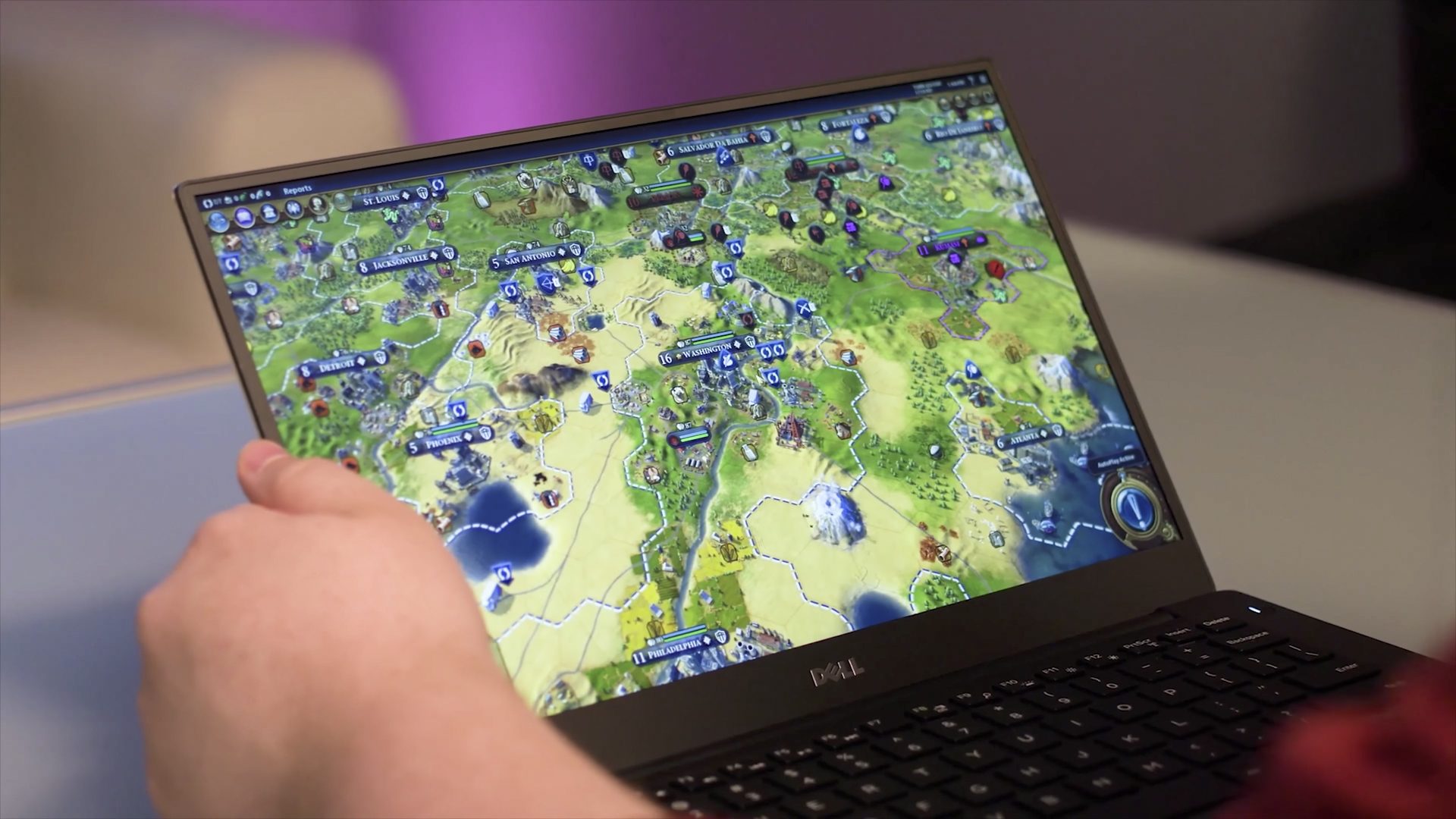
While Ice Lake will improve processor performance, there’s more to using a laptop that the CPU. Graphics performance has long been a weak point for Intel, and the problem has worsen in recent years as Intel’s HD Graphics received minor, evolutionary updates.
That’ll change with Ice Lake. It ships with Intel’s Gen11 integrated graphics. Though still an evolutionary upgrade, it’ll be the first graphics hardware to ship since Intel hired AMD’s former Radeon chief, Raja Koduri. Gen11 promises better framerates and new support for important standards like Adaptive Sync and HDR.
Let’s be clear. Gen11 won’t suddenly turn every laptop into a gaming monster. It’ll still be relatively anemic, likely landing near the Nvidia MX150 in benchmarks. That’d be a welcome gain over the Intel UHD 620 solution, however. Intel’s Becky Loop, Chief Client CPU Architect, told Digital Trends that Gen11 will ship across a broad range of Ice Lake processors – not just top-shelf chips.
One port to rule them all

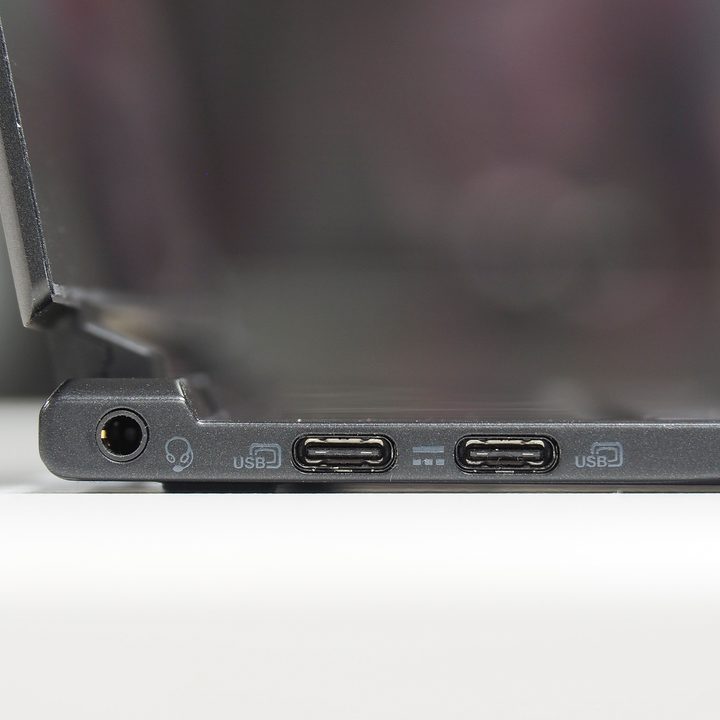
Ice Lake’s new architecture, Sandy Cove, makes many small improvements to the design that focus on feature set. One of these is the standard support for Thunderbolt 3. It’s already available on laptops, of course, but Ice Lake processors will Thunderbolt 3 over Type-C available on every laptop it powers.
That essentially guarantees that not just USB-C, but also Thunderbolt 3, is about to become common. If history is any guide, Ice Lake will appear first in premium laptops, but then trickle down to affordable laptops in the following three to six months.
Proliferation of Thunderbolt over Type-C will only mean good things. It should make every other port, aside from perhaps the headphone jack, obsolete. There’s just no reason to use anything else if Thunderbolt 3 is an option. It’s fast, it supports charging, and it’s easy to use. What more could you want?
Get ready for the next laptop revolution
The laptop’s big leap forward was the ultrabook. In just a few years, laptops lost pounds of weight, inches off their waistline, and added new technologies like solid state drives. Intel drove the spark for that burst of innovation with new processors and early ultrabook concepts. Ice Lake may be what’s needed to make that happen all over again.