
  1. Home
  2. Computing
  3. Legacy Archives

Samsung Settles with Rambus for $900 Million

Add as a preferred source on Google

Just as the patent infringement case between them was set to go to trial, South Korean electronics giant Samsung has reached a settlement with Rambus that will have the company shelling out some $900 million. Samsung will pay Rambus $200 million immediately, purchase $200 million in Rambus stock, and pay Rambus about $25 million per quarter for the next five years. In return, Samsung gets a perpetual fully paid license to Rambus’s dynamic random access memory (DRAM) technology. Samsung is one of the world’s largest manufacturers of memory, and DRAM is the main type of memory used in PCs in and graphics controllers.
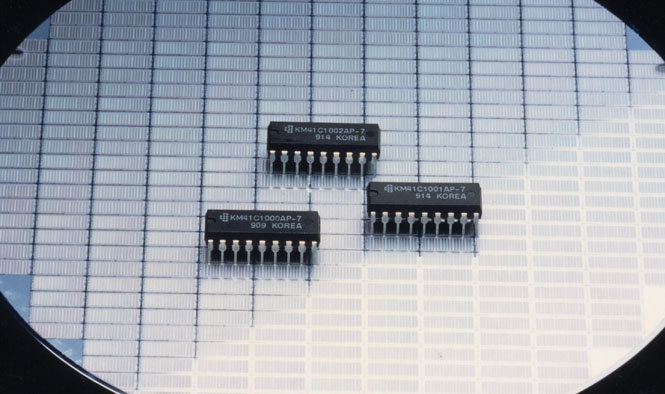
DRAM (Samsung)
Image used with permission by copyright holder

“We have a tremendous opportunity to renew a partnership which has created solutions that have benefited consumers worldwide,” said Rambus president and CEO Harold Hughes, in a statement. “Bringing together Samsung’s market and technology leadership with our innovations for high-performance and high-efficiency memory architectures will make possible an exciting new generation of mobile, computing and consumer electronics products.”

Recommended Videos

The companies say they will put their differences behind them and focus on potential collaborations on memory technology for high-speed NAND flash memory as well as memory technologies for mobile devices and servers.

Rambus has a complicated legal history surrounding its memory technology: the company initially got into hot water following claims the company had violated antitrust regulations by failing to disclose patents that covered new chip designs before the Joint Electron Device Engineering Committee (JEDEC). The U.S. Federal Trade Commission initially ruled Rambus had violated antitrust rules, but Rambus managed to get the finding overturned on appeal.

Rambus is continuing to pursue infringement claims against other memory manufacturers, including Micron and Hynix Semiconductor.

Geoff Duncan
Former Contributor
Geoff Duncan writes, programs, edits, plays music, and delights in making software misbehave. He's probably the only member…
Writers are now deliberately making mistakes because, apparently, good prose looks like AI
Congratulations, AI detectors: you've made an em dash a potential crime
Representative Image

AI has managed to do something rather unexpected: it is making people afraid of sounding like themselves. As detection tools such as Pangram increasingly influence debates over whether a piece of writing was created by a human or a chatbot, authors and students are changing their language to avoid raising suspicion. That means fewer familiar writing habits, more deliberate imperfections and, in some cases, people second-guessing perfectly ordinary sentences.

A Bloomberg report has highlighted how AI detection has moved beyond catching machine-generated content. It is now influencing the way people write, even when they claim they have never used AI.

Read more
Google makes Gemini’s AI avatars social, so friends can now appear in each other’s content
Google Gemini lets you share your AI likeness with friends, tag each other in prompts, and star together in generated videos.
gemini-ai-avatar

Google is making Gemini's personal AI avatars more social, letting you share your likeness with friends and appear together in AI-generated images and videos. You can share your avatar, tag friends in prompts, and create content featuring everyone's digital likeness.

https://twitter.com/GeminiApp/status/2115885244805251519

Read more
Subvocal’s glasses promise to let you talk to your computer in complete silence
Voice dictation is incredibly convenient, but talking to your computer in public can be embarrassing. Subvocal thinks it has a solution.
Subvocal smart glasses use radar to track your mouth movement and convert it to text using AI

Typing has always been a bottleneck between what we think and how quickly we can communicate it to a computer. AI-powered dictation tools like Wispr Flow have made things considerably better. You can practically ramble your way through an entire email, or even an article, and have it transcribed into text in seconds.

But there's a rather awkward problem with talking to your computer. Try doing it in a quiet office, a library, or even your favorite cafe, and more often than not, you tend to attract some attention or end up disturbing others. A startup called The Subvocal Company thinks it has found a solution to this issue. It has developed a pair of smart glasses that promise to turn silent mouth movements into text at over 200 words per minute.

Read more