  1. Home
  2. Computing
  3. News

Powerful Snapdragon 8cx Gen 2 Chromebooks could be coming soon

Add as a preferred source on Google

ARM-based Chromebooks have been around for many years, but they’ve been limited to the slower offerings from MediaTek and Qualcomm. But according to a discovery by Chrome Unboxed, there are mentions of Qualcomm’s flagship Snapdragon 8cx Gen 2 chip in the Chromium Repository.

This hints that work is being done in the code in ChromeOS to support the new, much more powerful SoC (system on chip).
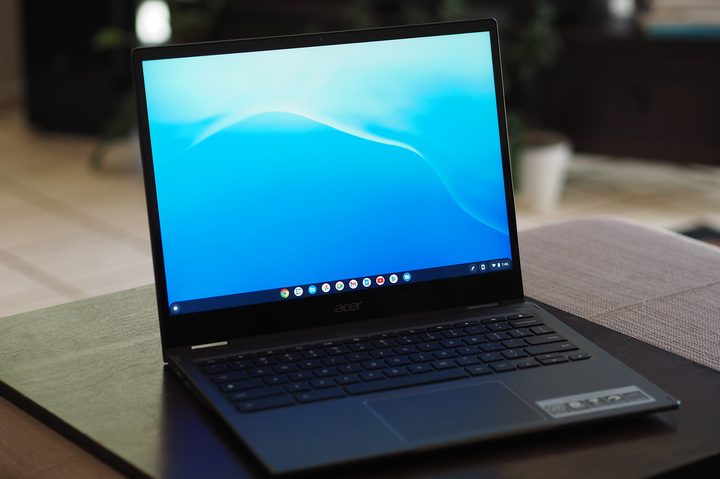
Acer Chromebook Spin 513 top down view showing display and keyboard deck.
Mark Coppock/Digital Trends

But going back to Chromebooks, the Chromium Repository is listing the Snapdragon 8cx Gen 2 as “SC8280xp,” which was the code-name for the SoC when it was used in Windows Laptops. This is also pretty similar to the original Snapdragon 8cx which was listed as “SC8180x.” For reference, the current generation Snapdragon 7c and 7c Gen 2 are  “SC7180” and “SC7280”.

Recommended Videos

So, what’s the big deal with the Snapdragon 8cx Gen 2? While we already have reviewed Chromebooks with the Snapdragon 7c and have liked the system performance versus Chromebooks with Intel chips, there could be some massive performance gains with the 8cx Gen 2 platform. Chrome Unboxed reports a possible 50% boost in single-core speed, and a near 100% boost in multi-core speed. For gaming and other GPU tasks, the performance could be as much as 400% faster.

It is unknown when Chromebooks with the Snapdragon 8cx Gen 2 could launch, but the Snapdragon 8cx Gen 2 is technically no longer a flagship chip from Qualcomm in the Windows space. Windows devices are now using the Snapdragon 8cx Gen 3, like the ThinkPad X13s. This means that 2023 could be a better chance to see Chromebooks with the chip while work is done at Google and Qualcomm to optimize for the SoC.

Yet unlike with Windows devices where Qualcomm is Microsoft’s only partner making ARM-based chips, this 8cx Gen 3 could also give Google the chance to boost the sale of ARM-based Chromebooks.

However, it is important to note that as of now, this is all just a rumor. We’ll need to wait for official confirmation from Google or Qualcomm to know for sure.

More competition between MediaTek and Qualcomm means a battle for faster Chromebooks. We don’t really know how powerful a Snapdragon 8cx Gen 2 Chromebook might be, but there’s a lot of hope, especially with Google confirming that a new video editor for ChromeOS is on the way.

Arif Bacchus
Arif Bacchus is a native New Yorker and a fan of all things technology. Arif works as a freelance writer at Digital Trends…
Some Googlebooks can play HDR. Others are oddly stuck without it
Some $1,000-plus Googlebooks can’t play HDR video. Google says it’s fixing that
Trying out the HP Googlebook at Snapdragon Summit Hands On Featured Image

Googlebook is supposed to be Google's premium answer to the modern laptop. And yet, some of these premium notebooks don't support something as basic as HDR. Owners of the new HP Googlebook 14 and Dell XPS Googlebook have reported that their machines currently aren't offering HDR playback.

The issue first surfaced in a Reddit thread (via AndroidAuthority) after an HP owner noticed that HDR-compatible YouTube videos weren't displaying the usual HDR badge. Another Dell XPS Googlebook owner subsequently reported the same behavior. Google has now confirmed that this isn't simply users missing a setting.

Read more
Apple says switching to Safari could add 5 hours to your MacBook’s battery life
Apple is making its case against Chrome with claims of longer battery life, faster page loads, and better privacy.
Safari logo on MacBook

Apple has never been shy about promoting its own apps, but its Switch to Safari campaign takes things a step further. The company has set up a dedicated page that pits Safari against Chrome, and to no one’s surprise, Apple’s comparison chart gives Chrome a “No” on every row.

Why does Apple think Safari is better?

Read more
Ask YouTube expands to mobile, web, and TVs across the US
YouTube’s AI search is now available across all major screens.
Ask YouTube on TV and desktop

Searching for something online by simply describing what you want is becoming pretty normal now. Google Search can do it. ChatGPT can do it. And YouTube has been slowly turning its own search box into something that works in a similar fashion.

YouTube has now announced a wider rollout for Ask YouTube, its conversational AI search tool. The feature is available to users in the U.S. across the web, mobile devices, and TVs. Mobile is the newest addition here, after Ask YouTube previously expanded to the web and smart TVs. Instead of putting a few keywords into the search bar, you can ask YouTube a complete question, describe what you are looking for, and then refine the results using follow-up questions.

Read more