In the landscape of smart TVs, Tizen-powered Samsung sets offer some of the greatest features on top of amazing picture quality. Whether this is your first TV purchase in several years or you’re new to Samsung’s smart TV interface, we’re here to teach you about the Samsung Smart Hub — your TV’s gateway to streaming services like Netflix and Hulu, news and weather content, web browsing, and more. In this guide, we’ll go over how to download, add, and arrange apps on your new Samsung smart TV. Grab your remote, and let’s get started.
Step 1
First off, you’ll want to make sure your TV is connected to your home network. While certain features of your Samsung’s Smart Hub will function without an internet connection, you’ll want your TV using solid Wi-Fi for downloading apps.
Step 2
Press the Home or Smart Hub button on your TV remote. Depending on the year and model of your Samsung TV, the button may show an image of a house, a multicolored Smart Hub 3D square, or a button simply labeled Smart Hub.
Step 3
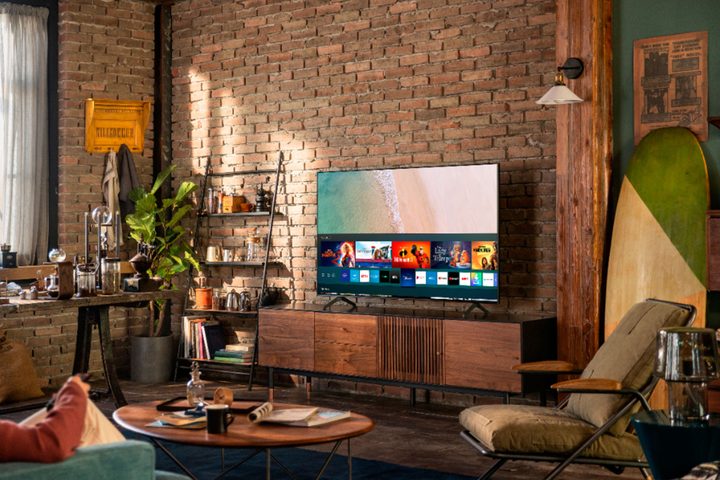
A horizontal pop-up menu will surface at the bottom of your TV. This is your TV’s home screen, the main waypoint on your Samsung for everything from picture and sound settings to your personalized Samsung app experience. Out of the box, a new Samsung TV will include several pre-loaded apps. You’ll also see Recommended and Recent Apps categories. These are all options you can highlight and select with your remote. There’s more where that came from, though. To download additional apps to your TV that aren’t featured on the initial home ribbon, navigate to the left of the menu, and select Apps.
Step 4
Welcome to the Samsung App store. Here, you’ll find a bevy of smart content, featuring everything from Pandora to The Weather Network. To begin downloading a new app, you can either select one from the main menu, tab through categories like Music & Radio and Apps to Kill Time, or search for an app by selecting the Hourglass icon at the top of the app store screen.
Step 5
Once you’ve selected an app, you’ll be taken to a second screen that describes what service you’re about to download, with options to either Open or Add to Home. If you want the app to appear in the ribbon of content on your home screen, select Add to Home. Choosing Open will take you straight to the app without adding it to your TV’s home ribbon.
Step 6
Tap the Home or Smart Hub button again to bring up your TV’s home screen. In the ribbon of pre-loaded smart content, you should now see the app you just downloaded. Navigate over to it and select to open. That’s all there is to it.
If you’re finding your smart ribbon is too cluttered, you can easily rearrange and delete apps you don’t want to use anymore. To do so, simply press and hold the Enter button over the app you want to relocate or vanquish.