“With hours of power and built for extremes, they'll stay put while you do the moving.”
- Comfy, ultra-secure fit
- Fully dust and waterproof
- Excellent battery life
- Useful transparency modes
- Awkward controls
- Poor noise isolation
- No active noise cancellation

“Why you can trust Digital Trends – We have a 20-year history of testing, reviewing, and rating products, services and apps to help you make a sound buying decision. Find out more about how we test and score products.“
Wireless earbuds are versatile gadgets, and a lot of them have what it takes to do double-duty for both casual listening and sports. But suppose your idea of a workout involves high-impact cardio or other situations where conventional earbuds are likely to lose their grip.
In that case, you need a set of earhook earbuds, like the JBL Endurance Peak 3. At $100, they’re way more affordable than the uber-popular Beats Powerbeats Pro, yet they’ll stick to your ears just as tenaciously — maybe even more so. Are they the right sports earbuds for you?
As the third-generation version of JBL’s earhook earbuds, the Endurance Peak 3 don’t break any molds. In fact, you’d have to look super closely to find any significant differences to their predecessors, the Endurance Peak 2. Sometimes a formula just works.
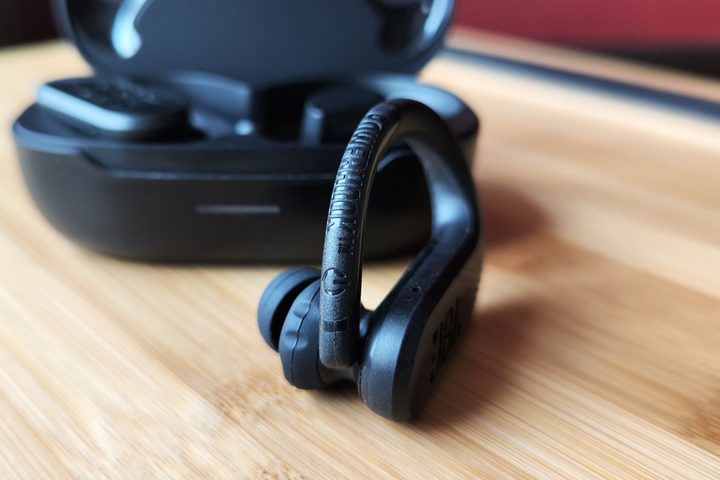
JBL has kept its clever Powerhook feature, which uses magnets at the tips of the earhooks to power down the earbuds when you take them off. It means you don’t need to return them to their bulky charging case or play around with buttons just to conserve battery life. I’d prefer if there was a way to tie that automatic power-off function to an auto-pause for music, but that remains something these buds don’t do.
As with all earhook designs, the Peak 3 take a bit of finagling to get onto your ears. In a standard set of earbuds, I’d call this a frustrating nuisance, but these earbuds have a mission. You lace up your running shoes and put on your Endurance Peak 3. They likely won’t be coming off again until you’re done with your workout. In the meantime, if you need to have a conversation or you simply want to keep better tabs on the world around you, JBL’s newly added smart ambient transparency features have you covered. Thanks to their impressive 10-hour battery life (maybe a little less if you listen loud) and their excellent comfort, you could leave them on for a very long time. As with all earhook-style earbuds, eyeglasses can be awkward when worn with the Peak 3. Some will work, and some will prove incompatible, depending on the thickness and design of the limbs.
The biggest change JBL has made for the Peak 3 is increased water resistance. It’s now rated at IP68, up from the Peak 2’s IP67, which effectively makes the Peak 3 waterproof and dustproof. You’ll still need to rinse them clean after getting them sweaty or immersing them in salt water, but it should be very hard to kill these things by doing anything short of skin diving. And even then, the IP68 rating should keep things dry inside for “long periods of immersion under pressure.” JBL is so confident in the Peak 3’s combo of waterproofing and grip, it calls these earbuds “waveproof.” Sadly, I didn’t get to put that to the test, but I can attest to their rock-solid stability. They didn’t move at all once I had them firmly seated.
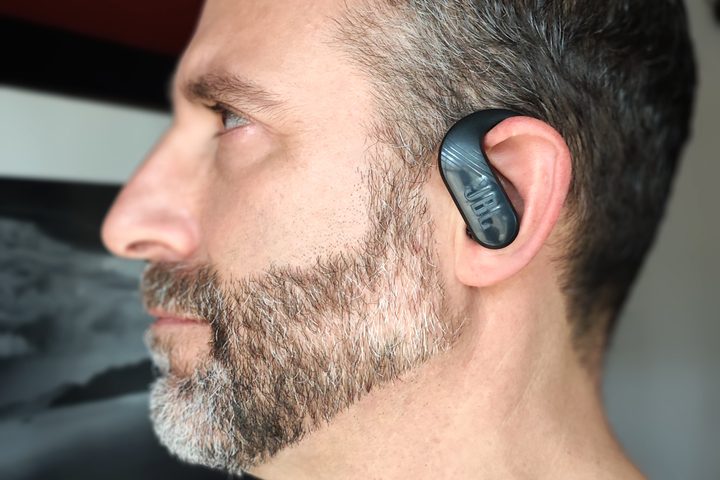
Unfortunately, I’m less thrilled with the controls. Touch controls can be, well, touchy, and the Peak 3 suffer from a usability problem. It’s not that the touch areas aren’t responsive — they are — it’s that they’re devilishly hard to tap with accuracy.
They’re located in the middle of the rubberized exterior panel. On the left earbud, it’s roughly where the J in JBL is, on the right side, it’s near the L. That seems intuitive enough until you’re trying to find it while running, cycling, or whatever other activity you’re engaged in. There’s no tactile way for your finger to know it’s in the right place. Instead, I found myself repeatedly tapping near the end of the surface. Not that it did me much good; the tap area doesn’t extend that far.
If you’re thinking of upgrading from the Peak 2, be warned: JBL has removed the sliding gesture for volume control on the Peak 3. Instead, you now have to choose (inside the JBL Headphones app) whether you want to control the volume or play/pause and track skip forward. To me, that’s not really a choice at all — I’d never give up play/pause functionality for anything — but that’s how it works.


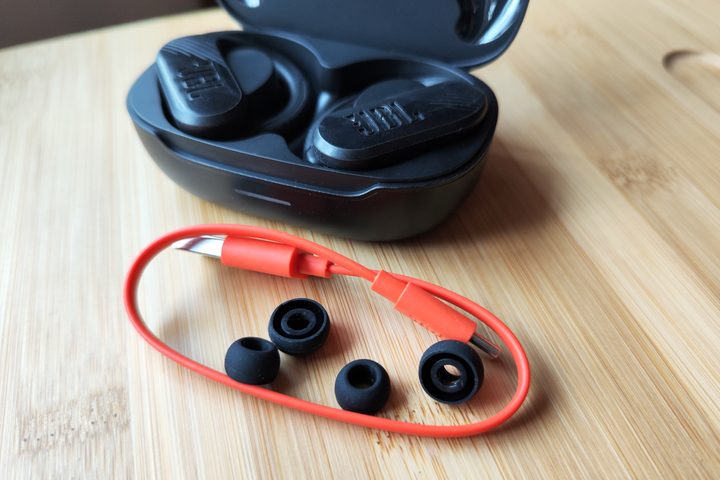
Sport earbuds don’t have to sound like audiophile gear as long as they deliver on a key ingredient most folks want when working out: deep bass. The Endurance Peak 3 largely succeed on this front but you may not hear it right out of the box. For starters, the Peak 3 ship with three sets of eartips, and the medium size is installed at the factory. I found the mediums very comfy, but I struggled to hear enough low-end. Switching to the larger tips helped a lot — this is always the first thing you should try if your earbuds feel anemic when it comes to bass. However, I suspected there was potential for even more punch, so I delved into the JBL app and flipped on the equalizer. By default, this engages a preset called JBL Endurance Peak 3 EQ, which gives a bump to the mids and highs but saves its biggest boost for bass. Now we’re talking.
Again, the Peak 3 are absolutely not for critical listening — the absence of any Bluetooth codecs other than SBC and AAC is enough to tell you that — but they’re more than capable of giving you a high-energy accompaniment to your workouts.
I have only one caveat and depending on where you like to sweat, it could be a big one. Even with the largest eartips installed, I found passive noise isolation less than stellar. Hoping on the treadmill at the gym made me instantly wish for active noise cancellation (ANC), which these buds don’t have, and I was similarly disturbed by passing traffic while listening to podcasts on my daily walk.
Perhaps I’m just spoiled — most of the earbuds I test these days have at least mild ANC — but I wanted the ability to block out more of the outside world.

It’s unlikely that you’ll want to wear the Endurance Peak 3 for their full 10-hour battery life, but it’s nice to know it’s there if you need it. It’s also nice to know that they handily beat the Powerbeats Pro when it comes to longevity: the Peak 3 get a total of 50 hours when you include the charging case, versus 9 hours/24 hours for the Beats.
Call quality on the Endurance Peak 3 is surprisingly good for a set of affordable earbuds. The mics don’t block all external sounds (wind and traffic noise still get through) but neither do they crush the life out of your voice when trying to compensate for those sounds. The result is generally good voice calls, albeit with a bit of compression and wobbliness that kicks in now and then. When indoors or in quiet locations, they perform far better.

Overall, these new Endurance Peak sports earbuds are a solid choice for those who need ruggedness and a secure fit. They lack a lot of bells and whistles like wireless charging, wear sensors, ANC, and Bluetooth multipoint, but then again, even the much more expensive Powerbeats Pro are missing several of these. If you want a great alternative to the Peak 3, check out the Tribit MoveBuds H1. They cost less, and though they’re not as sleek, they perform as well or better in most of the ways that matter.