 Samsung may have some serious patent litigation to fight out with Apple regarding–among other things–its Galaxy S line, but that doesn’t make the handset any less popular. It’s arguably the most popular Android smartphone on the market, and US consumers have had to keep patient waiting for the next-gen model while it launches overseas.
Finally, Samsung has confirmed that it will launch the Galaxy S II stateside next month. Yonhap News reports that mobile business president Shin Jong-kyun announced at a briefing in Korea this week that “We expect to release the Galaxy S II in the US market sometime in August.” Unfortunately that was as detailed as it got, and there’s still no talk of carriers.
Android devices have notoriously had issues working with cell phone carriers, so much so that Google has introduced a handset unity initiative for its mobile OS at the Google I/O conference in May. The initiative brings carriers, Android developers, and handset manufacturers together so they can begin collaborating to ease what has become a somewhat tumultuous process – and one that seriously has limited Android consumers’ mobile experience.
Carrier networks aren’t the only obstacle that could potentially have stood in Samsung’s way. In late May, federal court ruled that Apple would be granted access to new Samsung devices, including the Galaxy S II, because of patent litigation filed by Apple claiming Samsung had copied its iOS lineup.
Despite any hang ups, the Galaxy S II has sold quite well abroad and is likely to be well received by US consumers as well. Of course given its timing, the unit will either just beat, or go head-to-head, with the new iPhone release, which is sure to steal a considerable amount of attention. But it sounds as if Samsung is pretty confident in the Galaxy S II, which had already racked up three million pre-orders by the end of April.
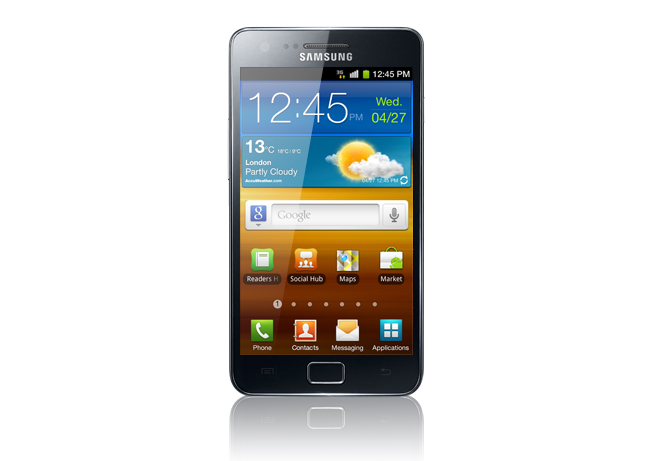
If you’ve forgotten what the specs of the phone are, we don’t blame you – it was announced all the way back at CES. Here’s a quick reminder:
- 1.2GHz dual-core processor
- 4.3-inch Super AMOLED Plus display; 400×800 resolution
- Will likely ship with Android 2.3.4 Gingerbread.
- 8-megapixel with LED flash, 1080p rear-facing camera; 2-megapixel front-facing camera
- microSD card port
- 8.49-mm thin
- It’s still largely unknown what US carriers will offer the phone, but all four major networks are expected to. A leaked photo (via This is my next) also shows off a Sprint-branded Galaxy S II for what it’s worth.
Editors' Recommendations
- Best Samsung Galaxy Z Fold 5 deals: discounts and trade-in credit
- 5 phones you should buy instead of the Samsung Galaxy S24 Plus
- Best tablet deals: iPad, Samsung Galaxy Tab, Fire, and more
- Best Samsung Galaxy Z Fold 4 deals: Grab the foldable phone for $700
- Best Samsung Galaxy S22 deals: Save big on unlocked models