Kevin Feige, Marvel Studios president and the mastermind behind the Marvel Cinematic Universe, is making a Star Wars movie. According to The Hollywood Reporter, with the Skywalker saga ending with this winter’s Star Wars: Episode IX — The Rise of Skywalker, Lucasfilm CEO Kathleen Kennedy wants Feige to create a movie to help usher in the new era of the Star Wars Universe.
Now, Feige isn’t taking over the entire Star Wars franchise — yet. For the time being, Kennedy is still in charge. However, the Hollywood Reporter says that Feige already has “a specific role” in mind for “a major actor,” and hints that Feige could work on more Star Wars projects in the future. He’s a superfan of the galaxy far, far away, and it seems he’s already hard at work.
Whether Feige’s time on Star Wars amounts to a one-and-done film or (hopefully) something bigger, this is great news for Star Wars fans, Marvel fans, and moviegoers in general. Over the past 11 years, Feige transformed Marvel’s superheroes into the biggest stars on planet Earth. He’s an excellent fit for the Star Wars franchise, and Star Wars is the perfect cinematic sandbox for Feige to play in next. Here’s why.
The master of interconnection
The Star Wars Universe is bigger than Episodes I through IX. It’s a world that’s been explored in novels, comics, reference books, cartoons, animated shorts, and theme parks. Most recently, it’s spawned two spinoff films and will soon launch the highly anticipated Disney+ series The Mandalorian.

That’s a lot of material, and under the Disney regime, every single piece of it is “canon.” Well, you know who’s a pro at managing sprawling sci-fi universes that span multiple media formats? We’ll give you one guess.
There are 23 films in the Marvel Cinematic Universe. Watched alone, each is an entertaining action-adventure flick. Taken as a whole, they tell one, ongoing story full of long-gestating subplots, subtle (and not-so-subtle) callbacks, and character arcs unfolded over a decade.
The MCU is a remarkable achievement on its own, with a scope and scale that’s wholly unique in cinema. Under Feige’s leadership, it’s about to get even more ambitious. Disney+ shows like Falcon and the Winter Soldier, WandaVision, Hawkeye, and Ms. Marvel will have a direct impact on the feature films that follow (Agents of S.H.I.E.L.D. and Netflix’s Daredevil, tangential tie-ins at best, are under Marvel Television, which Feige doesn’t oversee).
The idea that the Star Wars universe was suddenly open to all kinds of different filmmakers was extremely exciting.
Other than Lucasfilm, Feige’s Marvel Studios is the only production company that’s managed to make an interconnected cinematic universe work. Warner Bros.’ DC Extended Universe has been mostly DOA, and after Justice League‘s lackluster returns, the studio has started focusing more on stand-alone films like Joker and The Batman.
Universal’s “Dark Universe” centering on classic movie monsters fizzled out after a single entry. (Well, technically it fizzled after one film, was reworked, and then fizzled again.) The less said about Sony’s proposed Robin Hood cinematic universe, the better.
In fact, Feige and Marvel are arguably much more successful at this game than Lucasfilm. Since Disney bought Lucasfilm in 2012, there have been five Star Wars movies. In the same time period, Marvel has released 18 films. While Solo: A Star Wars Story disappointed at the box office, Avengers: Endgame, the 22nd film in MCU, went on to become the highest-grossing movie of all time.

Feige knows how to tell a story across multiple films while keeping individual installments interesting, and he knows how to keep fans coming back for more. If you’re interested in Star Wars because of its deep lore and ongoing subplot, Feige’s involvement should raise your pulse.
Top-tier talent (in all the right places)
When Disney announced that it would be making a new Star Wars movie every year (a plan that has, thankfully, changed since 2012), the idea that the Star Wars universe was suddenly open to all kinds of different filmmakers was extremely exciting. We’d already seen six Star Wars movies overseen by George Lucas. Who knew what a group of diverse and unique voices could do with the beloved property?
Unfortunately, that promise hasn’t been fully realized. JJ Abrams has directed two of the three “sequel trilogy” installments. 21 Jump Street and The Lego Movie directors Phil Miller and Chris Lord were fired from Solo halfway through production. Rogue One underwent massive reshoots after the first cut failed to deliver, with writer Tony Gilroy allegedly taking over for Rogue One‘s credited director, Gareth Evans.
When Scarlett Johansson had reservations about returning for Black Widow, Feige worked with her personally to integrate her ideas into Marvel’s bigger plans.
That’s not to put down Abrams, Ron Howard, The Last Jedi director Rian Johnson, or any of the other people who have made a Disney Star Wars. They’re all excellent filmmakers. However, under Disney, Lucasfilm’s relationship with its creators seems rocky, and many of its choices feel safe. Behind-the-scenes, there’s not much risk-taking.
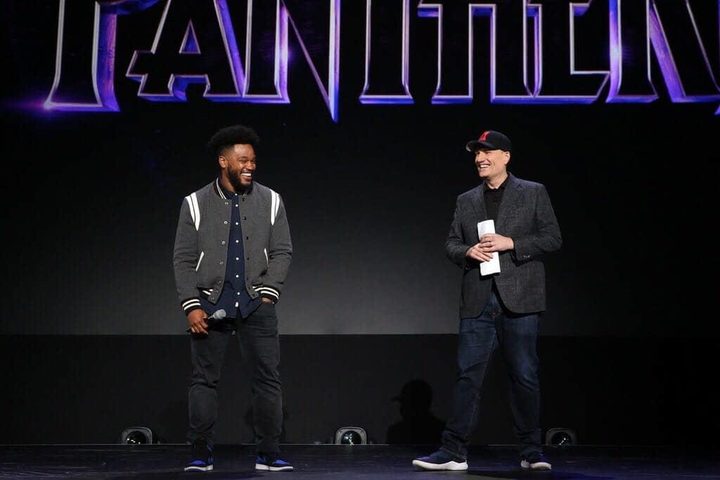
By contrast, filmmakers love working with Feige and Marvel, and the MCU is getting increasingly diverse. While early Marvel movies like Thor and Iron Man had similar looks and tones, directors like Guardians of the Galaxy‘s James Gunn, Thor: Ragnarok‘s Taika Waititi, Black Panther‘s Ryan Coogler, and Spider-Man: Homecoming‘s Jon Watts have pushed the MCU in increasingly unique and strange directions, leading to some of the MCU’s best and most satisfying films.
Even better, the talent keeps coming back for more. Before retiring from the MCU, Robert Downey Jr. played Tony Stark 11 times. For Thor: Love and Thunder, Marvel managed to lure Natalie Portman, who wrote Marvel off after the lackluster Thor: The Dark World, back into the fold. Gunn, Waititi, and Coogler are all lined up for sequels.
Things haven’t been perfect. A dispute between Gunn and his Guardians of the Galaxy co-writer Nicole Perlman escalated into a public beef. We’ll never see Edgar Wright’s version of Ant-Man thanks to “creative differences,” and Gunn was fired and then rehired over past tweets that Disney certainly should have known about before his first Guardians film.
At this point, though, Feige seems devoted to keeping his roster happy. When Scarlett Johansson had reservations about returning for Black Widow, Feige worked with her personally to integrate her ideas into Marvel’s bigger plans. The movie comes out next May.
Happy talent doesn’t always guarantee a great movie, but Feige’s approach to recruiting — signing top-tier filmmakers and letting them express themselves within the MCU banner — has worked well for Marvel. It should work well for Star Wars, too.
A name you can trust
If you’ve spent any time online, you probably know that there’s a contingent of Star Wars fans who aren’t happy with Disney’s take on the franchise. The Force Awakens was too derivative. The Last Jedi was too different. Solo and Rogue One were unnecessary. The movies are too political, or don’t espouse the right politics. The sequel trilogy disrespects Luke, Leia, and Han. The old Expanded Universe was better, and its erasure is a slap in the face to Star Wars’ most dedicated fans. And on, and on.

Whether you believe those statements are not, you rarely hear the same complaints about the Marvel Cinematic Universe (Captain Marvel, Marvel’s first female-led movie, being the one notable exception). The MCU respects its source material, but isn’t beholden to it. Easter eggs and nods to comic lore keep hardcore fans happy, while the streamlined take on Marvel’s 80-year-deep comic book continuity makes the movies welcoming to everyone.
As a result, people can’t get enough. At Comic-Con International 2019, Marvel’s Phase 4 presentation stole the show. At D23 a month later, Marvel, not Star Wars, dominated the headlines. For many people — even some who have been reading the comics for decades — Robert Downey Jr.’s Iron Man, Chris Evans’ Captain America, and Chris Hemsworth’s Thor are the definitive versions of the characters.
The MCU is the only media franchise with a fanbase as big as Star Wars, and Feige has figured out how to play to the crowd perfectly. After every Marvel movie opens, viewers rush online to decode the latest post-credit sequence. Heck, people spent a year speculating about Avengers: Endgame‘s subtitle and applauded when Feige unveiled simple logos on the Comic-Con stage. That’s hardcore dedication and it’s largely Feige’s doing.
Unlike David Benioff and D. B. Weiss, who burned audiences’ goodwill with Game of Thrones‘ controversial final season — and who are also making some Star Wars flicks — geekdom trusts Feige. Why wouldn’t they? He’s turned Marvel into a home for some of the best filmmakers on the planet and he’s done an impeccable job making the Marvel movies much bigger than the sum of their parts. Star Wars — and its millions of decades-long fans — will be lucky to have him.