
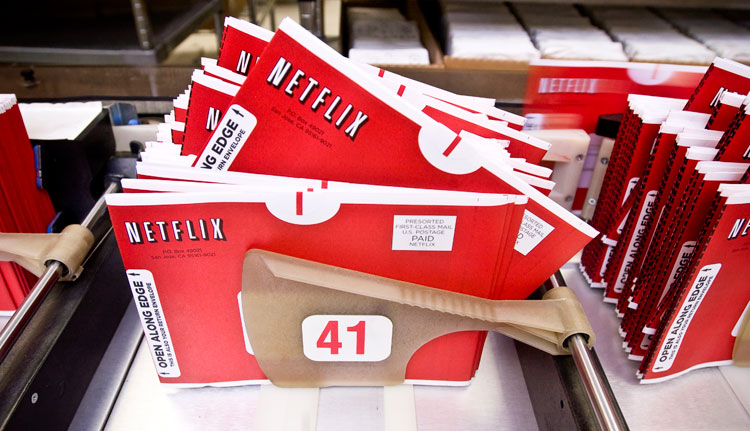
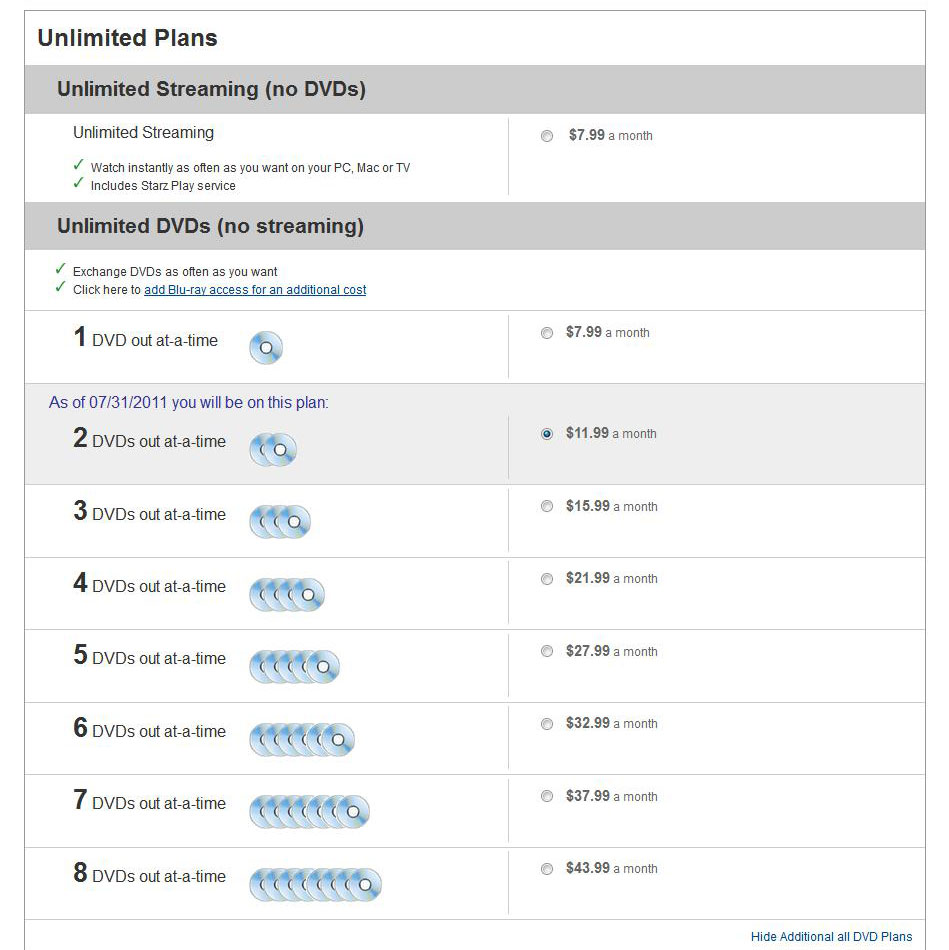
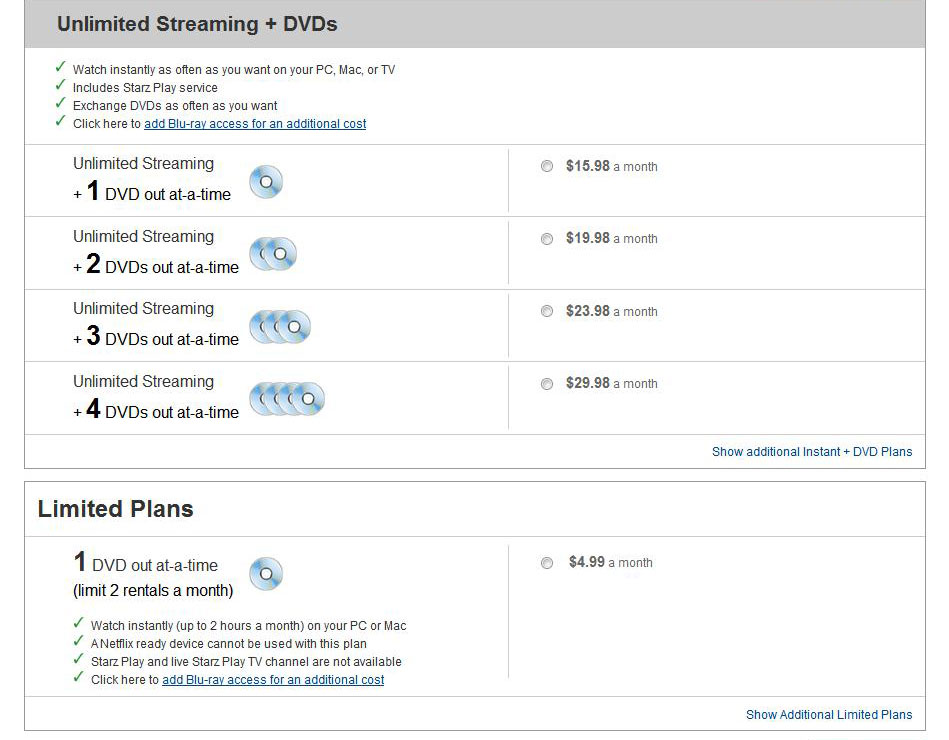
Netflix sparked a flurry of customer outrage Tuesday with the announcement that it would no longer offer a plan that includes both unlimited movie streaming and unlimited DVD rental. These services will now be split into two plans, which start and $7.99 apiece. Together, they will cost about $16 — a 60 percent increase from the $9.99 price of the dual-option plan, which the company will cut on September 1.
This news was met by tens of thousands of furious comments on the Netflix blog announcement and the company Facebook page, with many users declaring the movie rental company dead in the water.
“Bad idea. Epic epic epic screw-the-customer fail,” says one Facebook commenter.
“I agreed to like this page so I could say that I am no longer a Netflix customer,” says another. “I told my family to cancel also.”
These types of comments go on and on. At the time of this writing, there were nearly 38,000 comments on the company’s Facebook page, most of them highly negative.
Despite the intense dissatisfaction among customers, however, investors’ reaction couldn’t be better: Netflix stock price popped by about 3 percent, at the time of this writing, to just under $300.
So, why the disconnect between the optimistic mood on Wall Street and the outright fury on Main Street?
According to Pacific Crest market analyst Andy Hargreaves, who specializes in technology companies, Netflix raised its prices in an attempt to actively shift from the expensive business of physical DVD rentals to the far more cost-effective endeavor of streaming movies and TV shows online. This, he says, is simply a wise business decision, at least in the long-term.
“Streaming, at a very basic level, is a better business than DVD distribution,” said Hargreaves in a phone interview with Digital Trends. That’s “because people use it more, the costs are fixed rather than variable, so you have more leverage longer term, and you can address new clients really easily, with no start-up costs, essentially.”
 While changing the plan price structure may make sense for Netflix’s ultimate goals of becoming a streaming-only company, as opposed to a mail-order DVD rental operation, Hargreaves says that Netflix will likely lose some subscribers because of the price jump, but that the total number of lost users will be “negligible.”
“There are clearly subscribers who are pissed. There are clearly going to be subscribers who cancel because of this,” says Hargreaves. “I think, at the end of the day, that’s probably a vocal minority, a very small vocal minority.”
Hargreaves adds that, because the cost of a Netflix subscription is still far less than the average $100 price tag that goes with cable service, he expects the company will be able to survive the crashing wave of negativity, and still “continue to add [customers] in the next several quarters.”
“At the end of the day — and this is the gamble that [Netflix is] making — there’s going to be some saber rattling at the beginning, customers that are going to be annoyed because their price just got raised,” says Hargreaves. “Is that really going to change how customers view the service? Probably not.”
 The obvious downside to a streaming-only Netflix subscription is that few new movies, especially the most popular titles, are available through that service, which is likely why the DVD rental option has remained so attractive to customers.
By making customers pay a minimum of $7.99 per month for the one DVD at-a-time plan, or $11.99 per month for two DVDs at once, Hargreaves says Netflix has made itself vulnerable to competitors like RedBox.
“On the DVD side you have viable alternatives. Redbox is pretty decent,” says Hargreaves. “They don’t have the depth of catalog [that Netflix has]. But you can get the same new movies.” In terms of streaming, however, “there are no other options.”


