Pairing the more compact size of a sedan with slightly more room in the back, the best hatchbacks allow for decent gas mileage without giving up needed trunk space.
The Toyota Corolla Hatchback wins again this year for the best overall hatchback by leaving no need or feature untouched. For those drivers needing all-wheel-drive, though, the Subaru Impreza excels in winter conditions. Of course, these are just two of the best hatchbacks.
The best: Toyota Corolla Hatchback
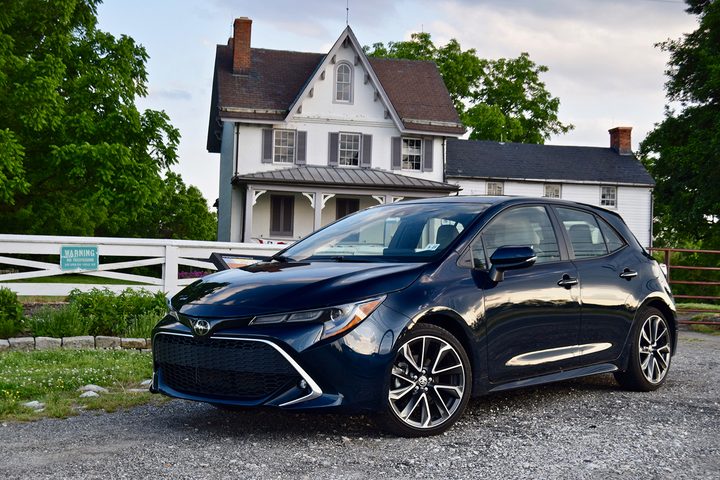
Why should you buy this: The Corolla ticks every box in the mainstream hatchback segment.
Who’s it for: Anyone who just needs a car.
How much will it cost: $20,290+
Why we picked the Toyota Corolla:
The Toyota Corolla didn’t become one of the best-selling nameplates in the world by accident. Formerly known as the Corolla iM, the plainly named Hatchback continues to offer one of the best interiors in its class, a generous amount of trunk space, and a comprehensive suite of safety features at an attractive price point. We’d expect these things from a Toyota; however, what surprised us is that it’s genuinely sharp to drive.
The Corolla speaks tech, too. Even the entry-level SE model offers a 6.0-inch touchscreen compatible with Android Auto and Apple CarPlay, a six-speaker sound system, a lane departure warning system, forward collision warning, adaptive cruise control, and road sign recognition, which are more commonly found on more expensive cars.
Every Corolla regardless of trim level comes with a chain-driven (so durable) 2.0-liter four-cylinder engine that delivers 168 horsepower at 6,600 rpm and 151 pound-feet of torque at 4,800 rpm. There’s no high-performance model — at least not yet — but some variants are available with a six-speed manual transmission.
Read our Toyota Corolla Hatchback review
Best premium hatchback: Mini Hardtop
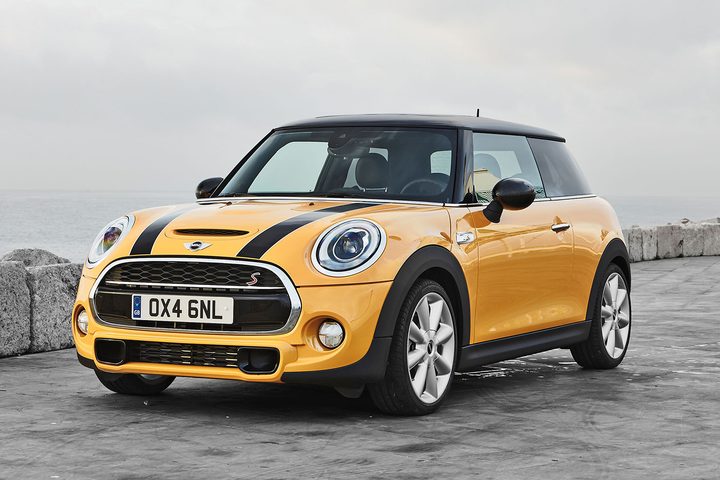
Why should you buy this: Cheap it ain’t, but it’s hard to beat in terms of style and handling.
Who’s it for: Those willing to pay more to get more.
How much will it cost: $23,400+
Why we picked the Mini Hardtop:
The Mini Hardtop embodies the concept of form over function. It wears a retro-chic design inspired by the original Mini introduced in England all the way back in 1959. It’s much bigger than its truly tiny predecessor though, and it uses time-tested mechanical components borrowed from the BMW parts bin.
Don’t let its humble roots fool you; the Mini is far from an economy car. It boasts a surprisingly spacious cabin built using premium materials, and it’s offered with features you’d usually find on cars positioned in the next segment up. Notably, buyers can deck out the Hardtop with a moonroof, parking sensors on both ends, a head-up display, rain-sensing wipers, and adaptive cruise control; however, these options inflate the price significantly.
The lineup includes several variants, including two- and four-door hatchbacks and a range-topping John Cooper Works model tuned to pump out 228 ponies. The range-topping, 306hp GP model is quick, rare, and expensive. At the other end of the spectrum, Mini now sells an electric variant of the two-door Hardtop.
Best electric hatchback: Chevrolet Bolt EV

Why should you buy this: With the Bolt, you’ll never have to stop for gas again.
Who’s it for: Eco-conscious motorists.
How much will it cost: $36,620+
Why we picked the Chevrolet Bolt EV:
The Bolt EV is Chevrolet’s first mass-produced electric vehicle. It’s not the only electric hatchback on the market, but it’s one of the few that’s not designed as a compliance car to satisfy California’s draconian clean air regulations. Simply put, it’s better engineered than most, so it’s a painless way into electric car ownership.
Sold all across the nation, the 200-horsepower Bolt EV is capable of driving for up to 259 miles on a charge, which places it well ahead of the Nissan Leaf and most other competition. Plugging it into a 240-volt charger replenishes about 25 miles of driving per hour, though using a fast charger yields 90 miles of range in about 30 minutes.
Drivetrain aside, the Bolt EV excels as a hatchback; it’s a good car that just happens to run on a large battery. Its low trunk floor can accommodate a grocery trip’s worth of bags, and even taller drivers can comfortably drive it on a daily basis. You can put a roof rack on it to carry kayaks, bikes, or other bulky gear. An elegant-looking cabin and a whisper-quiet ride remind the passengers that they’re not burning gasoline to get to their destination.
Read our Chevrolet Bolt EV review
Best all-wheel drive hatchback: Subaru Impreza

Why should you buy this: Subaru’s time-tested all-wheel drive system make the Impreza more capable than many crossovers.
Who’s it for: Winter warriors.
How much will it cost: $18,695+
Why we picked the Subaru Impreza:
The Impreza is gifted with Subaru’s well-regarded permanent all-wheel-drive system. It’s certainly no off-roader, but it tackles harsh winter conditions with the kind of aplomb that many of its rivals can only dream of. To sweeten the deal, all-wheel drive is included in the price on all trim levels; there’s no other configuration offered.
Staying true to the Subaru ethos, the Impreza’s cabin is a basic but pleasant place to travel in. It’s spacious and well built, and its Starlink infotainment system is one of the more straightforward units on the market. There is virtually no learning curve involved. Subaru’s EyeSight driver-assist tech is also standard on all models, as long as you get the continuously variable transmission (CVT) instead of the five-speed manual.
The trade-off is that the Impreza’s flat-four engine lacks a bit of pep. It’s consequently not as brisk as other hatchbacks on the market, and the four-cylinder eagerly makes its presence known in the cabin, especially at higher revs. Still, if you routinely drive on snow or ice, the Impreza should be at the top of your list.
Read our Subaru Impreza first drive review
Best luxury hatchback: Porsche Panamera
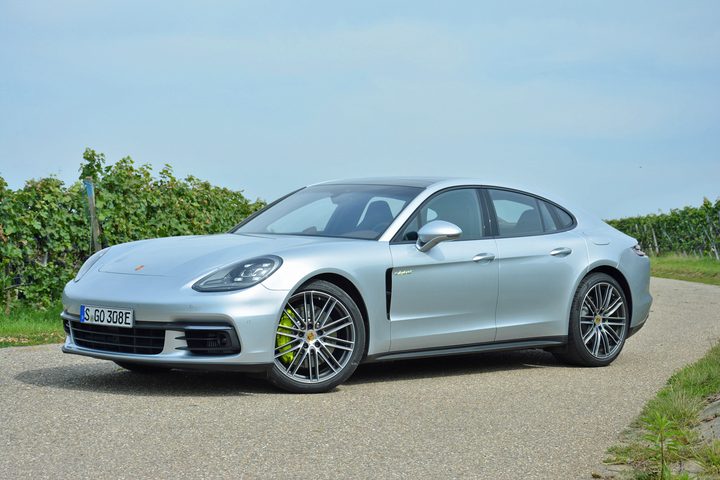
Why should you buy this: It’s a Porsche that lets you hug curves with the whole family.
Who’s it for: Connoisseurs who need four seats.
How much will it cost: $87,200+
Why we picked the Porsche Panamera:
Who says a hatchback needs to be cheap? The Porsche Panamera probably isn’t what comes to mind when the term “hatchback” meanders its way into a conversation, but it certainly qualifies as one. The cargo compartment is accessed via a roof-hinged door, not a lid that flips up. There’s a hatch on the back end.
The Panamera drives like a Porsche, it accelerates like one, and this time around it finally looks like one: It’s almost a four-door 911, minus the rear-mounted flat-six engine, of course. The treatment continues inside, where it feels like a proper high-performance coupe until you look back and notice it has rear doors.
Porsche offers numerous variants of the Panamera, including V6-, V8-, and hybrid-powered variants. All offer above-par handling, brisk acceleration, a five-star interior, and an excellent infotainment system.
Read our Porsche Panamera GTS first drive impressions
Best hot hatch: Volkswagen Golf R

Why should you buy this: The hottest Golf perfects the concept of a hot hatch.
Who’s it for: Grown-up enthusiasts seeking performance without compromising versatility.
How much will it cost: $40,395+
Why we picked the Volkswagen Golf R:
With about 300hp from a 2.0-liter turbo four, the all-wheel-drive Golf R is an impressive car on paper. It’s even more so on a twisty back road, where it delights with a responsive engine and scalpel-sharp handling. It packs enough power to let the driver have a blast behind the wheel, but not enough to be intimidating or overwhelming.
We also like that it’s low-key. Volkswagen’s design department refrained from tacking on silly wings, ostentatious spoilers, and useless vents to the body. It’s not the kind of car that’s going to draw unwanted attention everywhere it goes. Even the exhaust note is surprisingly restrained so you’ll be able to fly under the radar.
There are other great hot hatches in the Golf R’s segment; the Ford Focus RS proved itself a worthy adversary during its brief production run, and the Honda Civic Type R remains one of the best examples of the genre. But the Golf R has a unique combination of sportiness and refinement. It’s on its way out — Volkswagen just launched a new eighth-generation Golf, so a new model with even more power is looming on the horizon.
Read our Volkswagen Golf R review
Best subcompact hatchback: Honda Fit

Why should you buy this: The Honda Fit proves basic transportation doesn’t have to feel like a life sentence.
Who’s it for: Folks who think size matters, and smaller is better.
How much will it cost: $16,190+
Why we picked the Honda Fit:
The Honda Fit is one of the most practical small hatchbacks on the market today. It’s tiny enough to zip through even the narrowest streets, but it hauls lengthy and bulky items with ease thanks to a cleverly packaged interior.
Skeptics may be quick to consider the Fit an “econobox,” but they’d be wrong. This vehicle doesn’t skimp on an aesthetic modern interior design with luxuriously comfortable seats. It’s surprisingly roomy, too; four adults can ride in the Fit without feeling overly cramped.
The Fit delivers 130hp and can get up to 41 mpg on the highway with its four-cylinder, 1.5-liter engine. It’s a powerful engine for the size but at the same time saves you money on gas. For a compact car like the Fit, you’d be hard-pressed to find another model that combines the same gas mileage with space and comfort. The Fit and Honda HR-V share the same platform, but the Fit is more budget-friendly. Overall the Honda Fit checks nearly every box.
How we test
Our testing team of automotive experts evaluates vehicles in an extremely hands-on process. They rigorously review everything from materials to design to performance to comfort. Upon review, we add in an analysis of price and overall specs to easily compare models.
Our experts conduct extensive test drives of each vehicle, trying them out on various roadways and real-life scenarios. They’ll test until they feel confident they know everything about the way the car drives and handles. The final run-through includes safety tests in controlled settings to ensure you get the safest and most comfortable ride.