  1. Home
  2. Computing
  3. Android
  4. Mobile
  5. Evergreens

Google records every voice search you make, here’s how to view and delete them

Add as a preferred source on Google

You might already know that Google saves all your searches in order to target ads and to provide a better Google Now experience. That is, assuming you have signed in to your Gmail account. What you might not know is that Google also saves the full audio recordings of every one of your voice searches and commands.

This means that every time you search for the nearest Dunkin Donuts, ask how old a particular celebrity is, or even set a reminder to buy milk, Google records you and archives it. Google does this in order to improve speech recognition, so you don’t have to say the same thing over and over.

Recommended Videos

This data is anonymous and not shared publicly. However, privacy is always a concern, so we put together this guide that explains how to view your voice search data. From there, you can delete your history and opt out from future recordings.

View your voice search and commands history
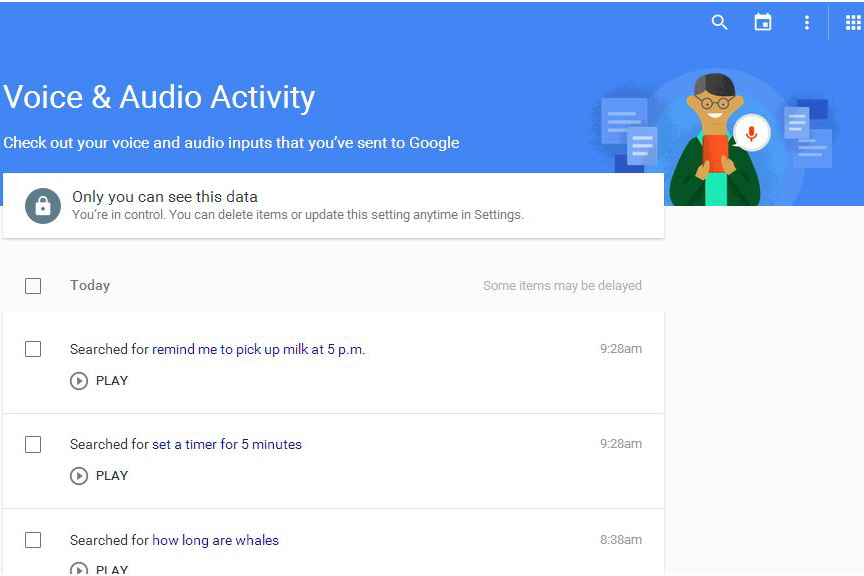
Google Now Voice History
Image used with permission by copyright holder

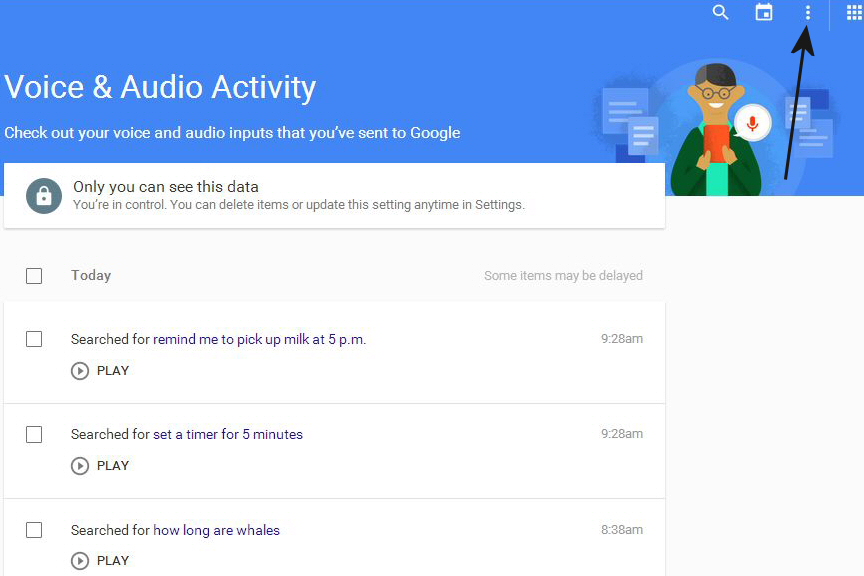
The Voice and Audio Activity page shows every voice search or command you ever made, whether it be from a desktop, smartphone, or Android TV device. You will be able to listen to each recording, and a transcript is provided in most cases.

You can simply click here on your desktop or smartphone to go directly to your Voice and Audio Activity page (sign in to Gmail account required).

Alternatively, you can open the Web & App Activity page by clicking here on your desktop or smartphone (sign in to Gmail account required). This page will show your complete history of web searches, the sites you visited, and what apps you have been using on your smartphone. It even shows your search commands for those apps that are compatible with Google Now. To open your Voice and Audio Activity page, just click on the hamburger (three horizontal lines) menu at the top left, and select Voice and Audio Activity.

Deleting your voice search history

You can delete your entire search history or individual searches.

Delete entire history

  1. Click on the three dot menu at the top right.
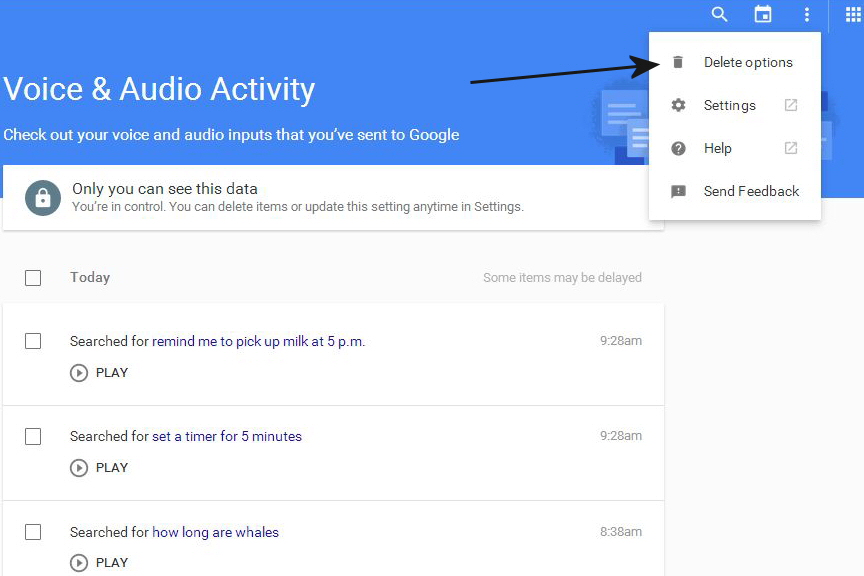
  2. Select Delete options.
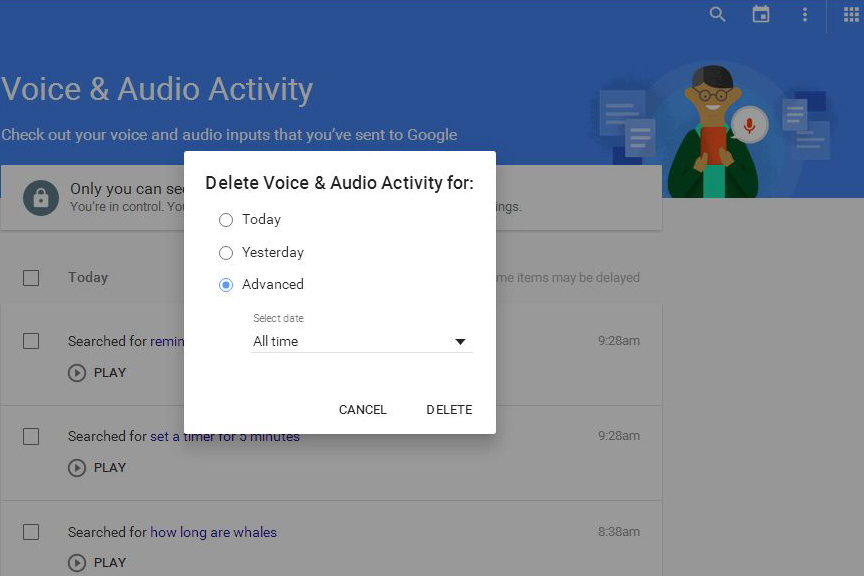
  3. Click on Advanced.
  4. Select All Time.
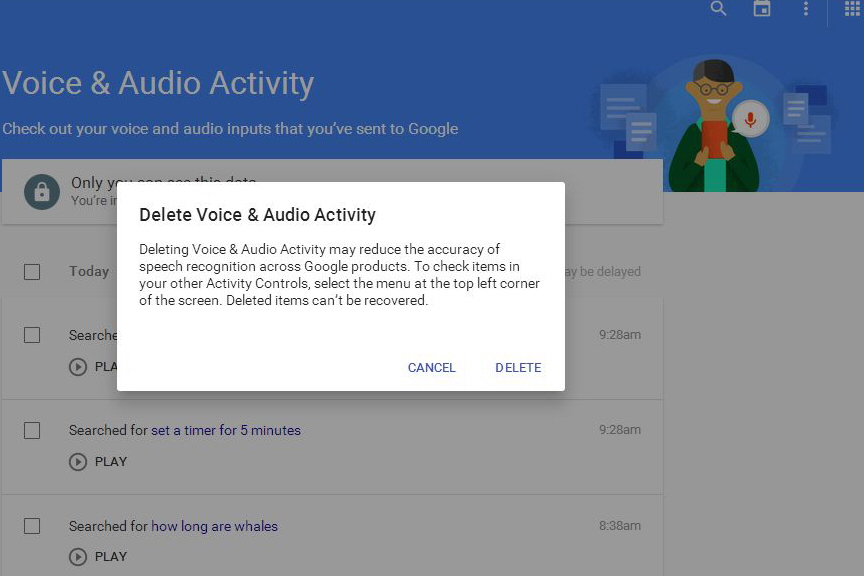
  5. Click on Delete.

Delete one or many search entries

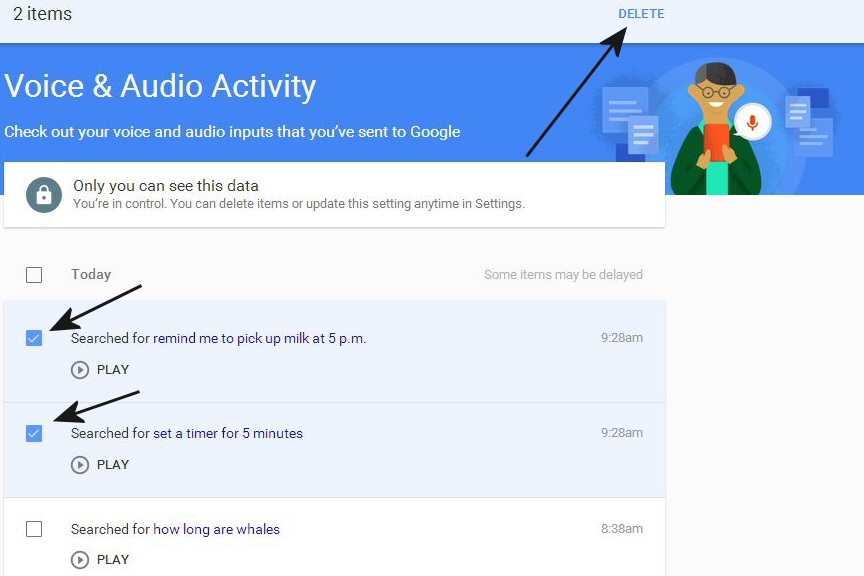
  1. Click on the check boxes next to each individual search you want to delete. Note: checking a date header will automatically select all the searches from that particular date.
  2. Click on Delete at the top right.
Google_Now_Voice_Search_History_02A
Image used with permission by copyright holder

How to stop Google from saving future voice searches

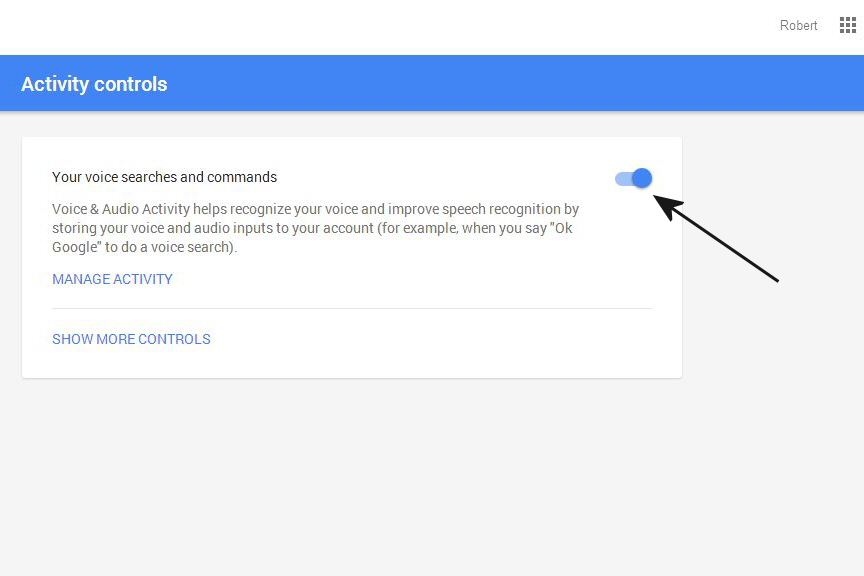
  1. Visit the Audio Controls page by clicking here.
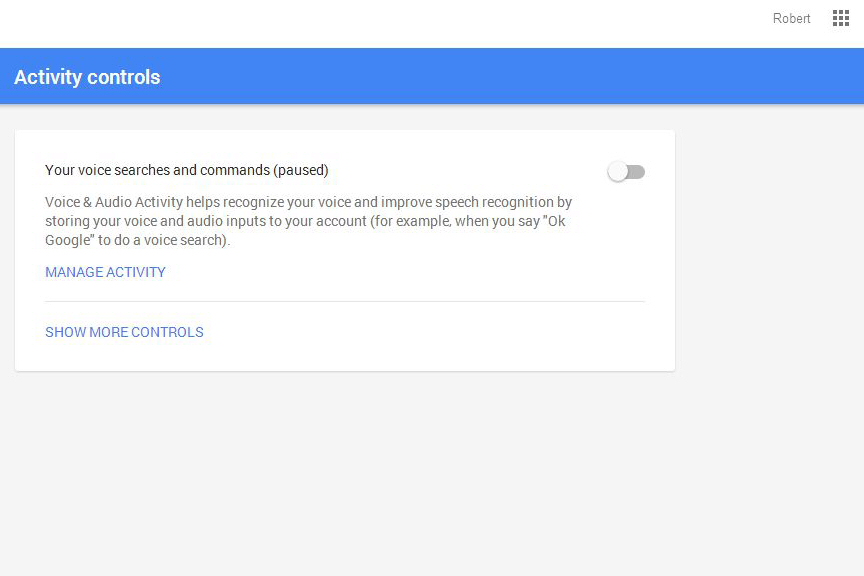
  2. Slide the switch to the Off position.
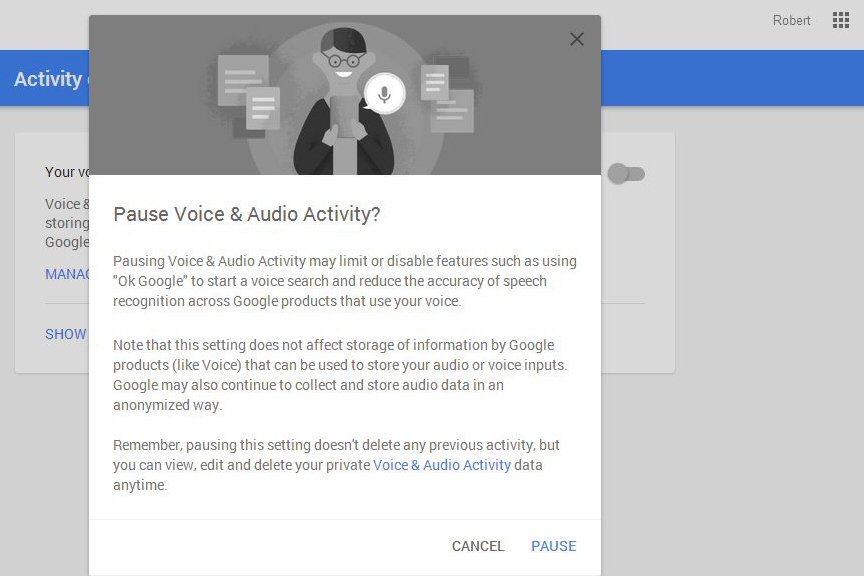
You can also click on Show More Controls for a variety of other settings. You will be amazed at how many things Google is actively archiving.

We hope this guide helped you. Please let us know in the comments if we missed anything, or if you have any other tips.

Robert Nazarian
Robert Nazarian became a technology enthusiast when his parents bought him a Radio Shack TRS-80 Color. Now his biggest…
Copilot could soon help diagnose issues with your PC
A new PC Insights feature will help you find what's slowing down your PC, though Copilot itself may be one of the main problems.
Microsoft Copilot Banner Featured

Copilot's next trick is diagnosing your PC's problems, but the catch is that the assistant doing the diagnosing is itself part of the problem. Windows Latest reports that Microsoft is testing a new Copilot feature called PC Insights, which will let you ask the AI assistant natural language questions about your computer's hardware and storage instead of digging through the Task Manager or Settings. The feature will reportedly allow users to ask questions like, "Do I have enough space for a 100GB game?" and Copilot will check the available storage to offer a response. Users will also be able to ask about CPU usage, battery health, etc., to diagnose issues.

What Copilot will be able to see

Read more
OpenAI just took the handcuffs off your ChatGPT Work and Codex usage limits, at least for now
The 5 hour limit is gone for now, your usage counter just reset, and GPT 5.6 Sol is about to get a lot lighter on your allowance.
OpenAI logo on Microsoft surface

It seems that OpenAI has been on a gallop lately, releasing new updates left and right. Just a few days back, the company launched its GPT-5.6 Sol, Terra, and Luna models for the general public, and now it's back with another update that will please its users even more. 

The headline change is that the 5-hour usage limit restriction in ChatGPT Work and Codex is being temporarily removed for all Plus, Business, and Pro plans. If you have ever been in the middle of a long working session and watched the limit message appear at the worst possible moment, this one is for you. 

Read more
This app gives your Mac a music player you’ll actually enjoy using
Apple Music on the Mac is a chore. Liqoria is the fix, and it plays nice with Spotify and YouTube too.
Liqoria music player

The Apple Music app on the Mac is not up to the mark. I don’t like how it looks or behaves, and Apple should take some inspiration from Spotify to make the app more modern and useful. Until that happens, we are stuck with a subpar app experience.

That’s why I never use the Apple Music app on my Mac and rely on third-party apps that let me control music. Today I am featuring one of the latest apps I discovered. It’s called Liqoria, and it’s probably the only music player app you will ever need.

Read more