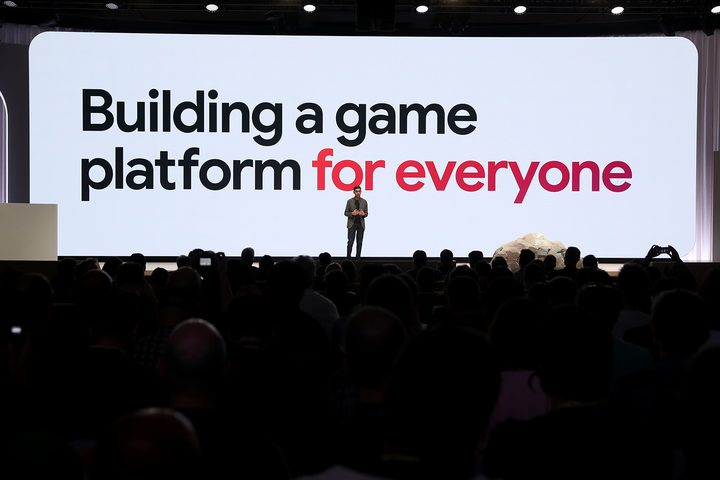
Google’s cloud gaming service, Stadia, made a splash earlier this year with a promise. “Now we focus on our next effort, which is to build a game platform for everyone,” Google CEO Sundar Pichai said on stage at GDC 2019. “And when we say for everyone, we really mean it.”
That, as it turns out, wasn’t entirely true.
Terms and conditions apply
It would be insane to expect a totally seamless experience. Stadia has many implied restrictions, like access to a reliable broadband internet connection. That’s ok. That’s expected. But that’s not the only restrictions you’ll face.
The fine print on the Stadia Founder Edition’s page makes that plain. “Google Chromecast Ultra required to play on TV.”
Ah. So that’s why it’s part of the Founder’s Edition.
Read on, and you’ll find more terms and conditions. Want to play on mobile? I hope you like Google Pixel phones, because Stadia only lists compatibility Pixel 3, Pixel 3 XL, Pixel 3a, and Pixel 3a XL. I followed up on this, and Google confirmed only these devices will support Stadia at launch. Other devices, including iOS phones, are planned – but no timeline has been laid out for support.
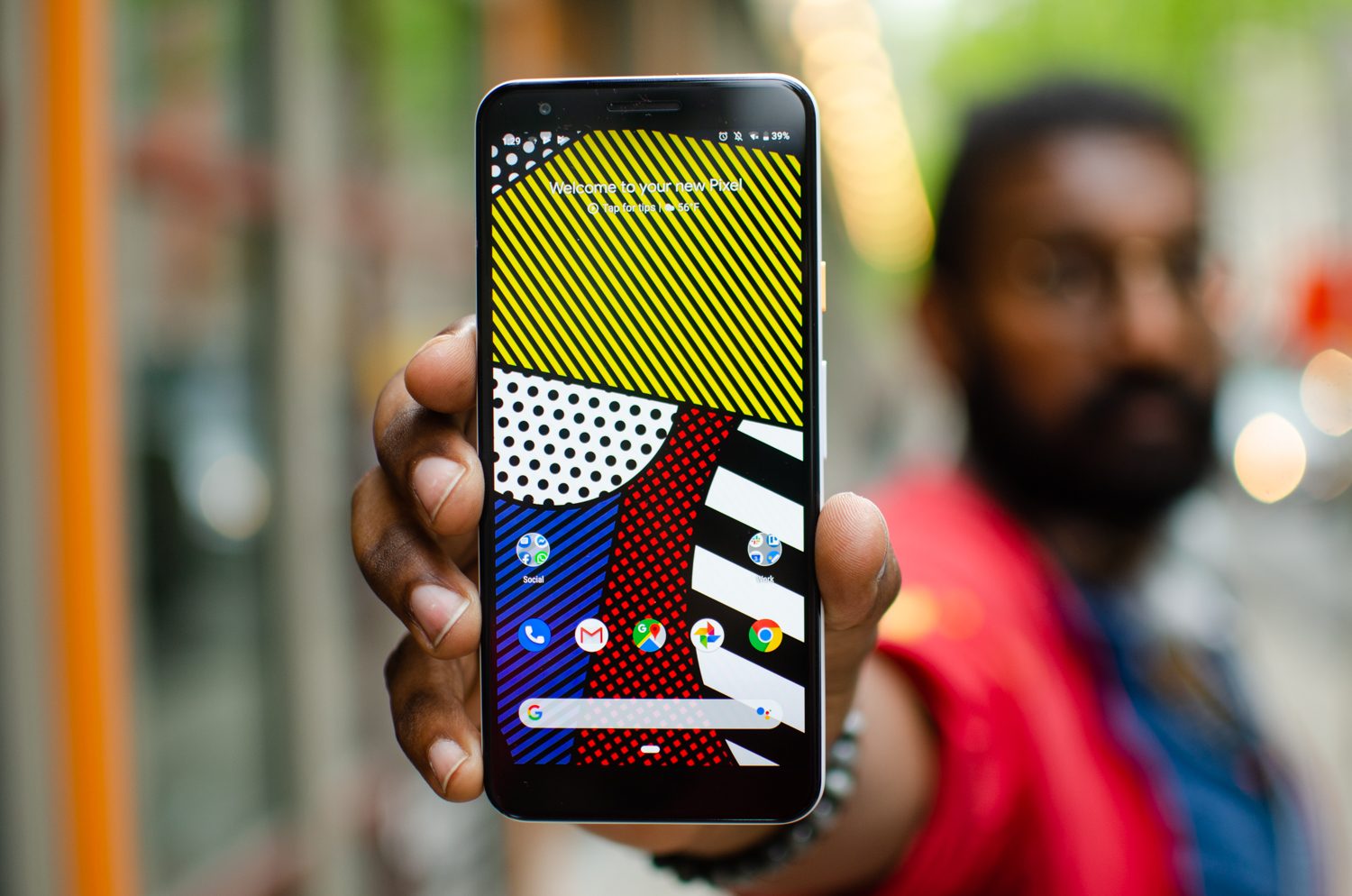
Suddenly, it’s clear Stadia isn’t really for everyone. It’s for everyone who is part of Google’s ecosystem, and that’s not a small obstacle. The Pixel phones are very, very good – but most people don’t own one, and it’s crazy to think a person will buy one just to use Stadia.
The same can be said of the Chromecast Ultra. It’s a cool device, and not unpopular, but not something everyone already owns. It’s affordable, as it’s only $60, but it still breaks the “platform for everyone” promise.
The Stadia Controller is a secret console
Google also continues to talk up its Stadia Controller. It’s not required to enjoy Stadia, which will technically work with any controller, but each new reveal makes its role seem more central.
This is most notable on mobile. I’ve been curious how Google would handle the fact most major console games are built for a controller and, as a result, will have problems when played with a touchscreen. The answer? You’ll need to use a controller.
Let that sink in. If you want to play Assassin’s Creed Odyssey or Destiny 2 on your smartphone – ah, excuse me, your Pixel 3 XL – you can. If you use a controller.

Who wants to do that? The entire point of a mobile game is the pick-up-and-play accessibility. It’s low effort, quick, easy. If you need a controller, then you might as well buy a portable console.
Which brings us to the Founder’s Edition. It’s a $130 package that is, for all intents and purposes, a game console. It includes the Chromecast Ultra, the Stadia controller, three months of Stadia Pro, a buddy pass, and Destiny 2.
This is not an optional package. This is the only way to play Stadia in 2019. Google warns on its Stadia FAQ page that “purchasing an individual controller does not entitle you to Stadia access.”
So, you can play Stadia anywhere, on any screen. If you own the right Google devices. And if you want to play it in 2019, you’ll have to purchase the hardware bundle.
The bandwidth problem remains unaddressed
There’s one more obstacle between you and Stadia. Your internet connection.
Stadia’s requirements aren’t unreasonable. You can play at 1080p with a mere 10 Mbps. If you want to play at 4K with all the goodies, though, you need to have 35 Mbps connection. Remember, that needs to be a reliable 35 Mbps. If you mostly have that, but sometimes go lower, you’ll see a reduction in image quality.
The problem expands when you add mobile into the mix. The hefty bandwidth requirement implies that mobile data bandwidth and mobile data caps will be an obstacle.
I’ve tested cloud gaming bandwidth before. Nvidia’s GeForce Now, a very similar service to Stadia, used an average of 487 megabytes every five minutes over Wi-Fi, and 520 megabytes every five minutes over Ethernet. That’s up to 6 gigabytes of bandwidth an hour. And that was at 1080p resolution.
Again, this makes mobile use look a lot less appealing. It’s technically possible, sure – but you could chew through your data limitations in very short order. And you do have limitations. Despite the “unlimited” label, all major carriers in the U.S. will slow down your data if you use too much.
There’s also reason to think mobile carriers will purposely slow down Stadia. This is already common with mobile video, which is often de-prioritized or restricted to a specific resolution in an effort to conserve network bandwidth. Stadia works a lot like mobile video and consumes just as much bandwidth. I would be surprised if it doesn’t end up with the same restrictions.
This was inevitable
Let’s summarize.
Google Stadia is a “platform for everyone.” Everyone owns a Chromecast Ultra or a Pixel 3/3a smartphone, and purchases $130 Founder’s Edition bundle. Oh, and you need to haul the Stadia controller around for mobile play. Don’t forget a top-tier data plan, as well. That sure doesn’t sound like a service for “everyone.”
Look, I’m not surprised. These problems were inevitable. The intuitive, pick-up-and-play experience that Google initially promised was too good to be true, so I’m not shocked to find out it wasn’t.
Google did have one win; pricing. The $9.99 per month subscription for Stadia Pro, along with the free 1080p tier, is attractive. There are many obstacles between Stadia and gamers, but the subscription price isn’t one of them.
An affordable subscription is great, but that alone isn’t enough. Stadia offers the opportunity to break down barriers between the many platforms. Unfortunately, that opportunity is locked behind new barriers, restrictions, terms, and conditions.
That isn’t what Google promised.