  1. Home
  2. Social Media
  3. News

Facebook’s ephemeral group messaging should give Snapchat the spooks

Add as a preferred source on Google

Remember when Facebook reportedly tried to purchase a then-buzzing app called Snapchat for $3 billion in 2013? The deal fell through, and Snapchat went on to become insanely popular in its own right.

The failed acquisition attempt did little to phase Facebook’s unrelenting ambition. The social network even indulged in a bit of retail therapy later that same year by nabbing messaging giant WhatsApp. After all, who needs Snapchat when not one but two of your chat platforms boast a billion users each?

Recommended Videos

Like a scorned lover, Facebook has not managed to put the past behind it, as evidenced by its latest experiment. According to a number of users, Facebook is testing a new disappearing messages feature within its main app.

Tiffany Zhong, an analyst at venture capital firm Binary Capital, first tweeted about the feature on Thursday. Called “quick updates,” it can be activated by tapping a smiling face icon within Facebook’s main app. This allows you to add friends to groups so you can see each other’s updates — including text, image, and video posts — during a 24-hour window, after which they disappear.
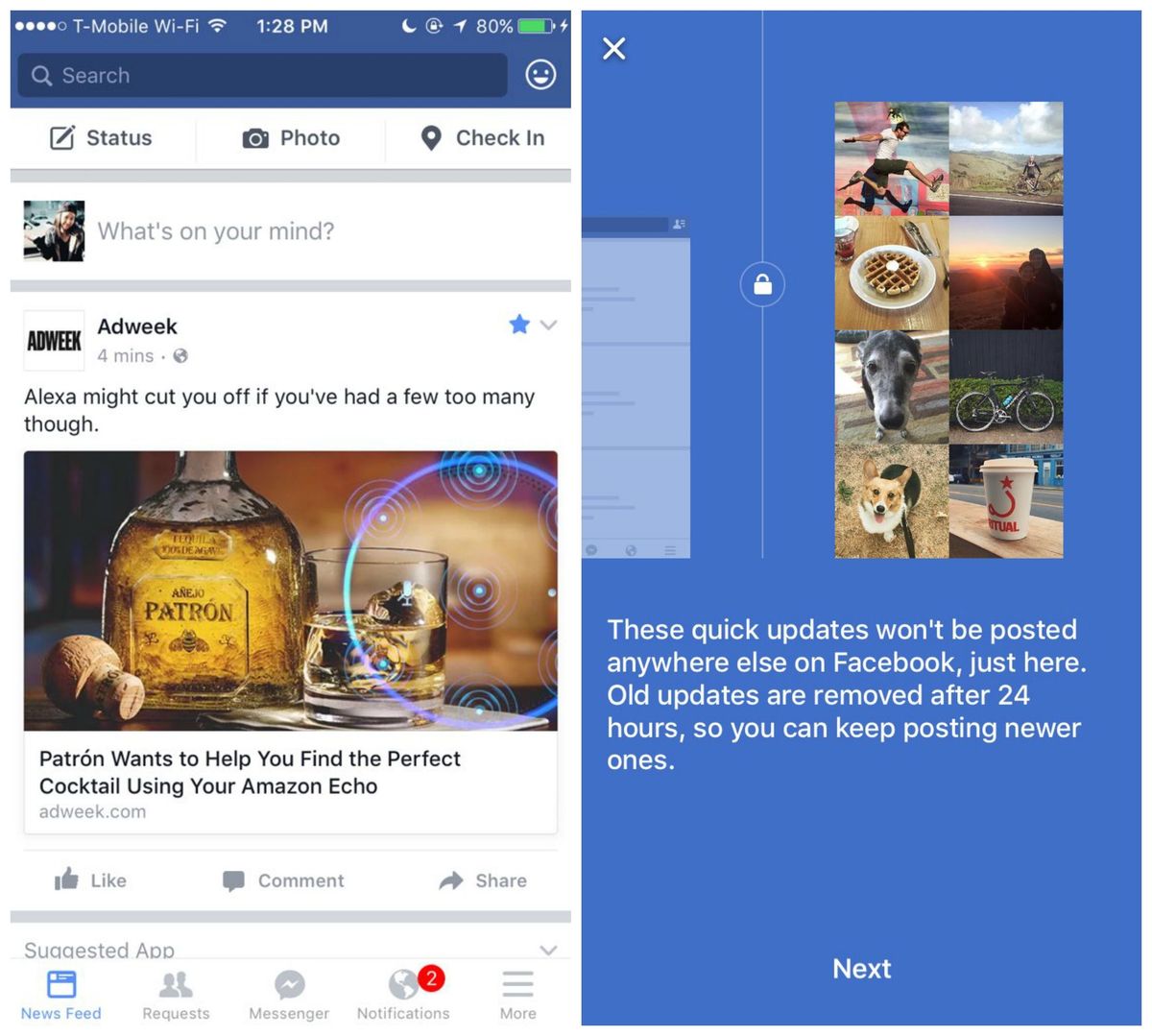
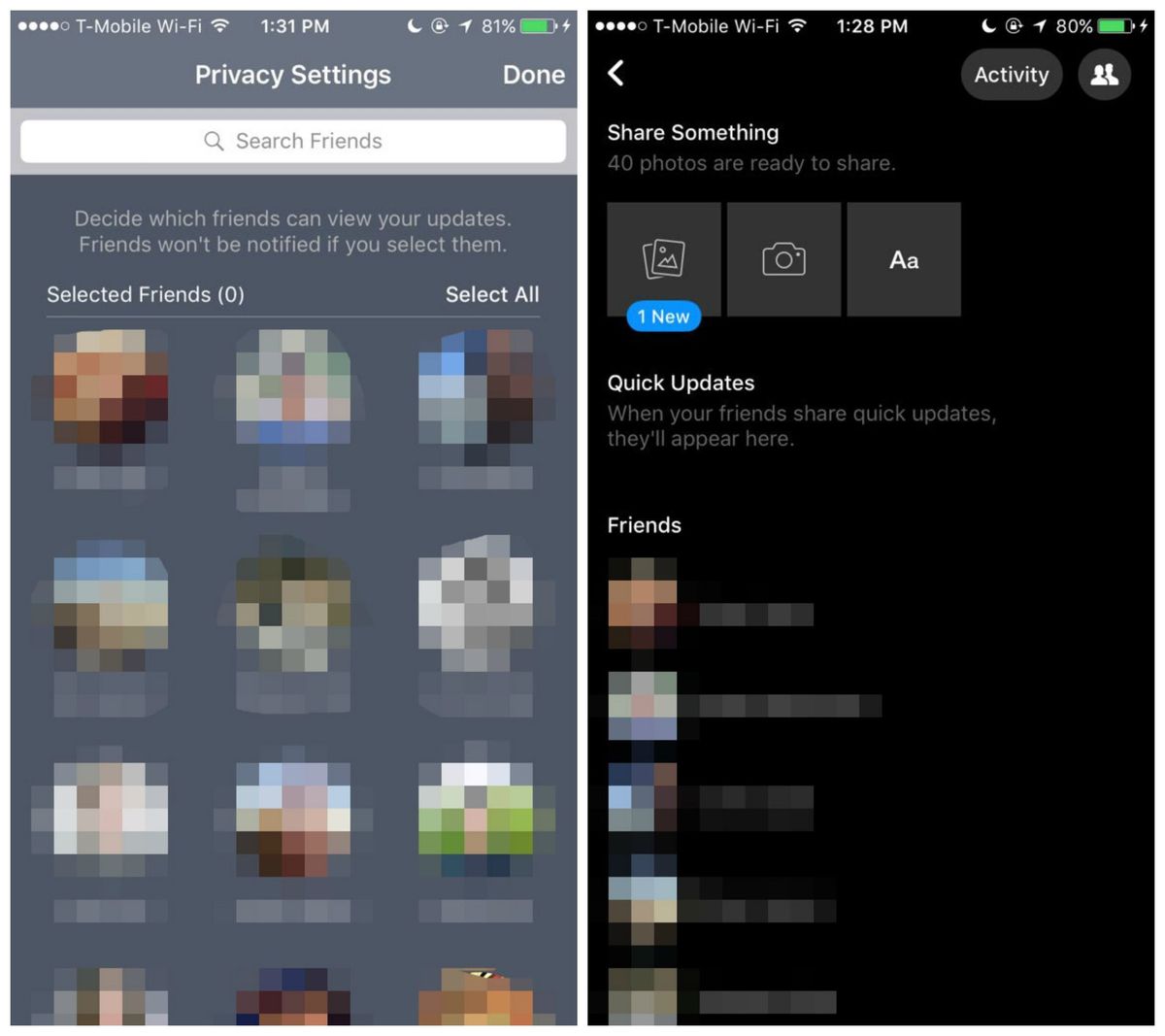
In the past, Facebook has repeatedly flirted with Snapchat-style functions, both in the form of test features on Messenger, and via its unsuccessful standalone apps, particularly Slingshot.

Facebook may also envision the experiment as a method through which users could be encouraged to share more personal information, something that has increasingly eluded the platform since the rise of Snapchat.

Facebook itself has played down the importance of the test, claiming in a statement that it is an “old feature” that was only shown to “some people.” The company added that it has no plans to “launch it more broadly.” Like the aforementioned examples, however, it still divulges the company’s interest in tapping into Snapchat’s frequent sharing formula.

Saqib Shah
Saqib Shah is a Twitter addict and film fan with an obsessive interest in pop culture trends. In his spare time he can be…
Meta just pulled its most controversial AI image generation feature days after launch
Meta is framing this as "hearing feedback," not as fixing a consent problem.
Instagram Muse Image

A couple of days ago, I covered Meta’s announcement of the Muse Image, an AI tool that lets users generate images based on someone’s Instagram profile without asking the account owner. 

I also highlighted the risks associated with it in another piece, along with steps for opting out. Three days later, the feature is no longer available. 

Read more
Your YouTube playlists can now become actual TV shows, but there’s a catch you need to know
YouTube just gave Partner Program creators the episodic infrastructure that Netflix has been using to keep audiences hooked for years.
Electronics, Mobile Phone, Phone

YouTube just gave its creators a tool that streaming platforms take for granted. I’m talking about the ability to structure content as proper episodic TV. 

If you're in the YouTube Partner Program and you’ve been organizing your videos into playlists while praying that the algorithm and your audience notice, then Shows is the upgrade you've been waiting for.

Read more
I knew there was plenty of AI slop on LinkedIn. Shocking report says the problem is far worse than suspected
LinkedIn app on App Store iPhone

I already knew LinkedIn was overflowing with posts written by AI, recycled leadership advice, and those god-awful lessons about entrepreneurship. A new report suggests the situation is considerably worse than even the platform’s feed makes it appear.

AI-detection company Pangram analyzed more than one million posts scanned through its Chrome extension across LinkedIn, X, Reddit, Medium, and Substack. LinkedIn represented approximately one-third of everything scanned, yet produced 62% of all content Pangram flagged as AI-generated.

Read more