1. Home
  2. Emerging Tech
  3. Health & Fitness
  4. News

Space-age toothbrush promises to clean your gnashers in 30 seconds flat

Add as a preferred source on Google
 

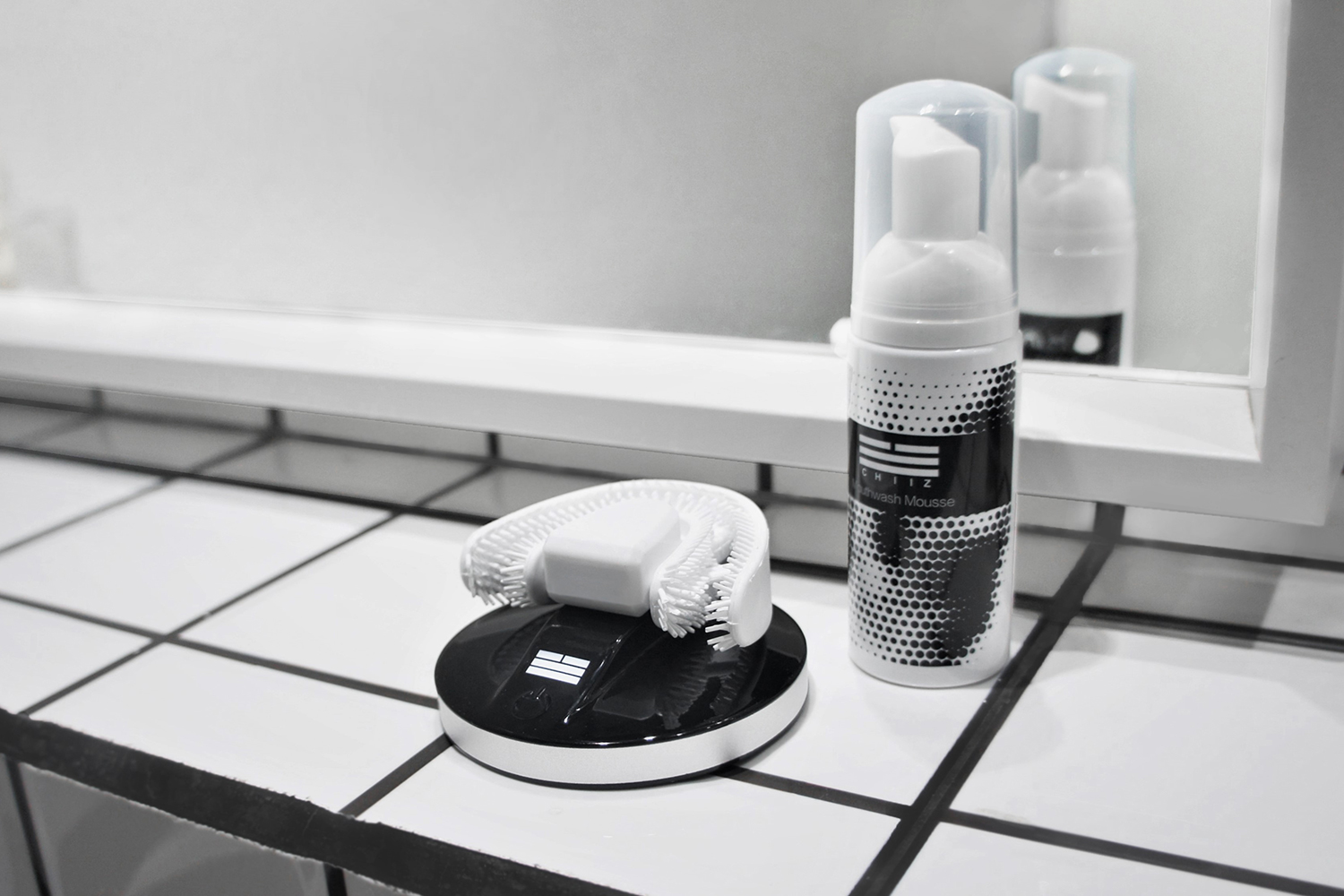
Sure, your parents’ generation probably had four minutes per day to brush their teeth the old-fashioned way, but the world has changed since then. Work is 24/7, we’re constantly connected tweeting and snapchatting, and, at best, we can carve out one minute per day to making sure our teeth don’t wind up looking like something out of Austin Powers. Thank goodness, then, for the folks behind Chiiz, a so-called sonic tooth cleaner which promises to shine your teeth up real nice in just 30 seconds.

Recommended Videos

“Chiiz is designed to change the way people brush their teeth,” Michael Zhang, Chiiz founder and CEO, told Digital Trends. “Although the device only takes 30 seconds to clean your teeth, the time it takes — though important — is not my main concern. My original purpose for this product was to create a brush that guides to clean your teeth the right way. At the same time, I wanted to create a brush which was hands-free, where you didn’t need to worry at all about brushing duration, angle or strength when using it. Chiiz just does it all automatically.”
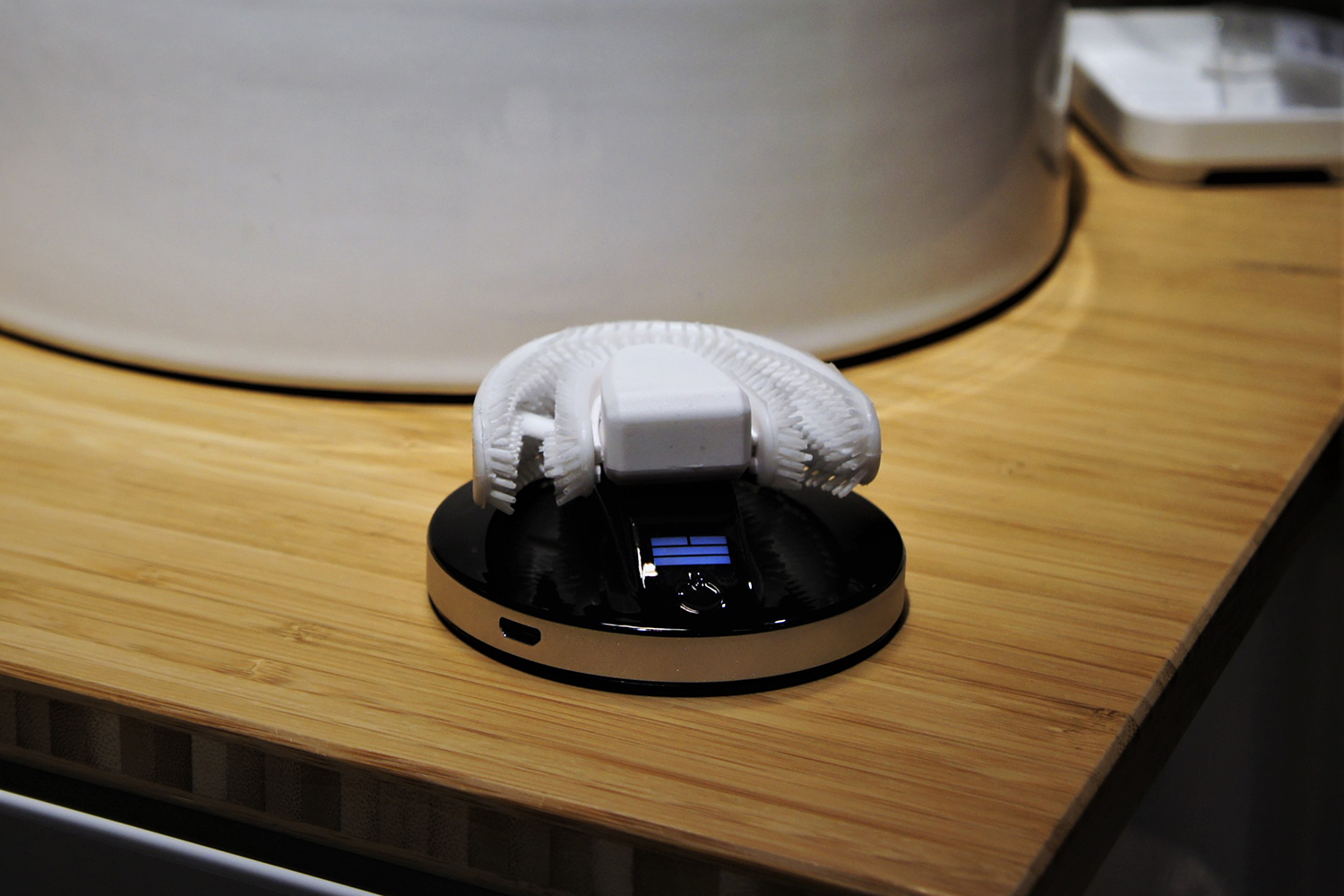
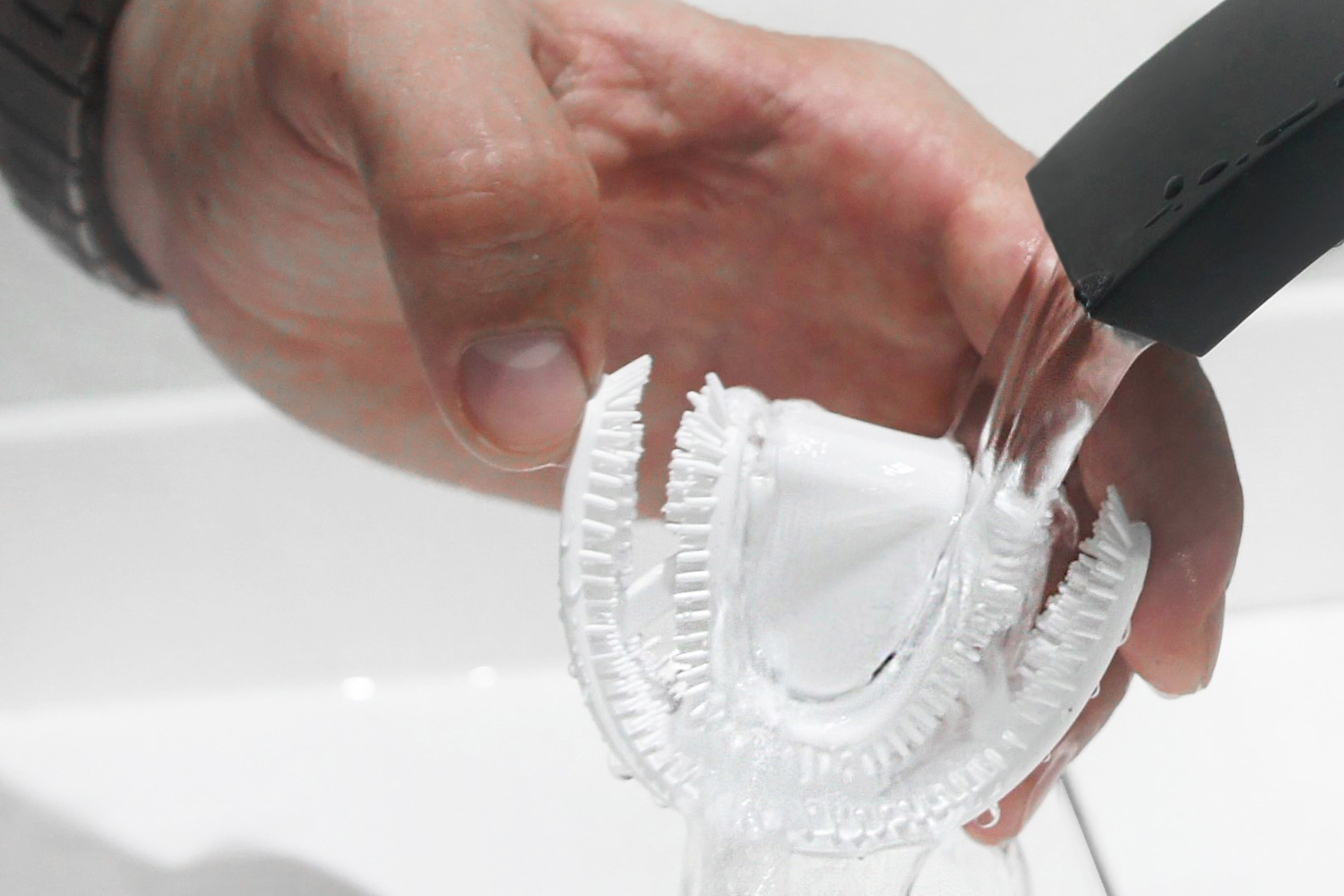
Essentially, Chiiz resembles the kind of mouthguard you wear for contact sports. Inside this are brushes which give total coverage to all your teeth at once. Add some toothpaste, pop it in your mouth, and the moment you bite down the device begins brushing at a speed of 25,000 strokes per minute, angled at the ideal 45 degrees.

“Chiiz is designed for people who are looking for a better way to protect their oral health,” Zhang continued. “The market for our device may include individuals with oral diseases, like bleeding gums such as myself, or individuals who lack confidence to speak or smile naturally due to issues with their breath. Another target audience would be individuals who are in a situation with limited mobility, such as after an injury or surgery. There are many more possibilities.”

Image used with permission by copyright holder

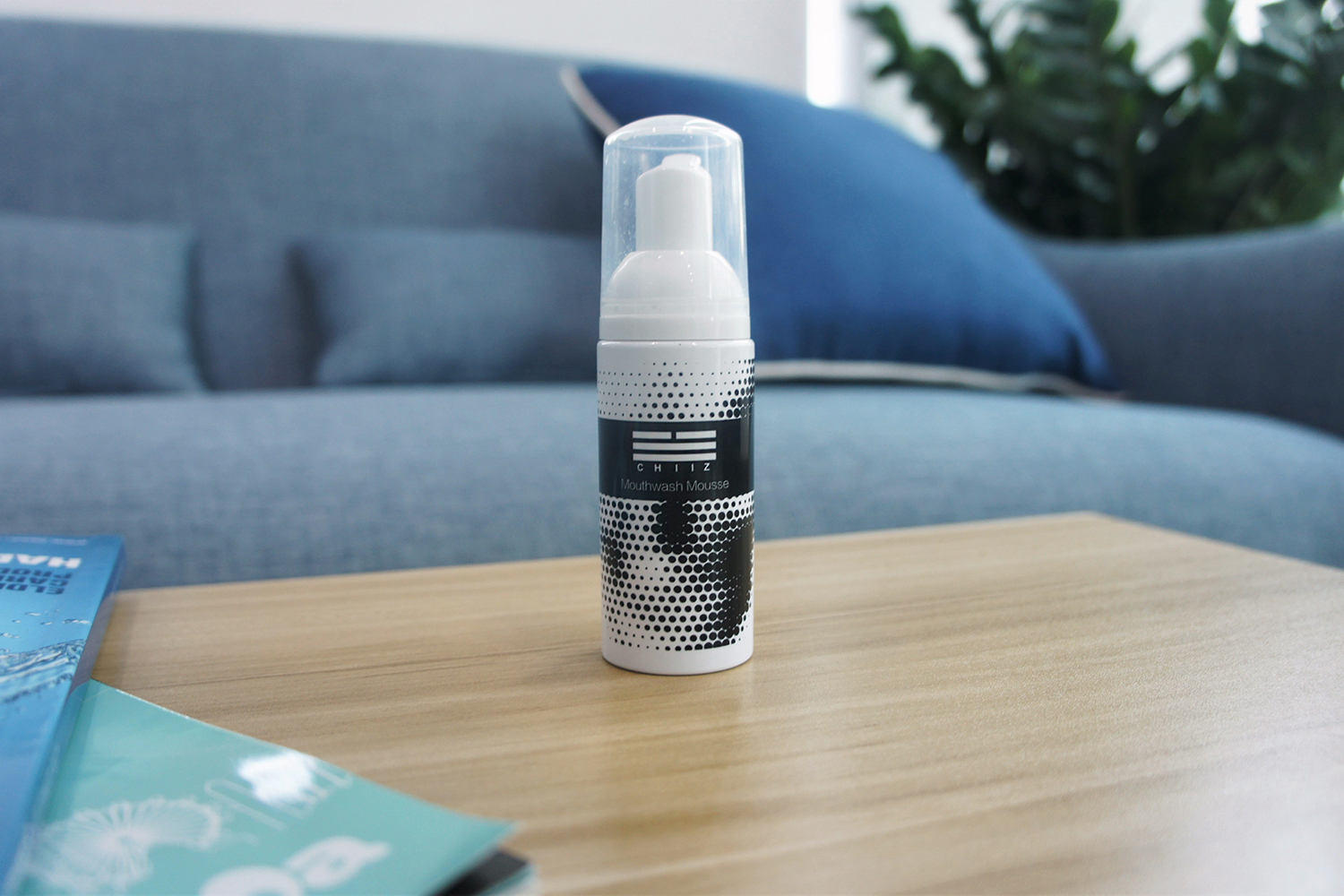
As ever, we offer our usual warnings about the potential risks inherent in crowdfunding campaigns. While we don’t want to cast aspersions about this particular product, it’s also worth noting that some previous Kickstarter and Indiegogo futuristic toothbrush projects have failed to materialize. Nonetheless, if you’re aware of these possibilities and still want to get involved, head over to the project’s Kickstarter page. A basic kit — comprising a sonic motor, mouthpiece, toothpaste mousse, charging dock, travel dock, and USB charger — starts at just $69. Shipping is set to take place in September.

Luke Dormehl
I'm a UK-based tech writer covering Cool Tech at Digital Trends. I've also written for Fast Company, Wired, the Guardian…
Anker just exposed a big problem with portable power stations
Appliance, Device, Electrical Device

When you're shopping for a portable power station, there's one number that's almost impossible to ignore: battery capacity. A 2 kWh battery should give you roughly 2 kWh of usable power, right? Unfortunately, things aren't quite that simple. Anker SOLIX has published new efficiency data for its S Series portable power stations, and it's putting the spotlight on something that doesn't get nearly as much attention as capacity: how much of the energy stored inside the battery actually makes it to your devices.

According to Anker, portable power stations are commonly advertised with efficiency figures measured under relatively heavy loads, where they can reach roughly 89% to 92% efficiency. But that's not necessarily how most people use one during an outage. Think about what you'd actually plug in. A Wi-Fi router might sip power continuously, a refrigerator switches its compressor on and off throughout the day, and a CPAP machine could run overnight. Together, those devices may draw just a fraction of what a large power station is capable of supplying. And that's where efficiency can start slipping.

Read more
OpenAI’s first gadget sounds like a tiny expressive AI companion
The device will have a doughnut-shaped body, built-in cameras, and moving parts
OpenAI press image

For months, reports have suggested that OpenAI’s first hardware product would be a screen-free smart speaker designed to act more like an AI companion. We already knew it could understand its surroundings, be carried around the home, and proactively help users. A new Bloomberg report now gives us a clearer picture of what the device may actually look like.

As per the report, OpenAI’s first gadget will be shaped like a doughnut and measure about the same size as a hockey puck. You will be able to carry it between rooms or leave it nearby on whatever surface is convenient. The device is expected to be on the expensive side, as the company has pondered pricing it around $300 to $400. A release is currently planned for 2027.

Read more
Google Antigravity just built an AI translator that works without the internet
Electrical Device, Switch, Robot

Google has shown off a new AI project that could make language barriers a little less intimidating, and it doesn't need an internet connection to do it. The company has introduced the Gemma Translator, a compact prototype built in collaboration with Antigravity. Unlike most AI translation tools that rely on cloud processing, this device runs entirely offline using Gemma 4 E2B, Google's lightweight open model. Everything happens locally on the device, making it both portable and independent of an internet connection. The prototype is powered by a Raspberry Pi 5 and includes a microphone and speaker inside a custom 3D-printed enclosure, creating a self-contained translator you can carry almost anywhere.

AI translation, without the cloud

Read more