
Smart vacuum cleaners like the iRobot Roomba i7+ or the Roborock S6 MaxV are best known for their ability to automatically clean your home, but did you realize that robot vacuums can do much more than that? Yes, the expectation to clean our homes is there. However, you may be surprised by the technology packed into today’s bots.
Depending on the model, your robot vacuum could be jam-packed with other features that give it utility far beyond a cleaning appliance. Here are seven things you didn’t know robot vacuums could do.
Robot vacuums can spot clean specific areas
While a whole-room cleaning is recommended at least once a week, you might only have a specific place that’s dirty. For example, maybe you had rice for dinner one night and there are little grains all around the kitchen table. The iRobot Roomba i7+ is just one of the many that can do this.
You don’t want to order your robot vacuum cleaner to clean the entire space just for the table. The good news is that Roombas and other types of robot vacuums can spot clean — in other words, they focus on a specific area. This feature is most often available on models with smart maps.
You can ask the robot vacuum to clean around a specific fixture in the home, such as the coffee table, entryway, or dining room table. When it finishes, it will return to its dock to charge.
Robot vacuums can act as security for your home

Newer models of robot vacuums come equipped with “eyes” that help recognize and avoid objects and obstacles. While many models use lidar to accomplish the same task, robot vacuums with onboard cameras can actually double as security for your home.
Sure, a burglar might look for a security camera, but who thinks to look down for prying eyes? Robot vacuums like the Roborock S6 MaxV, the LG CordZero ThinQ, and the Ecovacs Deebot Ozmo T8 AIVI all include this feature.
While it shouldn’t be your main form of home security, a robot vacuum can act as a supplementary line of defense and added security for your home.
Robot vacuums are smart enough to detect poop
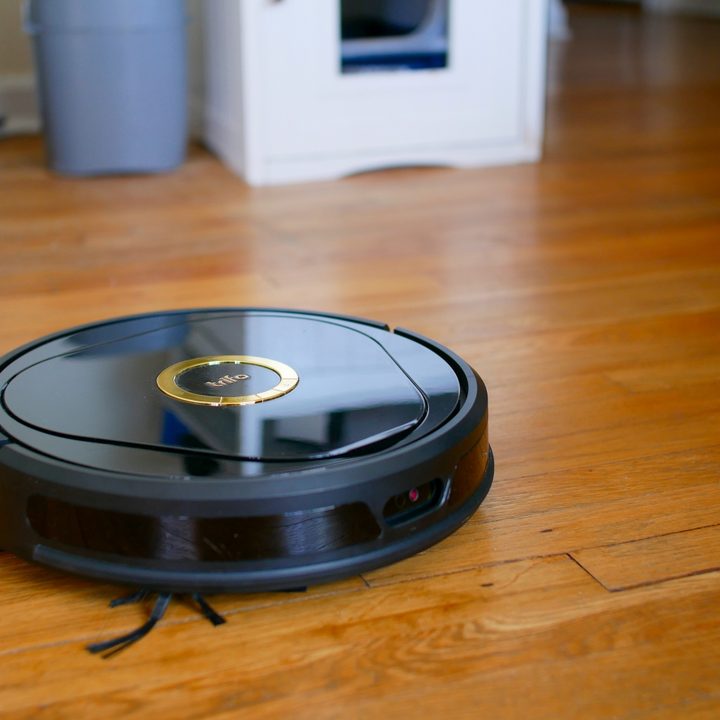
Everyone has heard the horror stories: A pet has an accident in the home, only for the robot vacuum to grab it and smear it across the entire home and in the carpet, usually ending in some form of catastrophic event. While the stories are hilarious to read about, they’re much less enjoyable when it happens to you.
The good news is that robot vacuum manufacturers are aware of this particular problem and have begun to design robot vacuum cleaners with the ability to recognize poop and avoid it. The Trifo Lucy is one example of a model that can do this.
The 360 Smart Life Robot Vacuum Cleaner is another. Most robot vacuums with poop-avoidance features do this by using more detailed navigation sensors that allow them to recognize smaller objects and veer around them.
Your robot vacuum can clean specific rooms


When it’s a dry, dusty day outside, the entryway of your home can become caked in dirt in no time at all. Rather than breaking out a vacuum cleaner, just ask the robot vacuum to clean that specific room.
Most robot vacuums have this feature, provided they use smart mapping capabilities. If connected to a smart assistant like Amazon Alexa or Google Home, all you have to do is ask your assistant to tell the vacuum to clean that space.
Just take the time to fully map your home and then assign specific names to each area. It’s a much easier way to clean than running the robot vacuum over the entire home just to clean one space.
Your robot vacuum can empty itself

The one downside to many robot vacuum cleaners is the need to empty its dust bin after an hour or two of cleaning. Depending on how dirty the home is, your robot vacuum may need to be emptied more often than that. But what if it could empty itself out?
Some robot vacuums are compatible with Base Stations, like the iRobot Roomba i7+. This robot vacuum will automatically clean your home until its dust bin is full, at which point it will return to the Base Station and empty itself out. If it still has charge and isn’t finished cleaning, it will resume its job from where it left off.
The Base Station also needs to be emptied, but it contains anywhere from one to two months of dirt and dust at a time in hypo-allergenic bags that help improve the air quality of your home without letting dust escape.
Your robot vacuum can create and recognize virtual barriers
Let’s face it: there are just some places you don’t want your robot vacuum to go. Underneath entertainment centers are often dusty areas, but they’re also littered with cables. Even if the robot vacuum can navigate over the cords, there’s a better-than-zero chance it might pull one loose.
Maybe you’re building a house of cards in one room of your home and want to keep the vacuum out of there. Alright, that one is less likely — but whatever the reason you want your robot vacuum to stay away, you can create a virtual barrier within most apps that the vacuum will not pass.
Just as long as the robot employs some kind of tech to map out rooms, such as light detection and ranging (lidar) sensors, it’ll know the layout of rooms — whereby you can set up virtual barriers or fences to keep it out of specific places. The Eufy RoboVac L70 can do this. You can easily do this through the corresponding mobile app with your robot vacuum. This is an easy way to keep it from bumping into your pet’s water bowl, to keep it out from under things it will get stuck under, and much more.
Your robot vacuum can detect edges and avoid falls
Many people worry that their robot vacuum will topple down the stairs, but that’s not something you need to concern yourself with. On the bottom of most robot vacuums are specialized cliff sensors that constantly emit a signal. This sensor measures the time it takes for the signal to return, and if it takes beyond a certain amount of time, the robot vacuum knows it’s at a cliff or an edge.
This means that robot vacuums can effectively clean up to the edge of a step without going over. Because the wheels are positioned near the middle of the device, the sensors will detect the cliff long before it becomes unbalanced and falls.


